Managing underperformance policy (Kentucky): Free template
Got contracts to review? While you're here for policies, let Cobrief make contract review effortless—start your free review now.
Customize this template for free
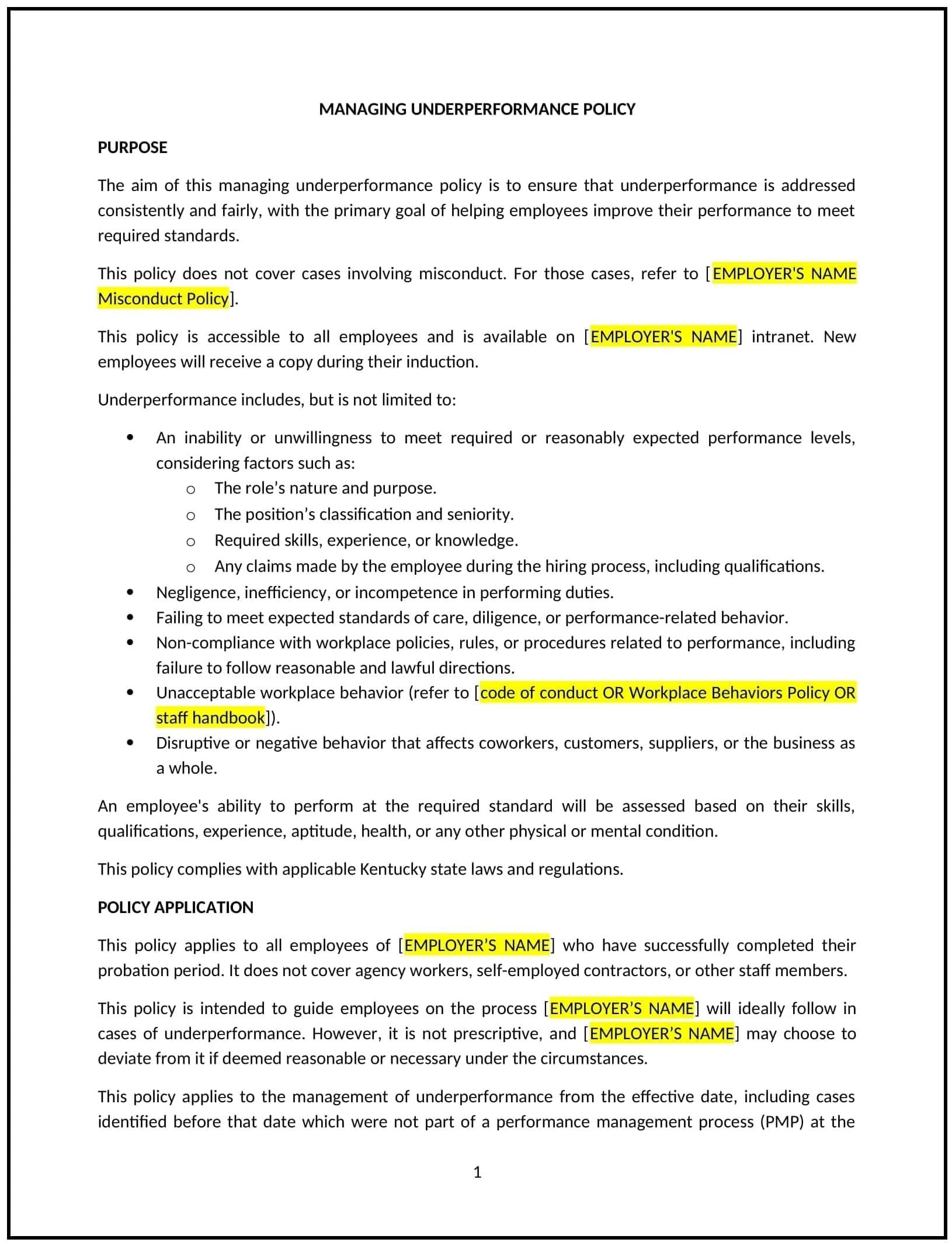
Managing underperformance policy (Kentucky)
A managing underperformance policy provides Kentucky businesses with a structured approach to addressing employee performance issues effectively and fairly. This policy outlines the steps businesses can take to identify, address, and resolve performance concerns while supporting employees’ development and maintaining organizational productivity.
By adopting this policy, businesses can foster a culture of accountability, improve team performance, and minimize risks associated with unfair treatment or legal disputes.
How to use this managing underperformance policy (Kentucky)
- Define underperformance: Businesses should clearly outline what constitutes underperformance, such as failure to meet job expectations, poor attendance, or behavioral concerns.
- Set performance standards: Businesses should establish clear expectations for each role, ensuring employees understand their responsibilities and performance metrics.
- Identify performance issues: Businesses should monitor employee performance regularly and identify any gaps through reviews, feedback, or performance metrics.
- Implement a structured process: Businesses should outline steps for addressing underperformance, including providing feedback, setting improvement goals, and creating a performance improvement plan (PIP).
- Provide support: Businesses should offer resources such as training, coaching, or mentoring to help employees address performance issues effectively.
- Document actions: Businesses should maintain detailed records of all performance discussions, improvement plans, and outcomes to ensure transparency and compliance.
- Address non-improvement: Businesses should specify consequences if performance does not improve, including reassignment, demotion, or termination, following due process.
Benefits of using this managing underperformance policy (Kentucky)
This policy provides several key benefits for Kentucky businesses:
- Promotes fairness: Establishes a consistent approach to addressing performance issues, ensuring all employees are treated equitably.
- Enhances productivity: Helps employees identify and address performance gaps, improving overall team and organizational performance.
- Reduces legal risks: Minimizes the risk of disputes by documenting performance discussions and following a transparent process.
- Builds accountability: Encourages employees to take responsibility for their performance by providing clear expectations and support.
- Supports employee development: Provides employees with the tools and resources needed to succeed in their roles, fostering growth and retention.
Tips for using this managing underperformance policy (Kentucky)
- Communicate the policy: Businesses should share the policy with all employees and ensure managers are trained to address performance issues effectively.
- Provide regular feedback: Businesses should encourage managers to offer constructive feedback regularly to identify and address potential issues early.
- Involve HR when needed: Businesses should engage HR in significant performance discussions to ensure the process remains fair and compliant.
- Use PIPs effectively: Businesses should create detailed performance improvement plans with clear goals, timelines, and measurable outcomes.
- Review periodically: Businesses should update the policy as needed to reflect changes in Kentucky laws, organizational goals, or best practices.