Managing underperformance policy (Maine): Free template
Got contracts to review? While you're here for policies, let Cobrief make contract review effortless—start your free review now.
Customize this template for free
Managing underperformance policy (Maine): Free template
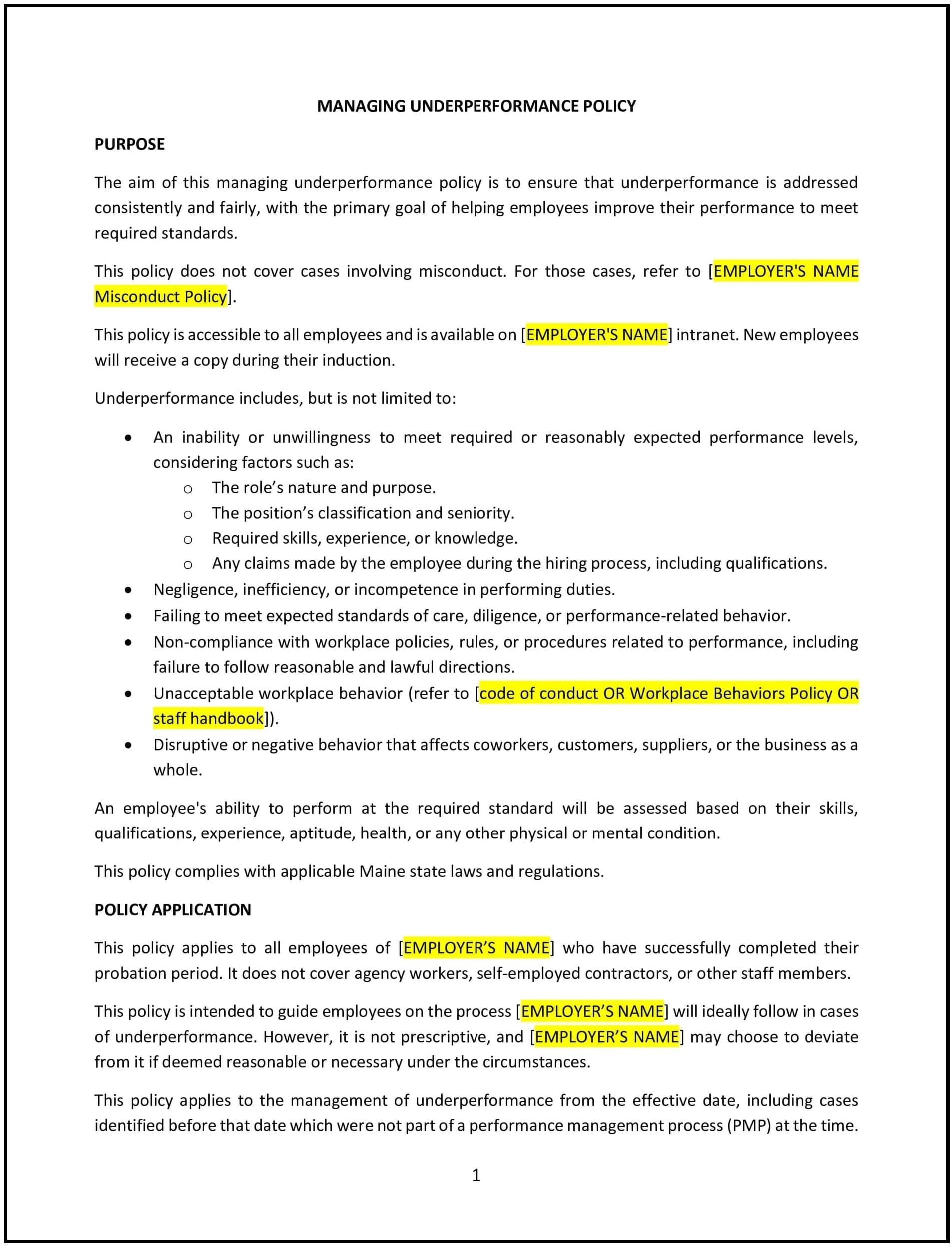
This managing underperformance policy is designed to help Maine businesses establish clear procedures for addressing and improving employee performance issues. It outlines steps for identifying underperformance, providing feedback, and supporting employees in meeting expectations, while supporting compliance with Maine labor laws.
By implementing this policy, Maine businesses can promote fairness, improve productivity, and foster a supportive workplace culture.
How to use this managing underperformance policy (Maine)
- Define underperformance: Clearly outline what constitutes underperformance, such as not meeting job expectations, failing to achieve goals, or exhibiting unprofessional behavior.
- Establish early intervention: Encourage managers to address performance issues promptly through informal discussions before initiating formal procedures.
- Outline a performance improvement plan (PIP): Provide a structured approach for employees to improve, including clear goals, timelines, and support resources.
- Include feedback procedures: Detail how managers should provide constructive feedback, set measurable objectives, and monitor progress.
- Address training and support: Offer training, mentorship, or other resources to help employees address specific performance gaps.
- Specify consequences: Clearly state potential outcomes for unresolved underperformance, such as reassignment, demotion, or termination.
- Review regularly: Update the policy to reflect changes in Maine labor laws or workplace needs.
Benefits of using this managing underperformance policy (Maine)
Implementing this policy provides several benefits for Maine businesses:
- Promotes fairness: Ensures all employees are given a structured opportunity to address and improve performance issues.
- Enhances productivity: Helps employees meet expectations and contribute effectively to the business.
- Reduces turnover: Offers employees the support they need to succeed, improving morale and retention.
- Protects against legal risks: Ensures compliance with Maine labor laws and provides documentation for fair handling of performance issues.
- Strengthens communication: Fosters open dialogue between managers and employees about performance expectations and progress.
Tips for using this managing underperformance policy (Maine)
- Train managers: Provide training on how to recognize, address, and document underperformance fairly and constructively.
- Use clear metrics: Set measurable performance standards and ensure employees understand expectations.
- Maintain records: Document all discussions, feedback, and progress to provide accountability and transparency.
- Be consistent: Apply the policy uniformly across all employees to ensure fairness and avoid bias.
- Support employees: Provide access to resources such as training, mentoring, or counseling to address specific performance issues.
- Stay compliant: Monitor Maine labor laws to ensure the policy remains legally compliant.