Managing underperformance policy (Minnesota): Free template
Got contracts to review? While you're here for policies, let Cobrief make contract review effortless—start your free review now.
Customize this template for free
Managing underperformance policy (Minnesota)
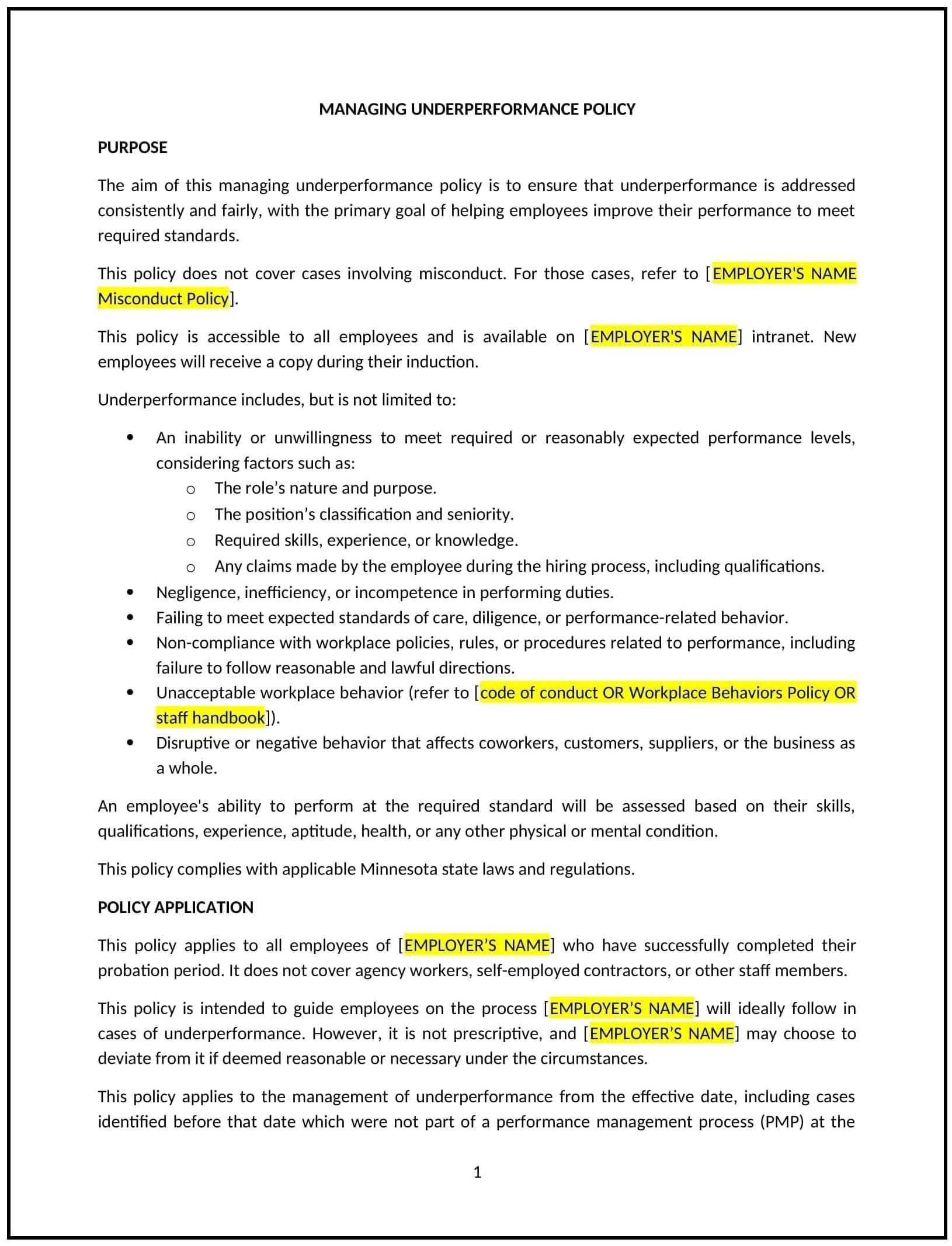
This managing underperformance policy is designed to help Minnesota businesses address employee performance issues in a fair, consistent, and constructive manner. It outlines the process for identifying underperformance, providing feedback, and taking corrective actions to support employees in improving their performance. The policy ensures that businesses maintain a productive work environment while supporting employees’ development and growth.
By implementing this policy, businesses can proactively address underperformance, improve employee engagement, and foster a culture of continuous improvement.
How to use this managing underperformance policy (Minnesota)
- Define underperformance: Clearly specify what constitutes underperformance within the organization, including examples related to job responsibilities, goals, and expectations.
- Outline the process for managing underperformance: Describe the steps involved in managing underperformance, starting with identifying performance issues, followed by providing feedback, offering support, and setting improvement targets.
- Provide a structured feedback process: Establish a procedure for managers to provide regular, constructive feedback, addressing specific performance issues and offering actionable suggestions for improvement.
- Offer support and development opportunities: Highlight the resources and support available to employees to help them improve, such as training, mentoring, or adjusting workloads.
- Set clear performance improvement plans: Define the process for creating and implementing a performance improvement plan (PIP), including timelines, measurable goals, and regular check-ins to track progress.
- Implement consequences for continued underperformance: Outline the steps that will be taken if the employee fails to meet performance expectations, which may include reassignment, demotion, or termination, depending on the severity of the underperformance.
- Encourage open communication: Foster an environment where employees feel comfortable discussing challenges they face, seeking feedback, and being transparent about potential performance issues.
Benefits of using a managing underperformance policy (Minnesota)
Implementing this policy provides several advantages for Minnesota businesses:
- Improves employee performance: By addressing underperformance early and offering support, businesses can help employees meet their potential and contribute more effectively to the organization.
- Boosts employee engagement: Clear expectations, constructive feedback, and opportunities for improvement can motivate employees to perform better and stay engaged in their work.
- Reduces turnover: Proactively managing underperformance can prevent dissatisfaction and frustration that may lead to turnover, as employees feel supported in their development.
- Ensures fairness: A structured approach to managing underperformance ensures that all employees are treated fairly, with consistent and transparent expectations and processes.
- Reflects Minnesota-specific considerations: Tailors the policy to Minnesota’s labor laws, ensuring it aligns with state regulations and best practices in managing performance issues.
Tips for using this managing underperformance policy (Minnesota)
- Communicate expectations clearly: Ensure that all employees understand the company’s performance standards and know how their performance will be evaluated.
- Provide regular feedback: Managers should give feedback regularly, not just during formal reviews, to address any issues early and maintain an ongoing dialogue about performance.
- Offer support and resources: Provide employees with the tools, training, and resources they need to improve, such as access to professional development programs or job aids.
- Address performance issues promptly: Don’t wait until underperformance becomes a bigger issue; address concerns early through regular check-ins or informal conversations.
- Review the policy regularly: Periodically review the policy to ensure it remains relevant, effective, and compliant with any changes to Minnesota state laws or company operations.