Got contracts to review? While you're here for policies, let Cobrief make contract review effortless—start your free review now.
Customize this template for free
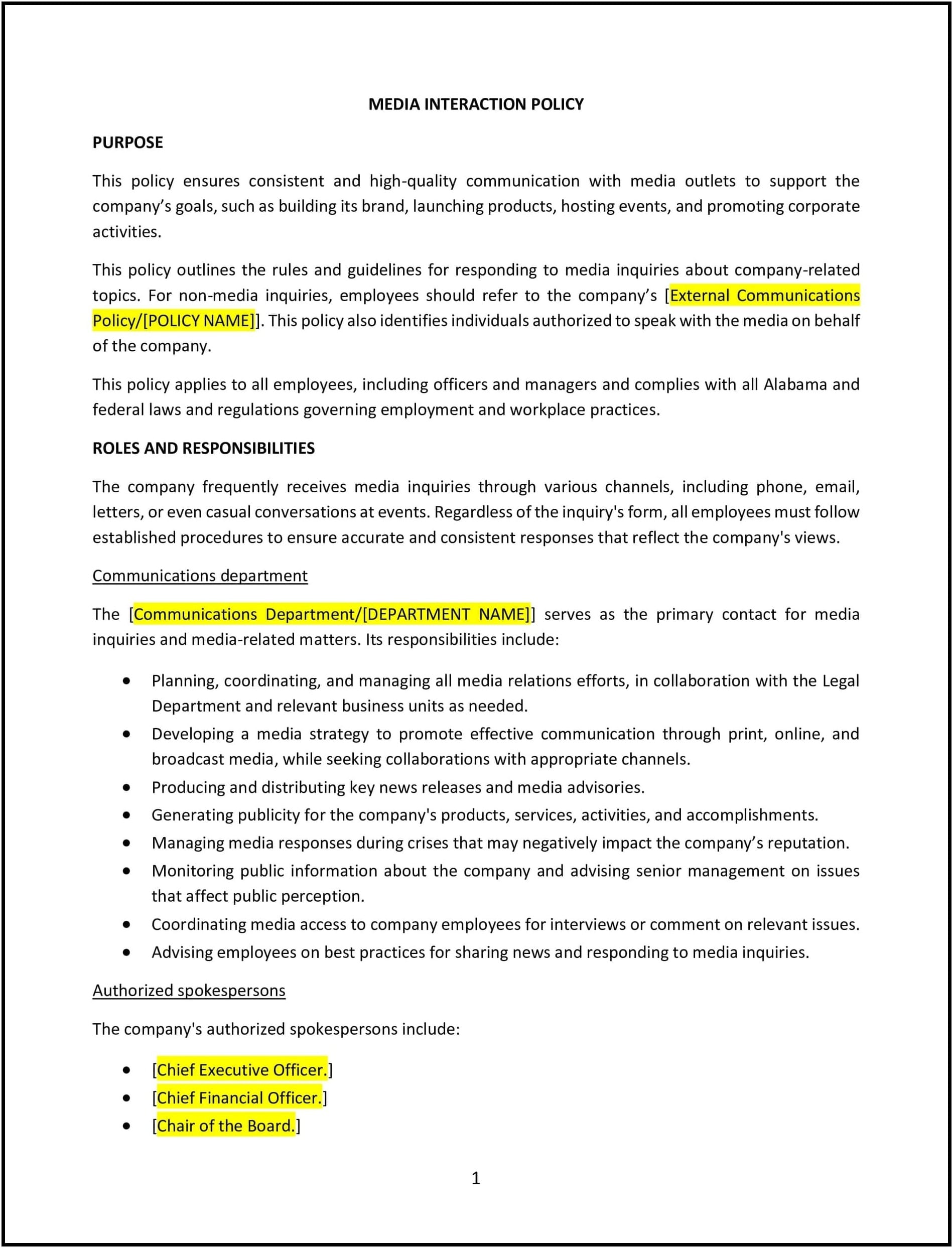
Media relations policy (Alabama)
A media relations policy establishes guidelines for managing communication between a company and external media outlets. For SMBs in Alabama, this policy helps ensure consistent messaging, protects the company’s reputation, and prevents the unauthorized release of sensitive or inaccurate information.
This policy provides a framework for identifying authorized spokespersons, approving media engagements, and responding to inquiries, fostering a professional and organized approach to public relations.
How to use this media relations policy (Alabama)
- Identify authorized spokespersons: Clearly specify who is permitted to represent the company in interactions with media outlets, such as executives or designated PR staff.
- Establish approval procedures: Require all media communications, including interviews, press releases, and public statements, to be approved by the appropriate department or personnel.
- Provide response protocols: Outline how employees should handle unsolicited media inquiries, such as directing them to the designated spokesperson.
- Include confidentiality safeguards: Emphasize the importance of protecting sensitive or proprietary information from being disclosed to the media.
- Address social media mentions: Provide guidelines for addressing media-related topics on social platforms, ensuring consistency with the company’s messaging.
Benefits of using a media relations policy (Alabama)
A clear and well-structured media relations policy benefits your business by fostering professionalism and protecting its reputation. Here’s how it helps:
- Ensures consistency: Aligns all media communications with the company’s messaging and values.
- Protects sensitive information: Minimizes the risk of accidental disclosure of confidential or proprietary details.
- Enhances reputation: Promotes a professional image by ensuring well-prepared and accurate responses to media inquiries.
- Reduces misinformation: Prevents unauthorized individuals from providing inaccurate or incomplete information.
- Supports crisis management: Establishes protocols for handling media during emergencies or sensitive situations.
Tips for implementing a media relations policy (Alabama)
- Train authorized spokespersons: Provide media training to designated representatives, focusing on interview techniques and managing challenging questions.
- Develop key messaging: Prepare a set of standard responses or talking points for common topics to ensure consistency.
- Monitor media activity: Regularly track mentions of your company in media outlets to address inaccuracies or leverage positive coverage.
- Update contact details: Maintain an up-to-date list of media contacts and ensure employees know who to direct inquiries to.
- Review and refine: Periodically evaluate the effectiveness of the policy and update it to reflect changing business needs or industry practices.