Got contracts to review? While you're here for policies, let Cobrief make contract review effortless—start your free review now.
Customize this template for free
Media relations policy (Alaska)
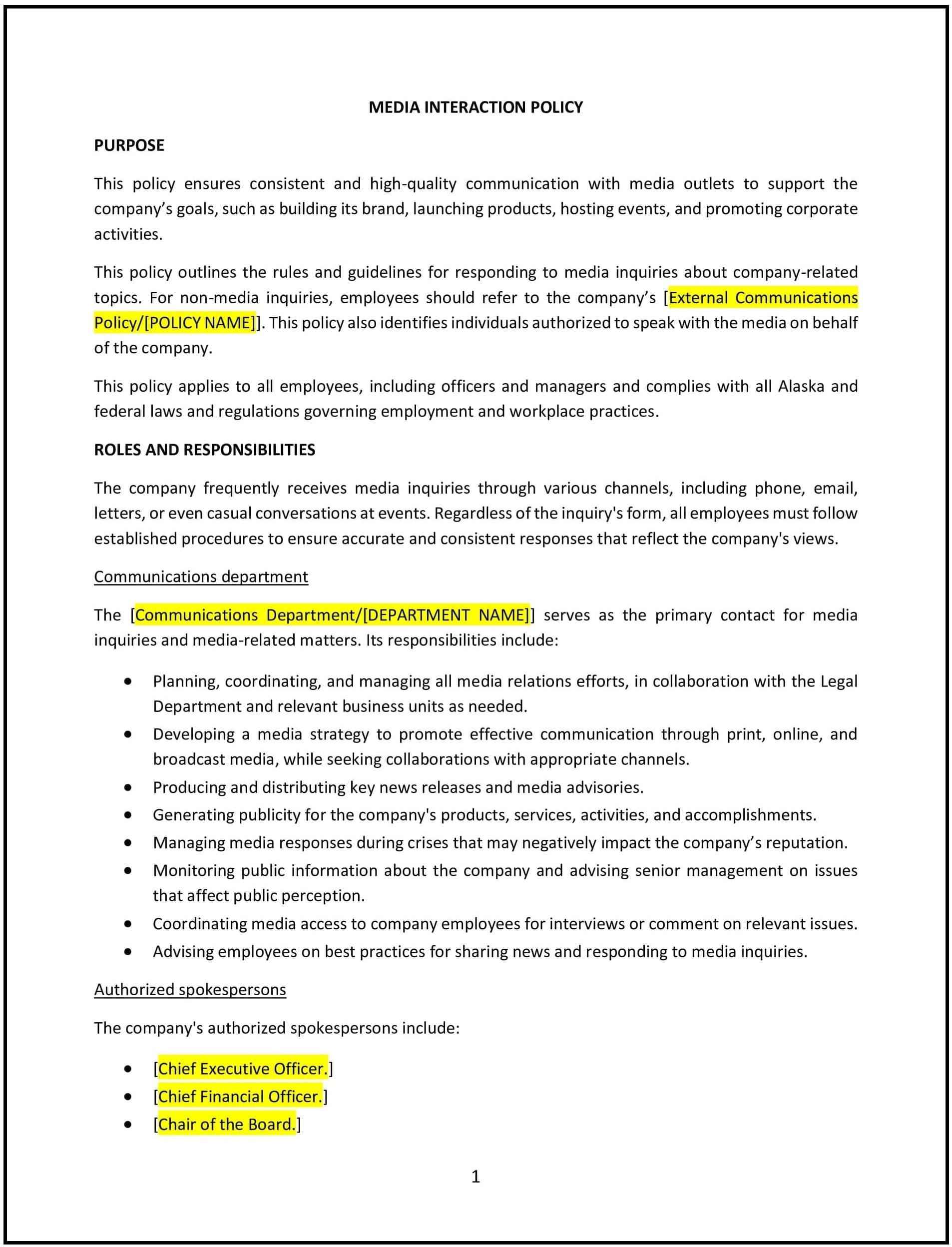
In Alaska, a media relations policy provides guidelines for how employees and management should interact with the media to ensure consistent messaging and protect the company’s reputation. This policy outlines the roles and responsibilities for communicating with journalists, responding to inquiries, and managing public statements. By implementing a clear media relations policy, businesses can handle media interactions professionally and reduce the risk of misinformation.
Given Alaska’s unique industries and remote communities, businesses may tailor their media relations policy to address region-specific concerns, such as cultural sensitivity or handling media in remote locations.
How to use this media relations policy (Alaska)
- Designate spokespersons: Identify individuals authorized to speak on behalf of the company, such as executives, PR representatives, or department heads.
- Define media inquiry procedures: Include clear steps for receiving, documenting, and responding to media inquiries, ensuring they are routed to the appropriate spokesperson.
- Set approval guidelines: Require prior approval for public statements, press releases, or interviews to ensure alignment with company messaging.
- Provide crisis communication protocols: Outline procedures for managing media relations during emergencies or controversies, including who handles responses and how they are delivered.
- Train employees: Offer training on how to handle unsolicited media contacts and redirect them appropriately to designated spokespersons.
Benefits of using a media relations policy (Alaska)
A media relations policy provides several advantages for businesses in Alaska. Here’s how it helps:
- Protects the company’s reputation: Ensures all public statements are accurate, consistent, and aligned with the company’s values and goals.
- Streamlines media interactions: Provides a clear framework for managing media inquiries and public communication, reducing confusion or delays.
- Reduces legal risks: Helps businesses avoid misstatements or unauthorized disclosures that could lead to legal issues.
- Enhances crisis management: Prepares the company to handle media scrutiny effectively during emergencies or controversies.
- Builds trust: Demonstrates professionalism and transparency in interactions with journalists and the public.
Tips for using a media relations policy (Alaska)
- Address local concerns: Include provisions for addressing media inquiries about Alaska-specific issues, such as environmental impacts or indigenous community relations.
- Monitor media coverage: Regularly track media mentions of the company to identify inaccuracies or emerging issues that may require a response.
- Establish a social media plan: Incorporate guidelines for managing media interactions on digital platforms, including responding to public comments or inquiries.
- Prepare for emergencies: Develop a crisis communication plan that includes pre-drafted messaging and designated roles for rapid response.
- Update regularly: Revise the policy as needed to reflect changes in company priorities, public relations strategies, or industry trends.