Got contracts to review? While you're here for policies, let Cobrief make contract review effortless—start your free review now.
Customize this template for free
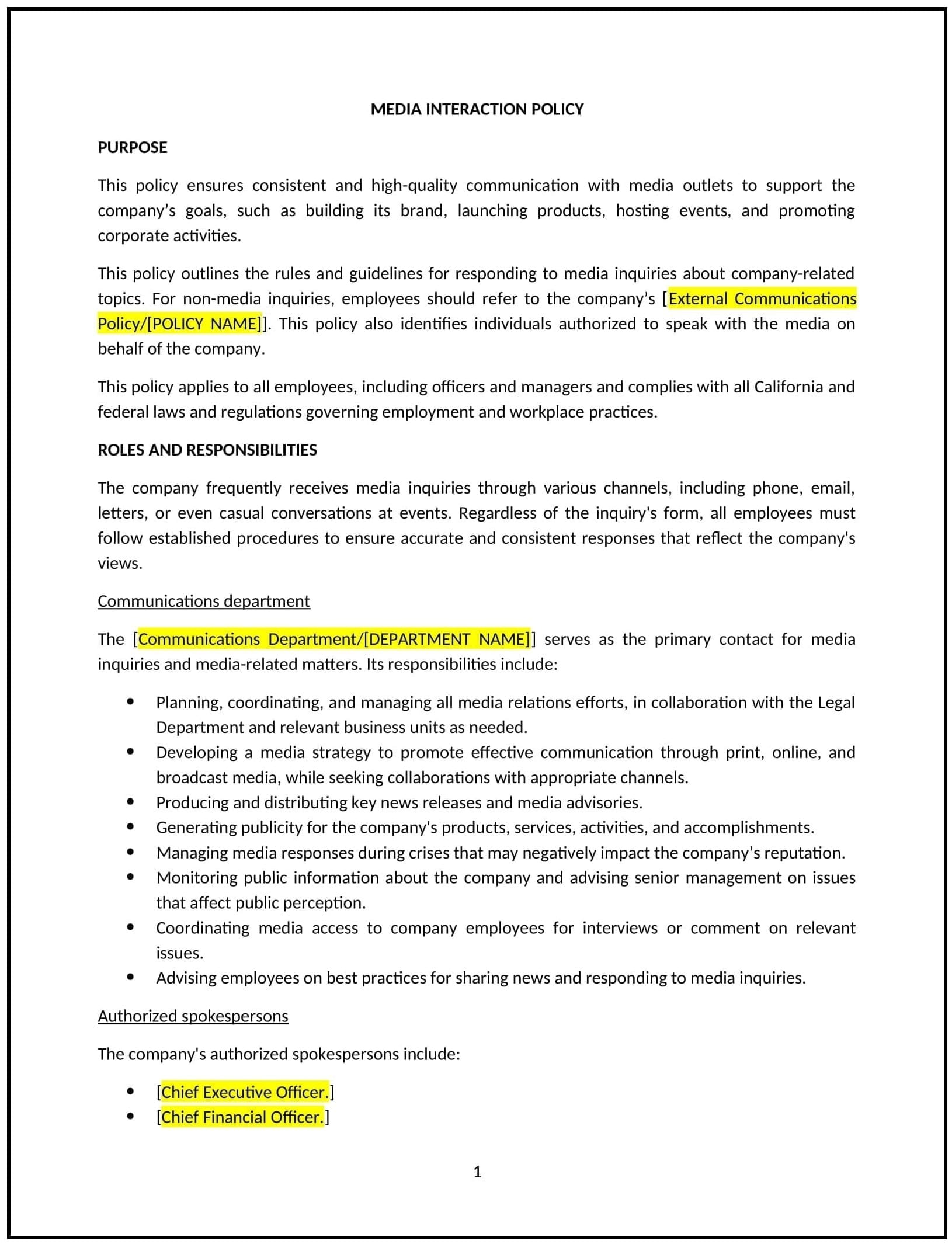
Media relations policy (California)
In California, a media relations policy provides businesses with guidelines for managing interactions with the media to ensure consistent, accurate, and professional communication. This policy supports compliance with state and federal laws, such as California’s privacy regulations and defamation laws, while protecting the business’s reputation.
This policy outlines the roles of authorized spokespersons, approval procedures for media communication, and the business’s expectations for employees regarding media interactions. By implementing this policy, California businesses can safeguard their public image and ensure legal compliance.
How to use this media relations policy (California)
- Designate spokespersons: Identify individuals authorized to represent the business in media interactions, such as executives or PR personnel.
- Establish approval procedures: Require that all media statements, interviews, and press releases are reviewed and approved by the designated team.
- Communicate employee responsibilities: Clearly state that only authorized personnel may engage with the media on behalf of the business.
- Address confidentiality: Prohibit the sharing of confidential or proprietary information with the media without explicit approval.
- Monitor media coverage: Regularly track media mentions of the business to address inaccuracies and assess public sentiment.
Benefits of using this media relations policy (California)
This policy offers several advantages for California businesses:
- Supports compliance: Reflects California’s privacy and defamation laws to ensure lawful media interactions.
- Protects reputation: Provides a structured approach to managing public communications, safeguarding the business’s image.
- Promotes consistency: Ensures that all external messaging aligns with the business’s values and objectives.
- Reduces risks: Minimizes the likelihood of unauthorized disclosures or miscommunications with the media.
- Enhances accountability: Clarifies roles and responsibilities for media interactions.
Tips for using this media relations policy (California)
- Reflect California-specific laws: Address privacy considerations and other state-specific regulations in media interactions.
- Train spokespersons: Provide media training for authorized personnel to enhance communication skills and preparedness.
- Use clear approval workflows: Implement a structured process for reviewing and approving media statements to ensure accuracy.
- Monitor compliance: Regularly review media-related activities to confirm adherence to the policy and identify improvement areas.
- Review regularly: Update the policy to reflect changes in California laws, business practices, or media trends.