Got contracts to review? While you're here for policies, let Cobrief make contract review effortless—start your free review now.
Customize this template for free
Media relations policy (Iowa)
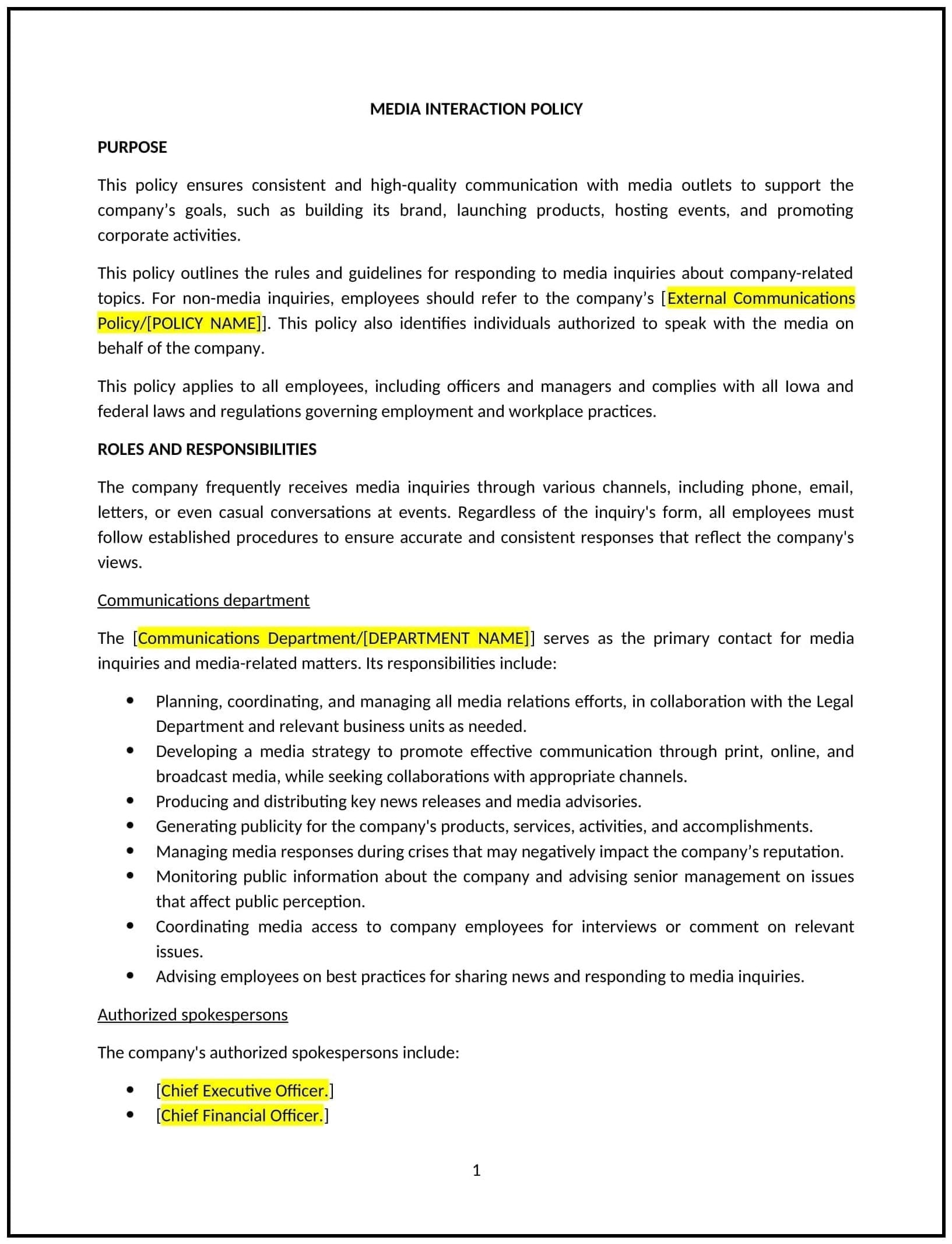
A media relations policy helps Iowa businesses manage interactions with the press and other media outlets, ensuring consistent, professional, and controlled communication. This policy defines who is authorized to speak on behalf of the company, how to handle media inquiries, and the processes for responding to press releases or public statements. By implementing this policy, businesses can protect their reputation, manage public perception, and build positive relationships with the media.
By adopting this policy, businesses in Iowa can streamline media interactions, ensure consistent messaging, and maintain control over the information being shared with the public.
How to use this media relations policy (Iowa)
- Define the media spokesperson(s): Clearly identify which employees are authorized to speak to the media on behalf of the company, such as executives, PR professionals, or designated spokespersons.
- Set guidelines for responding to media inquiries: Develop a process for how employees should respond to media inquiries, including when to escalate the inquiry to the designated spokesperson and how to maintain professionalism.
- Establish media monitoring procedures: Implement systems for monitoring media coverage to track mentions of the business, industry trends, and public sentiment.
- Develop media release protocols: Outline how press releases are created, reviewed, and distributed, including approval processes and distribution channels.
- Address social media interactions: Include guidelines for how employees should engage with the media on social media platforms, ensuring that posts align with company values and messaging.
- Provide crisis communication guidelines: Outline procedures for responding to negative media coverage or a PR crisis, including who is responsible for managing communications and how to protect the company’s reputation.
- Review and update regularly: Periodically assess and update the policy to reflect changes in media trends, business needs, and communication technologies.
Benefits of using this media relations policy (Iowa)
This policy offers several key benefits for Iowa businesses:
- Protects company reputation: Clear guidelines on media interactions help businesses manage how they are portrayed in the press, reducing the risk of miscommunication or negative publicity.
- Ensures consistent messaging: Having designated spokespersons and standardized procedures ensures that all media communications reflect the company’s key messages and values.
- Builds positive media relationships: A well-defined media relations strategy helps businesses foster positive relationships with journalists, media outlets, and industry influencers.
- Minimizes crisis impact: Clear crisis communication protocols help businesses respond effectively to negative media coverage, protecting their reputation during challenging situations.
- Increases operational efficiency: A structured process for responding to media inquiries and distributing press releases streamlines communications, saving time and resources.
- Supports brand credibility: By controlling how information is shared with the public, businesses can build trust and credibility with their audience.
Tips for using this media relations policy (Iowa)
- Designate trained spokespersons: Ensure that only individuals who are well-trained and informed are authorized to speak to the media, preventing misinformation or unintended remarks.
- Respond to media inquiries promptly: Businesses should acknowledge media inquiries as quickly as possible, even if the full response is delayed, to maintain professionalism and build trust.
- Keep messages simple and clear: When interacting with the media, businesses should focus on delivering concise, straightforward messages that align with company values and objectives.
- Foster media relationships: Encourage proactive engagement with the media, such as offering expert opinions, participating in interviews, or hosting media events to establish a positive presence.
- Stay consistent: Ensure that all media interactions, whether by email, phone, or social media, are consistent with the company’s brand voice and values.
- Monitor media coverage: Regularly track media mentions and public perception to adjust messaging or respond to emerging stories as needed.
- Prepare for crises: Businesses should have a crisis communication plan in place, with predefined responses and designated personnel to manage sensitive situations.