Got contracts to review? While you're here for policies, let Cobrief make contract review effortless—start your free review now.
Customize this template for free
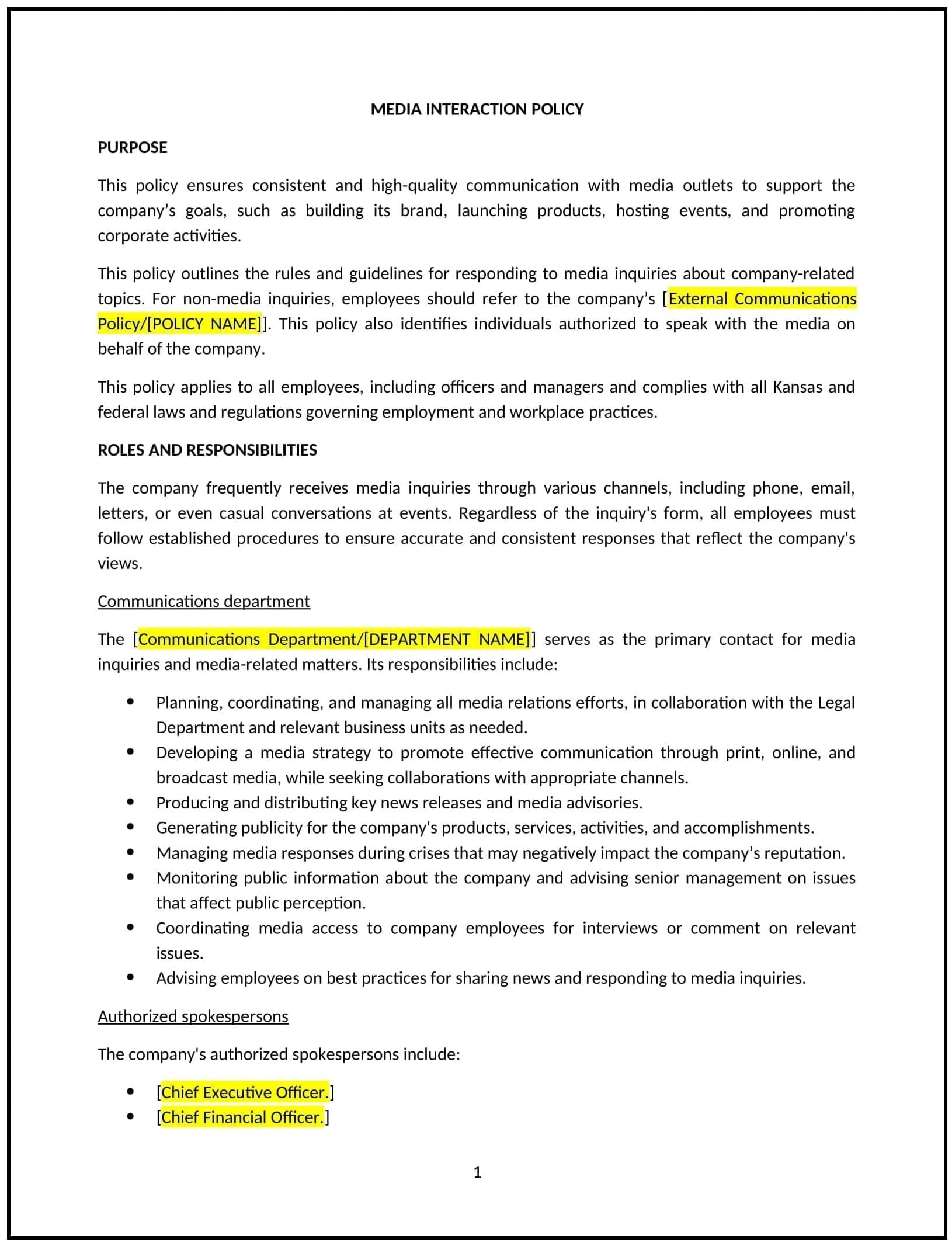
Media relations policy (Kansas)
A media relations policy helps Kansas businesses manage interactions with the media, ensuring that all public communications reflect the company’s values and goals. This policy outlines the procedures for responding to media inquiries, issuing press releases, and maintaining a consistent and professional image in all media interactions.
By implementing this policy, businesses can maintain control over their public messaging, protect their reputation, and foster positive relationships with the media.
How to use this media relations policy (Kansas)
- Define key spokespersons: Businesses should designate specific employees, such as senior management or PR personnel, who are authorized to speak with the media and represent the company.
- Establish media inquiry procedures: Businesses should provide clear instructions on how media inquiries should be handled, including how employees should refer journalists to the appropriate spokesperson.
- Outline approval processes for media statements: Businesses should specify the process for approving any public statements, press releases, or social media posts before they are shared with the media to ensure consistency and accuracy.
- Set guidelines for engaging with the media: Businesses should establish how employees should respond to media inquiries, emphasizing the importance of professionalism, confidentiality, and consistency in messaging.
- Define crisis communication protocols: Businesses should have a plan for handling media interactions in the event of a crisis, such as a product recall, lawsuit, or public relations issue.
- Address social media engagement: Businesses should set clear guidelines for social media interactions, specifying which employees can make statements on behalf of the company and what topics are acceptable for public discussion.
- Review and update regularly: Businesses should periodically review the policy to ensure it aligns with current media trends, company practices, and legal requirements.
Benefits of using a media relations policy (Kansas)
- Protects the company’s reputation: By managing media interactions carefully, businesses can ensure that their public image remains intact and that any negative press is addressed promptly.
- Promotes consistency in messaging: A formal media relations policy helps ensure that all statements and communications from the company are consistent and aligned with the company’s goals and values.
- Reduces the risk of miscommunication: Clear guidelines prevent miscommunication or unauthorized statements from employees, reducing the likelihood of inaccurate or harmful media coverage.
- Enhances media relationships: A professional, organized approach to media interactions helps build strong, trusting relationships with journalists and media outlets.
- Streamlines media inquiries: By having a clear process for handling media inquiries, businesses can respond quickly and efficiently, reducing delays and improving media relations.
- Prepares for crises: A crisis communication plan allows businesses to respond quickly and effectively in the event of negative press, helping to minimize damage to the company’s reputation.
Tips for using this media relations policy (Kansas)
- Communicate the policy clearly: Businesses should ensure that all employees are aware of the media relations policy and understand their role in handling media inquiries.
- Provide media training: Key employees, particularly those designated as spokespersons, should receive media training to ensure they handle interviews and inquiries professionally.
- Monitor media coverage: Businesses should regularly monitor media coverage to track their company’s image and address any inaccuracies or issues promptly.
- Handle crisis communication proactively: Businesses should have a crisis communication plan in place, detailing how to respond to negative media attention and mitigate potential damage.
- Maintain confidentiality: Employees should be reminded to respect confidentiality and not disclose sensitive or non-public information to the media.
- Regularly update the policy: Businesses should review and update the policy periodically to ensure it reflects current trends in media relations and new communication channels.