Media relations policy (Mississippi): Free template
Got contracts to review? While you're here for policies, let Cobrief make contract review effortless—start your free review now.
Customize this template for free
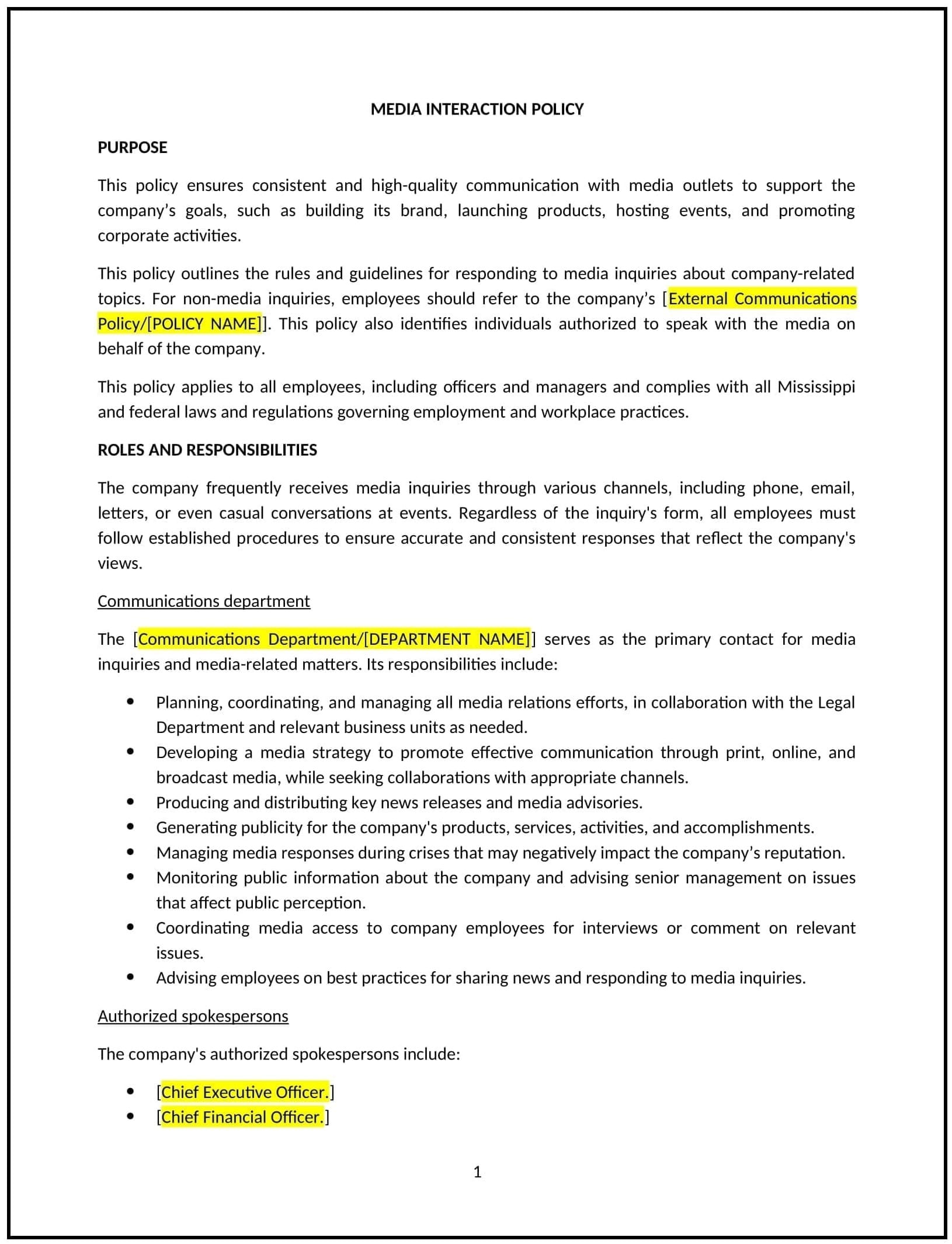
Media relations policy (Mississippi)
A media relations policy helps Mississippi businesses manage interactions with the media, ensuring that all communications are consistent, professional, and aligned with the company’s values. This policy provides guidelines on how to respond to media inquiries, handle press releases, and maintain a positive public image while protecting sensitive company information.
By adopting this policy, businesses can build strong relationships with the media, manage public perception, and safeguard their reputation, all while ensuring that employees know how to interact with the press in a way that reflects the company's objectives.
How to use this media relations policy (Mississippi)
- Designate a spokesperson: Appoint one or more official company spokespersons who are authorized to speak with the media. This ensures that all communications are consistent and well-coordinated.
- Establish guidelines for media inquiries: Specify that media inquiries should be directed to the designated spokesperson(s). Outline the procedure for employees to follow if they are contacted by the press, including how to refer inquiries to the appropriate party.
- Handle press releases carefully: Provide guidelines for issuing press releases, including the need for approval from key stakeholders, such as senior management or the legal department, before distribution.
- Set rules for social media and online presence: Include guidelines for how employees should engage with the media or public via social media, ensuring that they avoid making unauthorized statements about the company or its activities.
- Maintain confidentiality: Emphasize the importance of confidentiality when speaking with the media, ensuring that employees do not disclose sensitive company information without prior approval.
- Respond to media crises: Outline the procedure for handling media crises or negative publicity. This includes when and how to issue public statements, how to engage with the media, and how to address any inaccuracies or misrepresentations.
- Encourage proactive communication: Encourage the proactive sharing of positive company news with the media, such as new product launches, awards, or community initiatives.
- Review and update the policy regularly: Media relations policies should be reviewed periodically to ensure they reflect current practices, evolving media landscapes, and any changes in company operations.
Benefits of using this media relations policy (Mississippi)
This policy offers several benefits for Mississippi businesses:
- Protects company reputation: Clear media guidelines help businesses manage how they are portrayed in the press, ensuring that communications are consistent and aligned with the company’s values and objectives.
- Improves media engagement: Establishing clear channels of communication and a designated spokesperson ensures businesses are well-prepared for media interactions, making it easier to foster positive relationships with the press.
- Prevents unauthorized disclosures: By limiting who can speak to the media, businesses reduce the risk of sensitive information being disclosed inappropriately.
- Enhances crisis management: A media relations policy helps businesses effectively manage negative publicity or media crises, ensuring a timely and coordinated response.
- Promotes consistency in messaging: The policy ensures that all public communications are consistent and reflect the company’s brand and values, reducing the risk of mixed messages or misunderstandings.
Tips for using this media relations policy (Mississippi)
- Train employees: Provide regular training to employees on how to handle media inquiries, particularly those in roles that may interact with the press. This helps avoid unintentional leaks or misinformation.
- Monitor media coverage: Regularly track media coverage of the company to ensure that it aligns with the company’s values and objectives. If necessary, issue corrections or clarifications to ensure the accuracy of the information being shared.
- Develop crisis communication plans: Prepare for potential media crises by developing a crisis communication plan that includes specific protocols for dealing with negative press.
- Encourage transparency: Be open and transparent with the media, while adhering to the company’s confidentiality standards. Clear, honest communication helps build trust with the media and the public.
- Create media guidelines: Develop a comprehensive set of media guidelines that employees can refer to, ensuring that they understand how to handle media inquiries and the importance of referring requests to the appropriate spokesperson.
- Review and update regularly: The media relations policy should be regularly reviewed and updated to keep up with changes in media practices, technology, or company strategy.