Got contracts to review? While you're here for policies, let Cobrief make contract review effortless—start your free review now.
Customize this template for free
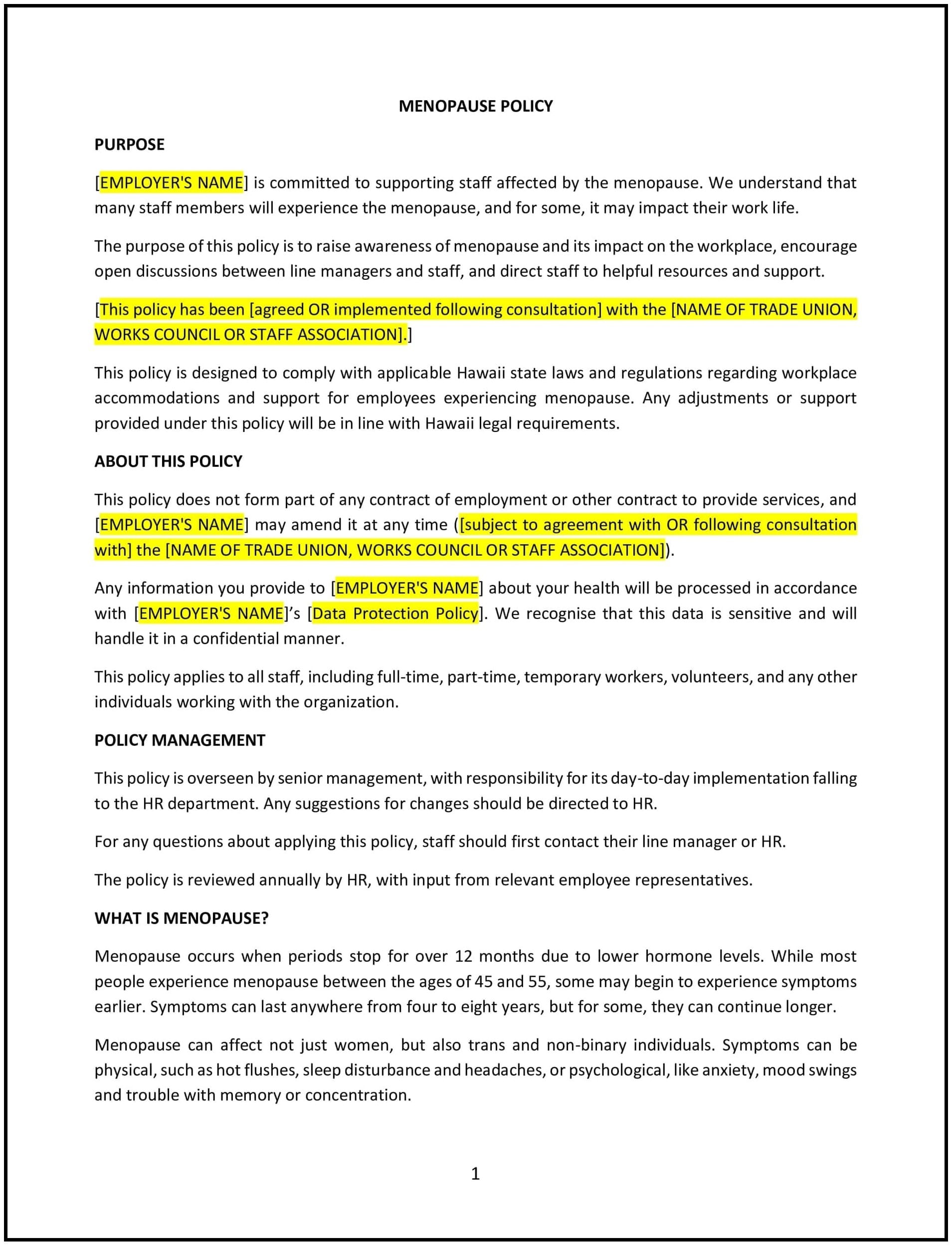
Menopause policy (Hawaiʻi)
A menopause policy helps Hawaiʻi businesses establish guidelines for supporting employees experiencing menopause or perimenopause. This policy outlines accommodations, resources, and procedures to create a supportive and inclusive workplace, while addressing Hawaiʻi’s unique cultural and workplace dynamics. It is designed to promote employee well-being, reduce stigma, and foster a culture of understanding and respect.
By implementing this policy, businesses in Hawaiʻi can improve employee morale, retain experienced talent, and demonstrate a commitment to inclusivity and employee care.
How to use this menopause policy (Hawaiʻi)
- Define menopause and perimenopause: Provide clear definitions and examples of symptoms, such as hot flashes, fatigue, or difficulty concentrating, to increase awareness and understanding.
- Offer accommodations: Outline potential workplace adjustments, such as flexible work hours, access to cooling fans, or private rest areas, to help employees manage symptoms.
- Promote open communication: Encourage employees to discuss their needs with managers or HR in a confidential and supportive environment.
- Provide resources: Share information about menopause, including educational materials, support groups, or access to healthcare professionals.
- Train managers: Educate supervisors on how to recognize menopause-related challenges, provide support, and implement accommodations.
- Communicate the policy: Share the policy with employees during onboarding and through internal communications to ensure awareness and understanding.
- Monitor effectiveness: Regularly review the policy’s implementation and gather feedback from employees to identify areas for improvement.
- Review and update the policy: Regularly assess the policy’s effectiveness and make adjustments as needed to reflect changes in workplace dynamics or employee needs.
Benefits of using this menopause policy (Hawaiʻi)
This policy offers several advantages for Hawaiʻi businesses:
- Supports employee well-being: Providing accommodations and resources helps employees manage menopause symptoms and maintain productivity.
- Reduces stigma: Open discussions about menopause foster a culture of understanding and reduce embarrassment or discrimination.
- Retains experienced talent: Supporting employees through menopause can improve job satisfaction and loyalty, reducing turnover.
- Enhances workplace culture: A compassionate approach to menopause creates a positive and inclusive work environment.
- Aligns with inclusivity goals: The policy demonstrates the business’s commitment to supporting employees at all stages of life.
- Encourages accountability: Managers understand their responsibilities for providing support and accommodations to employees experiencing menopause.
- Builds trust: Employees are more likely to trust leadership when they see a commitment to addressing their needs.
Tips for using this menopause policy (Hawaiʻi)
- Communicate the policy effectively: Share the policy with employees during onboarding and through regular reminders, such as emails or training sessions.
- Provide training: Educate managers on how to recognize menopause-related challenges, provide support, and implement accommodations.
- Be flexible: Offer accommodations such as flexible work hours, remote work options, or adjusted responsibilities to help employees manage symptoms.
- Encourage feedback: Gather input from employees to identify areas for improvement and ensure the policy meets their needs.
- Monitor effectiveness: Regularly review the policy’s implementation and gather feedback from employees to identify areas for improvement.
- Be transparent: Clearly explain the policy’s purpose, benefits, and expectations to employees to build trust and cooperation.
- Review the policy periodically: Update the policy as needed to reflect changes in workplace dynamics or employee needs.