Got contracts to review? While you're here for policies, let Cobrief make contract review effortless—start your free review now.
Customize this template for free
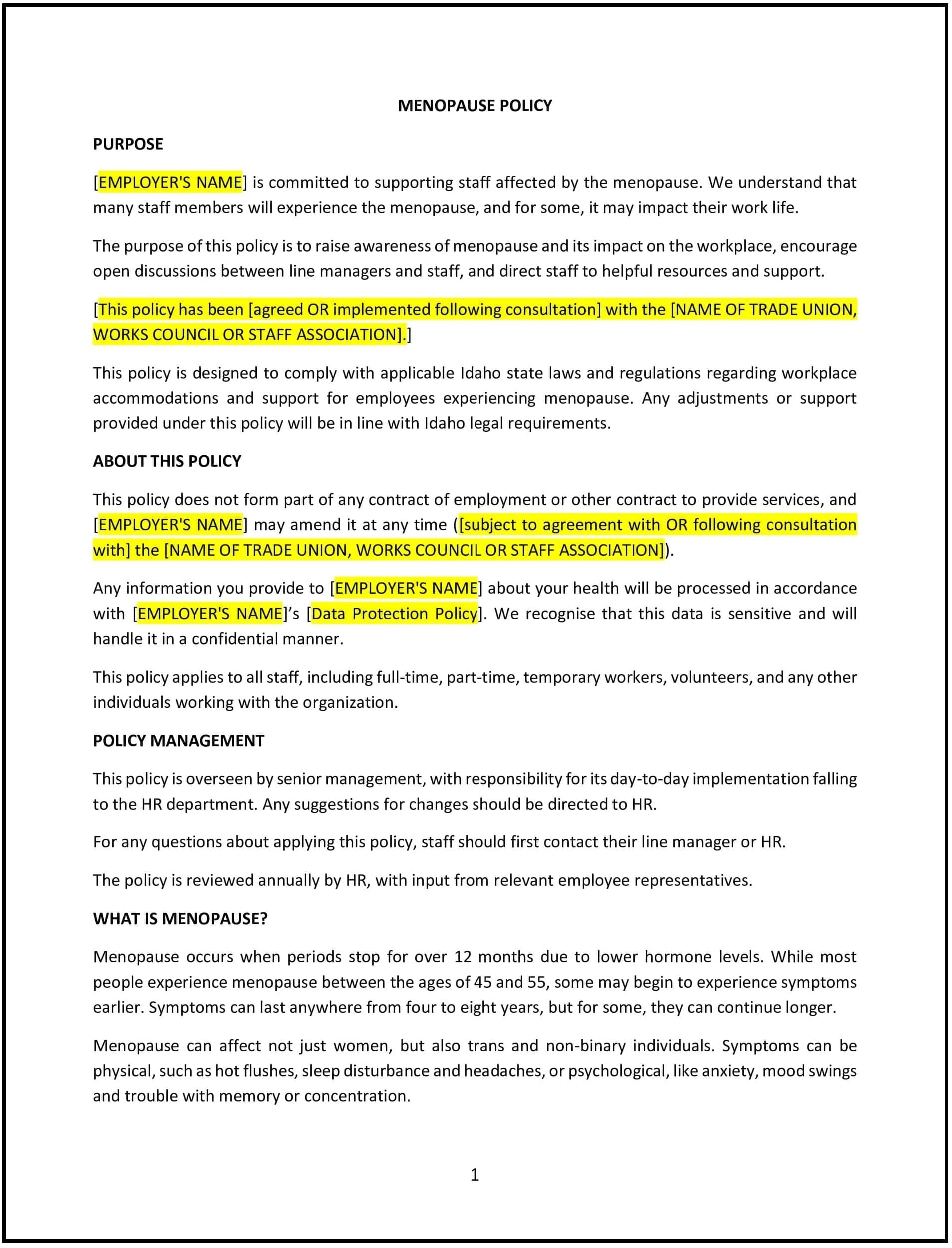
Menopause policy (Idaho)
A menopause policy helps Idaho businesses support employees experiencing menopause by creating a supportive and inclusive workplace environment. This policy outlines accommodations, resources, and guidelines for addressing menopause-related challenges, such as flexible work arrangements, access to health resources, and open communication. It also emphasizes the importance of fostering a culture of understanding and respect.
By implementing this policy, businesses can promote employee well-being, enhance productivity, and demonstrate their commitment to inclusivity and support for all employees.
How to use this menopause policy (Idaho)
- Raise awareness: Educate managers and employees about menopause and its potential impact on work performance and well-being. This helps reduce stigma and fosters a supportive environment.
- Provide accommodations: Offer flexible work arrangements, such as adjusted schedules, remote work options, or additional breaks, to help employees manage menopause symptoms.
- Ensure access to resources: Provide information about health resources, such as employee assistance programs (EAPs), counseling services, or wellness initiatives, to support employees during menopause.
- Encourage open communication: Create a culture where employees feel comfortable discussing menopause-related needs with their managers or HR without fear of judgment or discrimination.
- Train managers: Equip managers with the knowledge and skills to support employees experiencing menopause, including how to handle accommodation requests and maintain confidentiality.
- Promote inclusivity: Ensure the policy aligns with the business’s broader diversity and inclusion goals, emphasizing respect and support for all employees.
- Review and update the policy: Regularly assess the policy’s effectiveness and make adjustments based on employee feedback, changing workplace needs, or new resources.
Benefits of using this menopause policy (Idaho)
This policy provides several advantages for Idaho businesses:
- Supports employee well-being: Providing accommodations and resources helps employees manage menopause symptoms, improving their overall health and job satisfaction.
- Enhances productivity: Addressing menopause-related challenges can reduce absenteeism and presenteeism, allowing employees to perform at their best.
- Fosters inclusivity: A supportive policy demonstrates the business’s commitment to creating an inclusive workplace for employees of all ages and life stages.
- Builds trust and loyalty: Employees are more likely to feel valued and supported, leading to higher retention rates and stronger workplace morale.
- Reduces stigma: Open communication and education about menopause help normalize the conversation and create a more understanding work environment.
- Aligns with diversity goals: The policy reinforces the business’s dedication to supporting diverse needs and promoting equity in the workplace.
Tips for using this menopause policy (Idaho)
- Communicate the policy clearly: Share the policy with employees through onboarding materials, training sessions, or internal communication platforms to ensure awareness and understanding.
- Provide training: Offer workshops or seminars on menopause awareness to educate employees and managers about its impact and how to support colleagues.
- Create a supportive culture: Encourage open dialogue about menopause and other health-related topics to reduce stigma and foster a sense of community.
- Monitor accommodations: Regularly review accommodation requests and their effectiveness to ensure employees receive the support they need.
- Gather feedback: Solicit input from employees about the policy’s effectiveness and areas for improvement to ensure it meets their needs.
- Partner with health providers: Collaborate with local health organizations or EAPs to provide additional resources and support for employees experiencing menopause.