Got contracts to review? While you're here for policies, let Cobrief make contract review effortless—start your free review now.
Customize this template for free
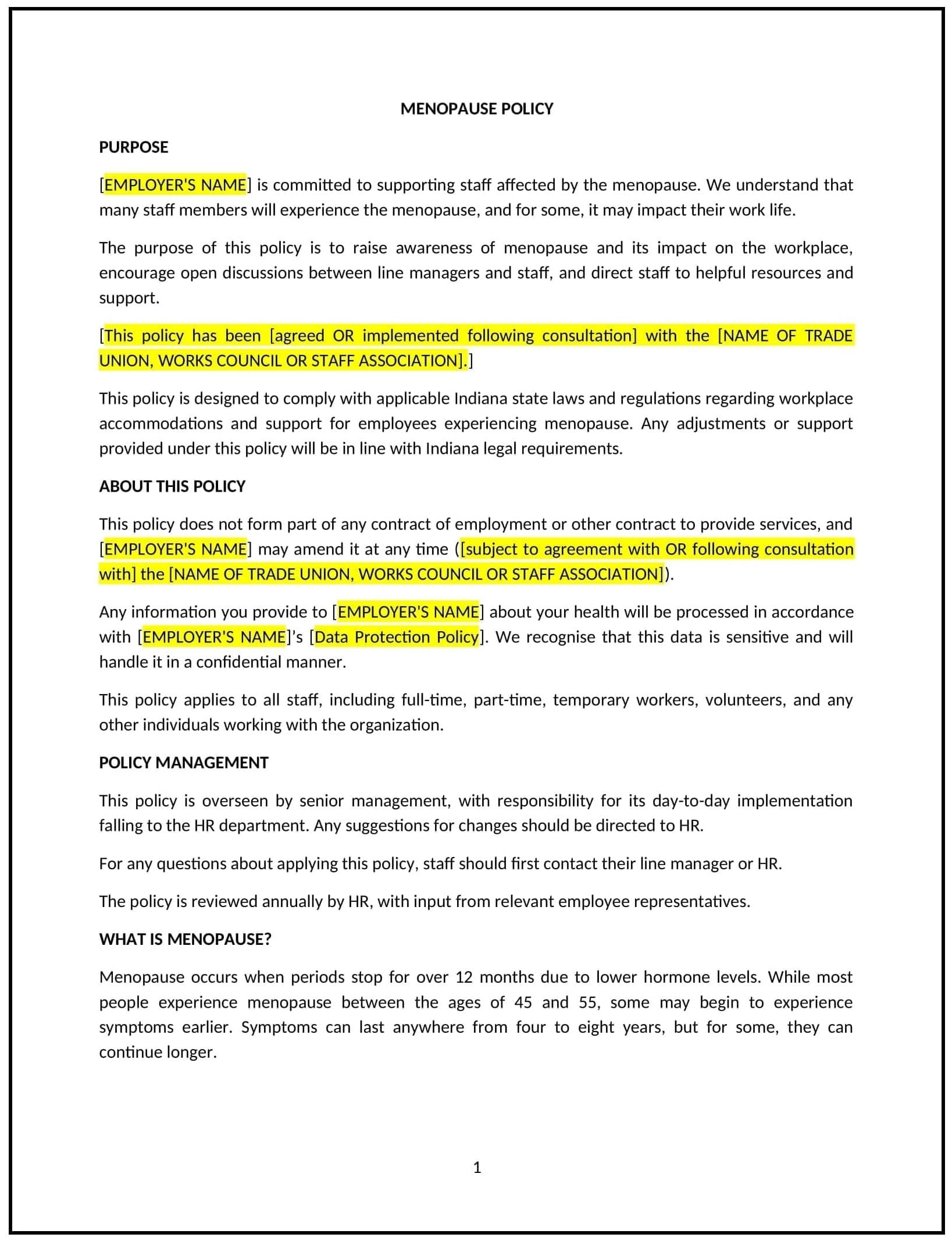
Menopause policy (Indiana): Free template
The menopause policy helps Indiana businesses provide a supportive and inclusive environment for employees experiencing menopause or perimenopause. This policy outlines the company’s commitment to addressing the specific health, workplace, and well-being challenges that employees may face during this stage of life. It provides guidance on how to create a supportive work environment, including flexible work arrangements, access to medical support, and open communication channels. By using this template, businesses can ensure they are creating an environment where employees experiencing menopause feel comfortable and supported in maintaining their health and productivity.
By implementing this policy, Indiana businesses can promote employee well-being, improve retention, reduce workplace stigma, and foster a more inclusive culture that supports all stages of an employee’s life.
How to use this menopause policy (Indiana)
- Define menopause and perimenopause: Clearly define menopause and perimenopause, explaining the physical and emotional symptoms that employees may experience. The policy should address common symptoms, such as hot flashes, fatigue, mood changes, and sleep disturbances, while emphasizing that menopause affects each individual differently.
- Promote open communication: Encourage employees to speak with their managers or HR if they need support related to menopause. The policy should outline how employees can raise concerns or request accommodations confidentially, ensuring they feel comfortable discussing their needs without fear of discrimination.
- Offer flexible working arrangements: Provide options for flexible working hours, remote work, or breaks to help employees manage symptoms effectively. The policy should outline how flexible work arrangements can be implemented and encourage managers to be understanding of individual needs.
- Ensure access to health and wellness support: Offer access to health and wellness resources, including counseling services, employee assistance programs (EAP), or guidance on seeking medical support for menopause-related symptoms. The policy should clarify how employees can access these resources.
- Address the physical work environment: Consider adjustments to the physical work environment, such as temperature control or access to quiet spaces, to accommodate employees experiencing symptoms like hot flashes. The policy should ensure that employees are provided with a comfortable and supportive workspace.
- Ensure privacy and confidentiality: Emphasize that any discussions or accommodations related to menopause will be kept confidential, and ensure employees that their health concerns will be handled with respect and sensitivity.
- Provide training for managers: Train managers and HR staff on menopause-related issues to ensure they can provide appropriate support and accommodations. The policy should specify that training should cover understanding menopause, how to have supportive conversations, and how to manage reasonable adjustments.
- Encourage awareness and reduce stigma: The policy should promote awareness of menopause and its impact, aiming to reduce stigma or embarrassment around the topic. Encourage the inclusion of menopause awareness in diversity and inclusion programs to foster a supportive workplace culture.
- Regularly review the policy: Regularly review the policy to ensure it remains relevant and up-to-date, particularly in light of changes to workplace regulations, best practices, or employee feedback. The policy should evolve as necessary to continue meeting employees’ needs.
Benefits of using this menopause policy (Indiana)
Implementing this policy provides several key benefits for Indiana businesses:
- Supports employee well-being: By acknowledging and accommodating menopause-related health concerns, the business fosters a healthier, more supportive environment for affected employees, improving their overall well-being.
- Improves employee retention: Offering support during menopause can help retain valuable employees who might otherwise leave due to unaddressed symptoms or lack of workplace support.
- Reduces stigma and discrimination: A clear and open policy helps reduce stigma around menopause, ensuring that employees feel safe discussing and managing their symptoms without fear of discrimination or embarrassment.
- Increases productivity: By providing employees with the flexibility and support they need to manage their symptoms, businesses can reduce the impact of menopause-related health issues on productivity and performance.
- Enhances company reputation: A business that actively supports employees experiencing menopause demonstrates a commitment to inclusivity, diversity, and employee health, which can improve its reputation as a desirable employer.
- Promotes inclusivity and diversity: The policy helps create a more inclusive and diverse workplace, ensuring that employees of all ages and life stages feel valued and supported.
Tips for using this menopause policy (Indiana)
- Communicate the policy effectively: Ensure that all employees are aware of the menopause policy by including it in the employee handbook, onboarding materials, and internal communications. Employees should be made aware of the available support options and how to access them.
- Train managers and HR staff: Provide training for managers and HR staff to ensure they understand menopause-related issues and can offer appropriate support. This should include awareness training on the symptoms of menopause, as well as how to engage in sensitive conversations and manage reasonable accommodations.
- Encourage openness and support: Create an open and supportive environment by encouraging employees to speak up if they need accommodations related to menopause. Foster a culture where employees feel comfortable discussing their health needs without fear of judgment or retaliation.
- Regularly assess the policy’s effectiveness: Gather feedback from employees to assess how well the policy is meeting their needs. Consider conducting anonymous surveys or one-on-one check-ins with employees to ensure the policy continues to be effective and relevant.
- Provide health and wellness resources: Ensure employees have access to appropriate resources, such as counseling, medical guidance, or wellness programs, that support their overall health and well-being during menopause.