Got contracts to review? While you're here for policies, let Cobrief make contract review effortless—start your free review now.
Customize this template for free
Menopause policy (Minnesota)
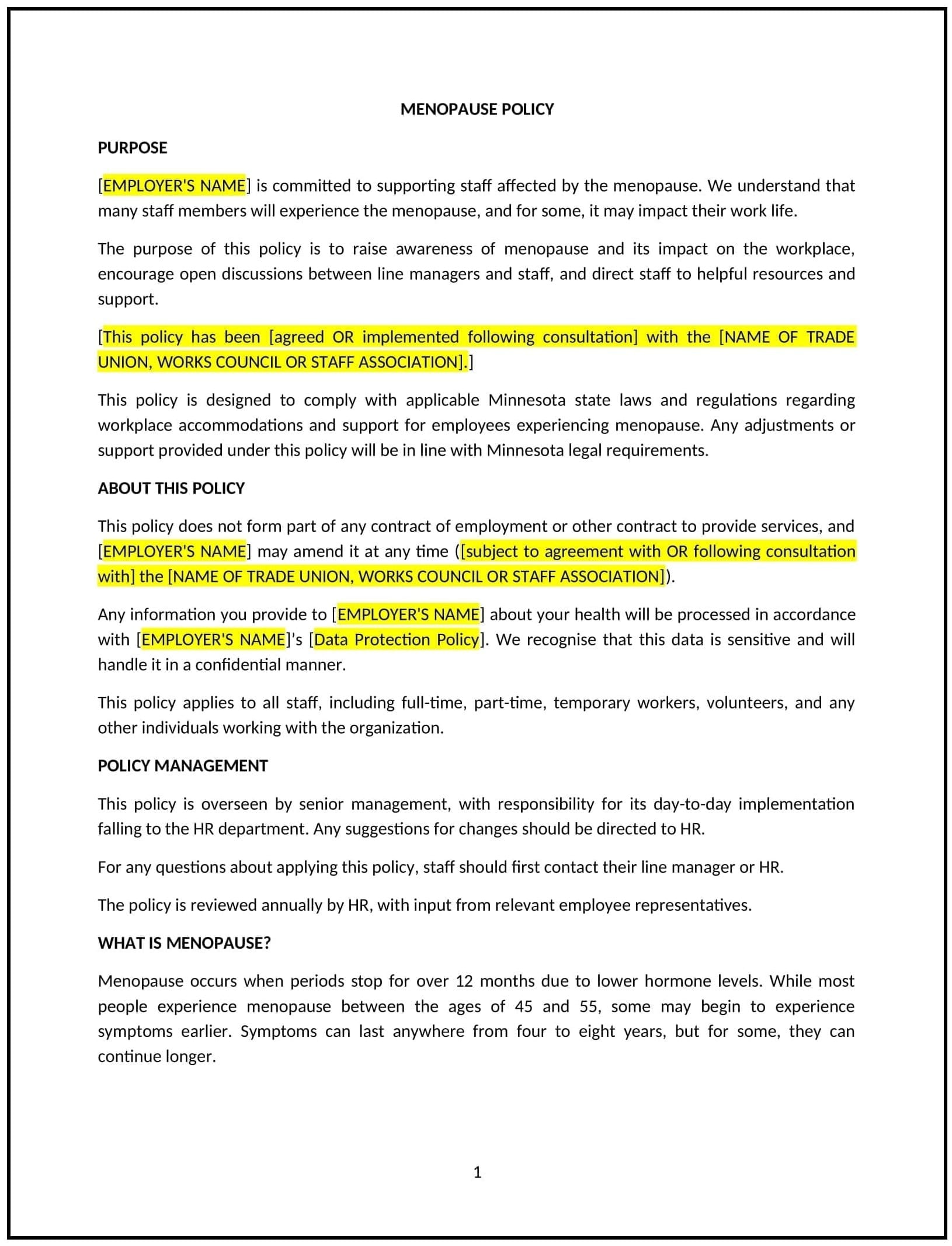
This menopause policy is designed to help Minnesota businesses provide support to employees experiencing menopause or perimenopause symptoms. The policy outlines the company’s commitment to fostering an inclusive work environment by recognizing the impact of menopause and providing reasonable accommodations to employees facing challenges related to this stage of life. It ensures that employees can manage their symptoms without the fear of stigma, while maintaining productivity and well-being.
By implementing this policy, businesses can support employees' health and work-life balance, improve employee satisfaction, and foster a supportive and inclusive workplace.
How to use this menopause policy (Minnesota)
- Define menopause and symptoms: Clearly explain what menopause and perimenopause are, including common symptoms such as hot flashes, fatigue, mood swings, and memory issues. This helps employees understand the context and encourages open dialogue.
- Offer reasonable accommodations: Specify the types of accommodations the company is willing to provide, such as flexible working hours, access to cool spaces, additional breaks, or adjustments to work duties to alleviate symptoms.
- Set up a confidential process: Establish a process for employees to confidentially request accommodations related to menopause, ensuring that personal health information is handled with sensitivity and respect.
- Encourage open communication: Encourage employees to communicate their needs and concerns regarding menopause and to feel comfortable asking for support, whether through HR or a designated manager.
- Provide resources and support: Offer resources such as Employee Assistance Programs (EAPs), counseling, or information about menopause-related health issues, ensuring employees have access to the support they need.
- Train managers and HR staff: Provide training for managers and HR personnel on how to support employees going through menopause, emphasizing sensitivity, respect, and non-discrimination.
Benefits of using a menopause policy (Minnesota)
Implementing this policy provides several advantages for Minnesota businesses:
- Supports employee well-being: Providing support for employees experiencing menopause or perimenopause helps ensure their physical and emotional well-being, fostering a healthier, more productive work environment.
- Reduces absenteeism: By offering reasonable accommodations and flexible work arrangements, businesses can help employees manage their symptoms, reducing the likelihood of absenteeism.
- Enhances inclusivity and diversity: A menopause policy promotes inclusivity by addressing the unique needs of employees going through menopause, which can improve employee morale and retention.
- Boosts employee engagement: Employees who feel supported and understood are more likely to remain engaged with their work and committed to the organization.
- Reflects Minnesota-specific considerations: Tailors the policy to comply with Minnesota’s workplace regulations and takes into account local attitudes and support systems regarding menopause in the workplace.
Tips for using this menopause policy (Minnesota)
- Communicate clearly: Ensure that employees are informed about the menopause policy, including how they can access support and request accommodations.
- Maintain privacy: Ensure all menopause-related discussions are handled confidentially, respecting employees’ privacy and health information.
- Be proactive: Encourage employees to proactively request accommodations when they are experiencing symptoms, rather than waiting until issues become more pronounced.
- Train staff: Provide regular training to HR and managerial staff on how to approach menopause-related issues in the workplace, fostering a supportive and non-judgmental atmosphere.
- Review regularly: Periodically review the policy to ensure it continues to meet the needs of employees and aligns with any changes in local laws, medical advancements, or employee feedback.