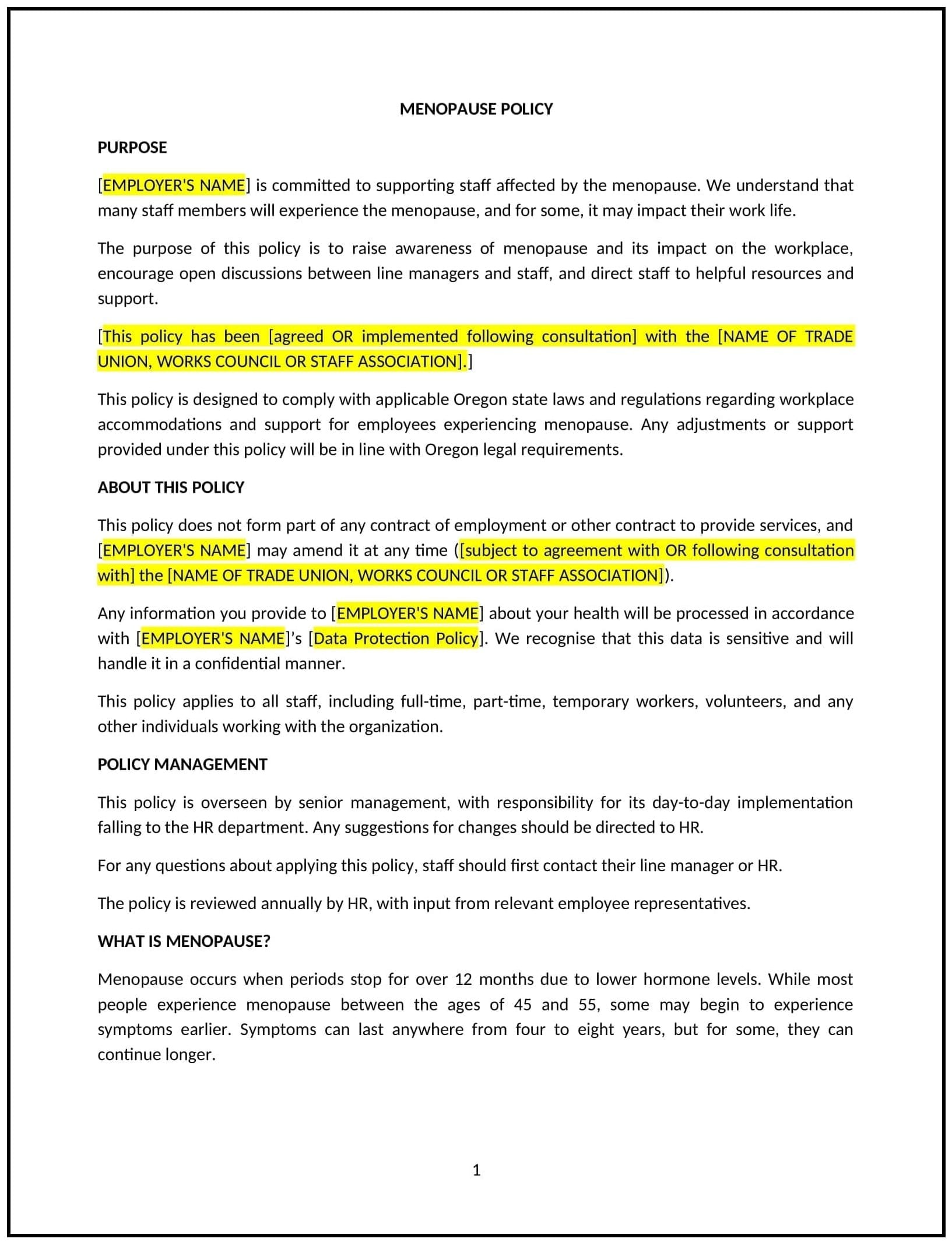
Menopause policy (Oregon): Free template
Encourages awareness and flexible support for employees experiencing menopause-related health issues.
- Policies
- Oregon
Menopause policy (Oregon)
This menopause policy is designed to help Oregon businesses support employees experiencing menopause by providing accommodations, resources, and a supportive work environment.
By adopting this policy, businesses can promote inclusivity, enhance employee well-being, and align with best practices for workplace health and wellness.
How to use this menopause policy (Oregon)
- Define accommodations: Outline potential accommodations for employees experiencing menopause, such as flexible work hours or temperature control.
- Provide resources: Offer access to information, support groups, or counseling services related to menopause.
- Train managers: Educate supervisors on recognizing menopause symptoms and providing appropriate support.
- Foster inclusivity: Create a culture where employees feel comfortable discussing menopause-related needs.
- Review and update: Assess the policy annually to ensure it aligns with evolving workplace health standards.
Benefits of using this menopause policy (Oregon)
This policy offers several advantages for Oregon businesses:
- Promotes inclusivity: Demonstrates a commitment to supporting employees through all life stages.
- Enhances well-being: Provides accommodations and resources to help employees manage menopause symptoms.
- Reduces absenteeism: Supports employees in staying productive and engaged at work.
- Builds trust: Shows employees that the business values their health and well-being.
- Supports retention: Encourages loyalty by addressing the needs of a diverse workforce.
Tips for using this menopause policy (Oregon)
- Communicate clearly: Share the policy with employees and include it in the employee handbook.
- Provide training: Educate managers on recognizing menopause symptoms and providing appropriate support.
- Monitor compliance: Regularly review accommodations and resources to ensure they meet employee needs.
- Address issues promptly: Take corrective action if employees feel unsupported or accommodations are inadequate.
- Update regularly: Revise the policy as needed to reflect changes in workplace health standards or employee feedback.
Frequently asked questions (FAQs)
Similar templates
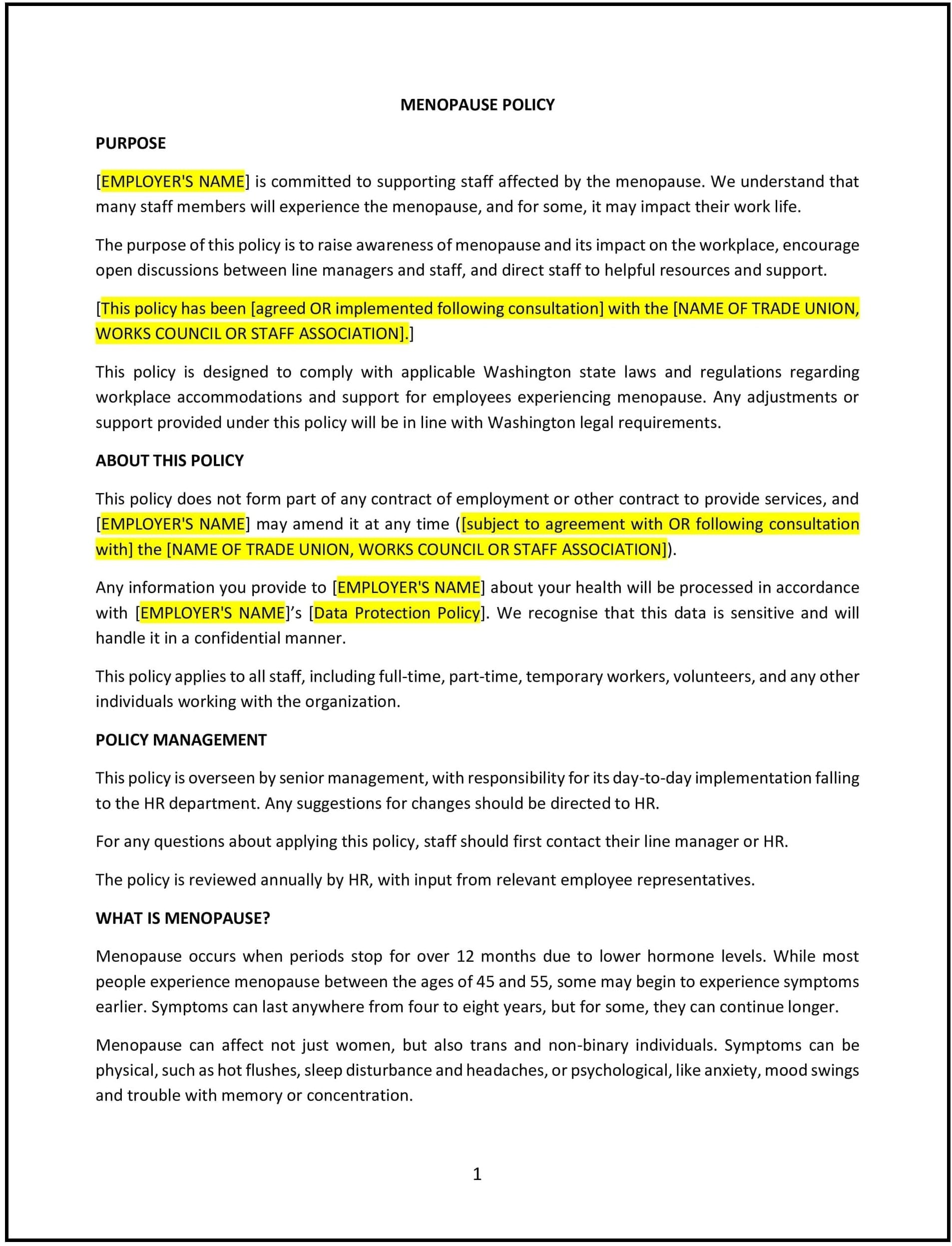
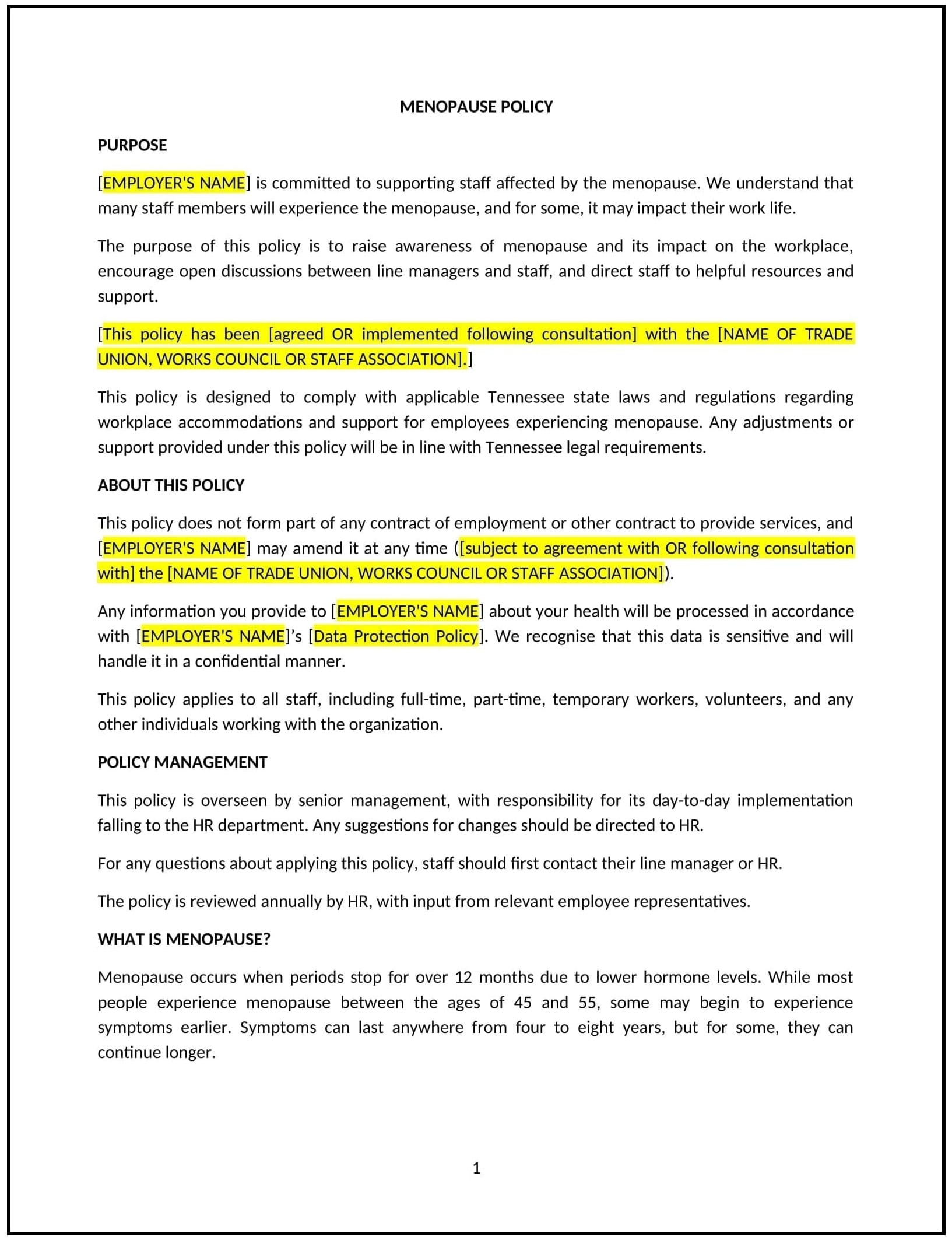
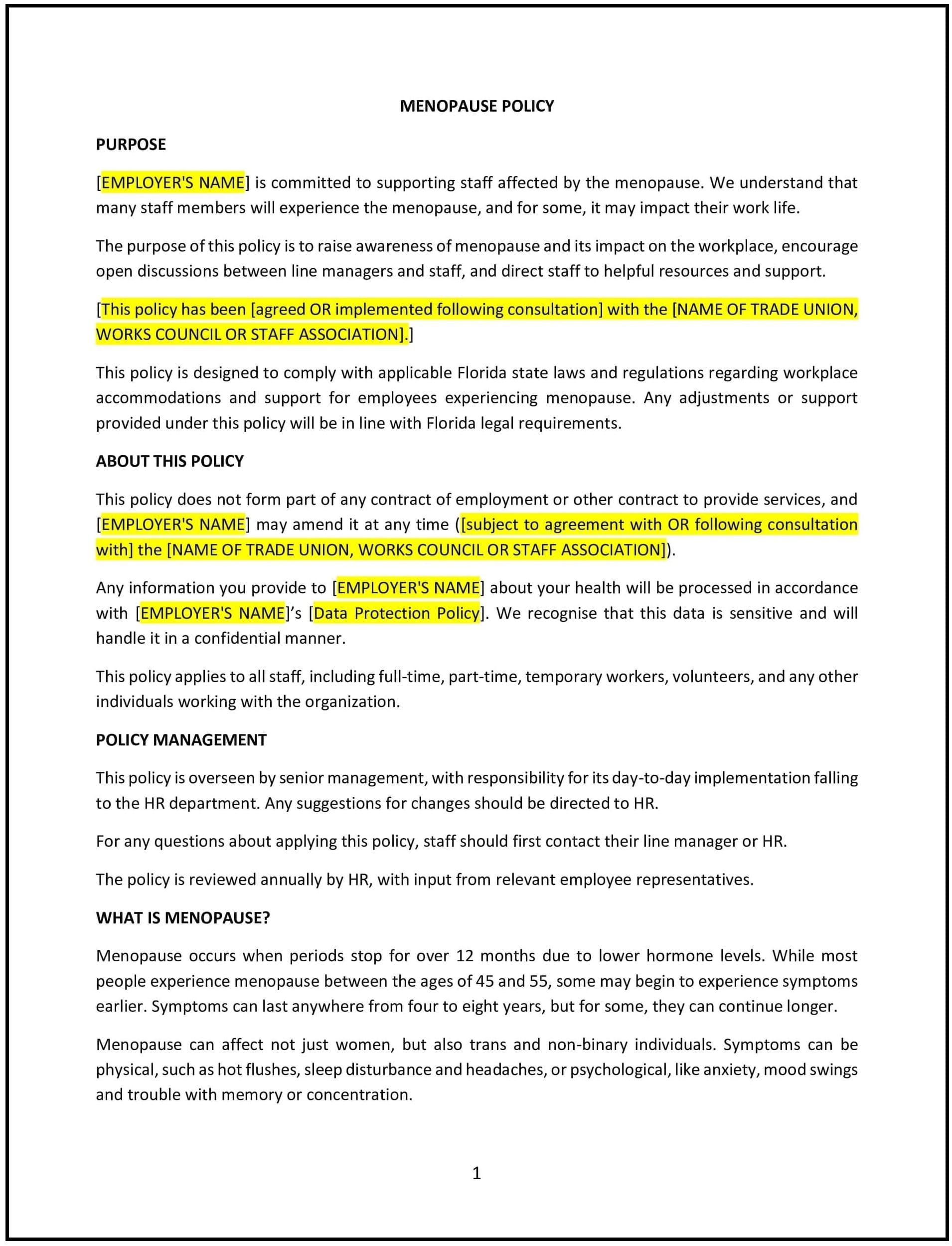
Where deals go from offer to paid
