Menopause relations policy (Connecticut): Free template
Got contracts to review? While you're here for policies, let Cobrief make contract review effortless—start your free review now.
Customize this template for free
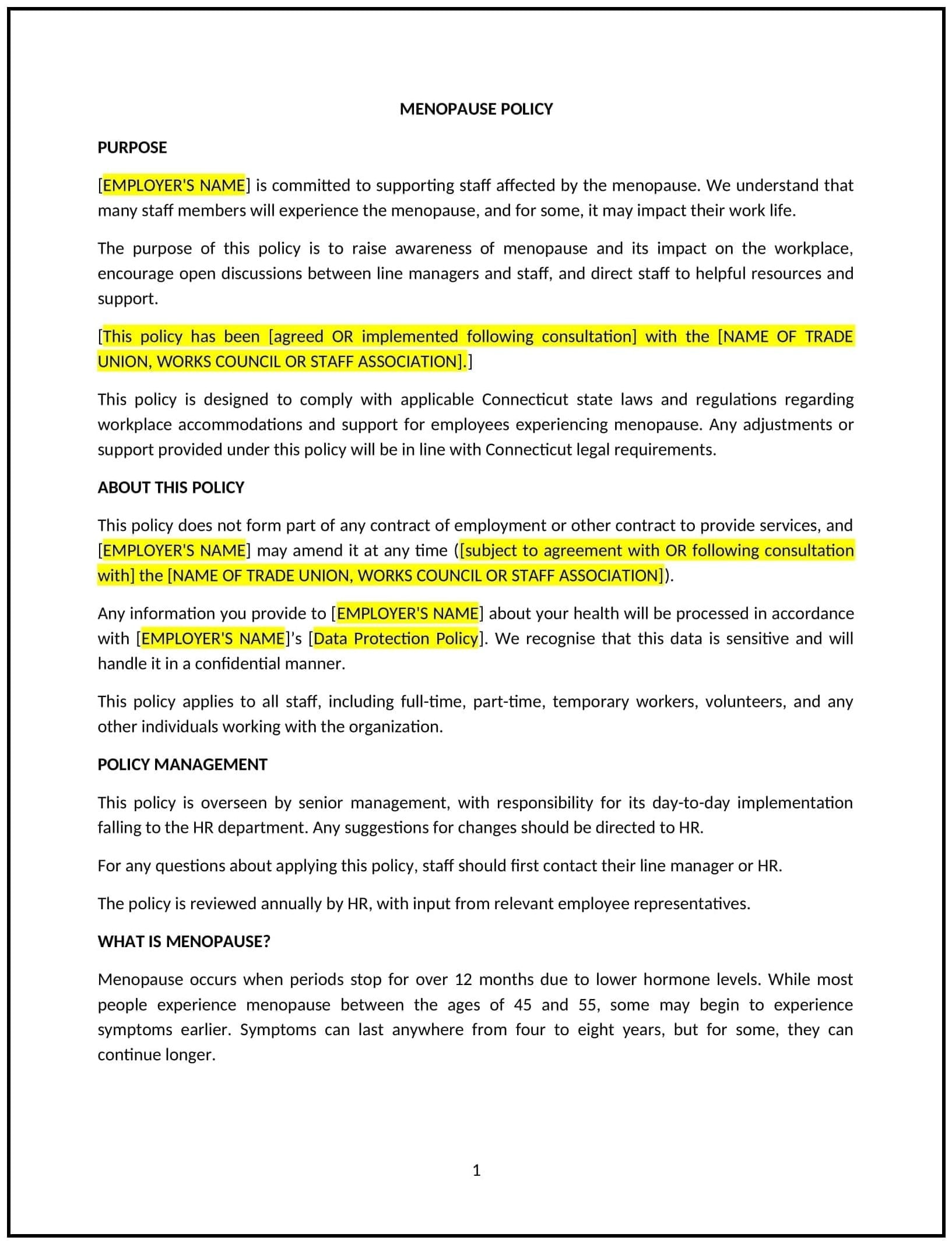
Menopause relations policy (Connecticut)
A menopause relations policy helps Connecticut businesses create a supportive and inclusive workplace for employees experiencing menopause. This policy outlines the company’s commitment to recognizing and addressing the challenges faced by employees during menopause, including providing accommodations and promoting awareness around menopause-related health issues in the workplace.
By implementing this policy, businesses can create a more inclusive environment, support employee well-being, and reduce the stigma around menopause, fostering a culture of respect and equality in the workplace.
How to use this menopause relations policy (Connecticut)
- Define menopause and related health issues: Clearly explain menopause and its potential symptoms, such as hot flashes, sleep disturbances, and mood changes, to ensure that employees and managers understand the context and the impact it may have on work.
- Offer workplace accommodations: Specify the accommodations the company will provide for employees experiencing menopause-related symptoms, such as flexible working hours, temperature control, and access to private spaces.
- Foster awareness and education: Promote awareness of menopause in the workplace by offering training for managers and employees, addressing common misconceptions, and reducing the stigma surrounding the topic.
- Address confidentiality: Emphasize that any medical information or requests for accommodations related to menopause will be treated confidentially and in accordance with privacy laws.
- Protect against discrimination: Clearly state that menopause should not be used as a basis for discrimination, and outline the company's commitment to ensuring equal treatment and opportunities for employees going through menopause.
- Encourage open communication: Promote a workplace culture that supports open conversations about health and well-being, ensuring employees feel comfortable discussing their needs without fear of judgment or retaliation.
Benefits of using this menopause relations policy (Connecticut)
This policy offers several benefits for Connecticut businesses:
- Supports employee well-being: By recognizing and addressing menopause-related challenges, businesses help employees feel supported and valued, contributing to a healthier, more productive workforce.
- Increases retention: Providing a supportive work environment for employees experiencing menopause can improve job satisfaction and retention, particularly among older employees.
- Reduces stigma: The policy helps break down the stigma surrounding menopause, making it a more openly discussed issue and improving employee morale and comfort.
- Enhances inclusivity: Fosters an inclusive work culture where all employees, regardless of gender or age, feel supported and respected.
- Promotes compliance with legal requirements: Helps ensure compliance with federal and state laws regarding workplace accommodations and anti-discrimination protections for employees experiencing menopause.
Tips for using this menopause relations policy (Connecticut)
- Communicate the policy clearly: Ensure that all employees are aware of the policy and understand their rights and options for accommodations, while maintaining confidentiality and privacy.
- Provide training for managers: Offer training for managers to better understand menopause-related challenges and how to support employees, ensuring that requests for accommodations are handled appropriately.
- Create an open dialogue: Encourage employees to discuss their needs and offer a clear process for requesting accommodations without fear of stigma or discrimination.
- Monitor and review: Regularly monitor the implementation of the policy and solicit employee feedback to ensure it remains effective and relevant to the needs of the workforce.
- Review periodically: Update the policy as needed to reflect changes in state laws, medical research, or employee feedback to ensure it continues to support menopause-related accommodations effectively.