Got contracts to review? While you're here for policies, let Cobrief make contract review effortless—start your free review now.
Customize this template for free
Moonlighting policy (California)
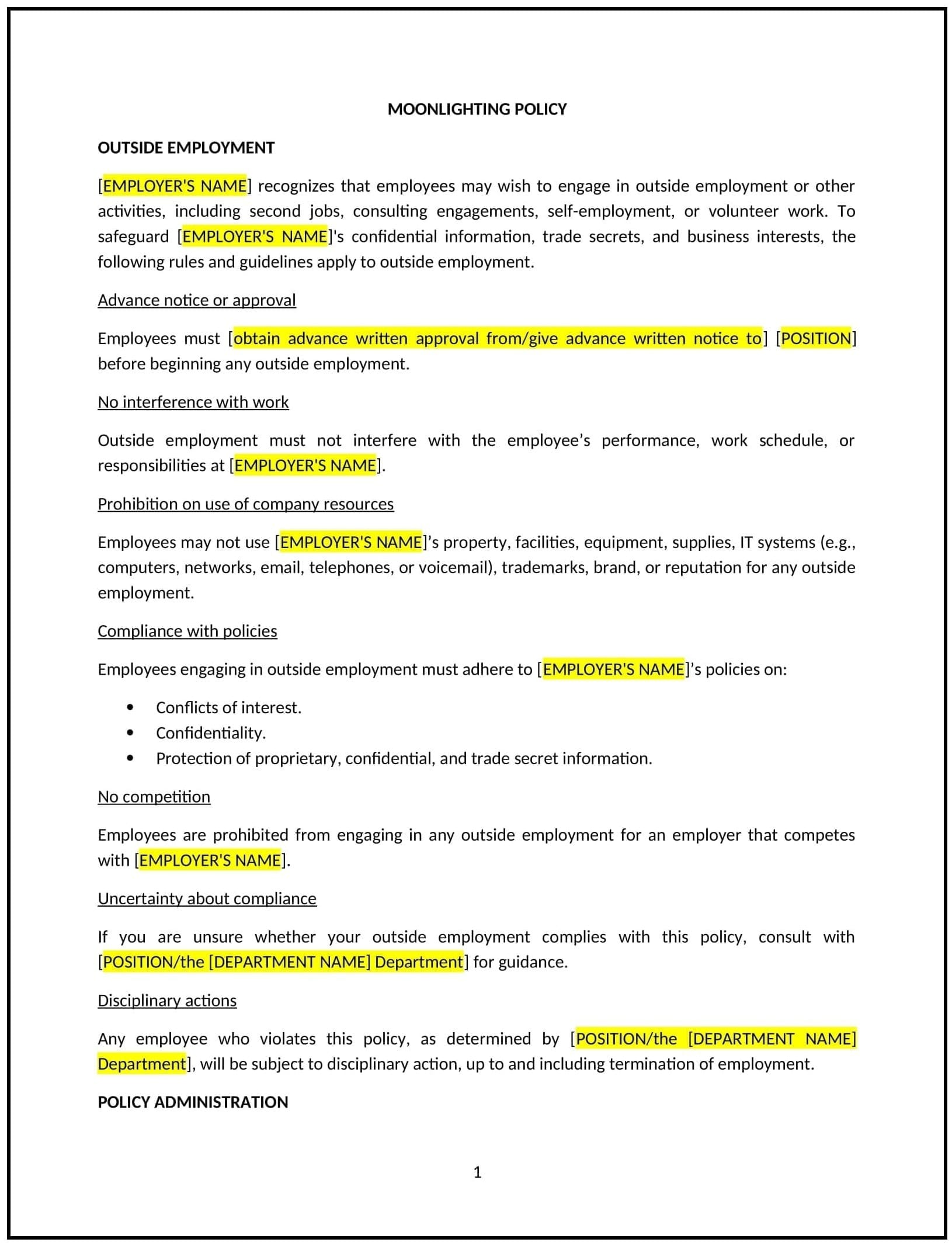
In California, a moonlighting policy provides businesses with guidelines for managing employees who engage in secondary employment or side activities outside their primary job. This policy ensures that such activities do not conflict with the business’s interests, violate California labor laws, or impact employee performance.
This policy outlines acceptable parameters for moonlighting, disclosure requirements, and the business’s expectations regarding conflicts of interest and confidentiality. By implementing this policy, California businesses can maintain productivity while respecting employees’ rights to pursue additional opportunities.
How to use this moonlighting policy (California)
- Define acceptable activities: Specify the types of secondary employment or activities that are permissible and those that may conflict with the business’s interests.
- Require disclosure: Ask employees to disclose any secondary employment that might create a conflict of interest or impact their performance.
- Address conflicts of interest: Prohibit activities that compete with the business, involve clients or suppliers, or misuse confidential information.
- Communicate expectations: Clarify that employees must continue to meet performance standards and prioritize their responsibilities with the business.
- Maintain compliance: Ensure the policy adheres to California labor laws, which protect employees’ rights to engage in lawful off-duty activities.
Benefits of using this moonlighting policy (California)
This policy offers several advantages for California businesses:
- Supports compliance: Reflects California labor laws that safeguard employees’ rights while managing potential conflicts of interest.
- Protects business interests: Prevents unauthorized use of business resources, confidential information, or time for secondary employment.
- Promotes fairness: Provides consistent guidelines for addressing moonlighting across the organization.
- Maintains productivity: Ensures that secondary employment does not negatively impact employee performance or attendance.
- Reduces risks: Minimizes potential legal disputes or reputational damage arising from conflicts of interest.
Tips for using this moonlighting policy (California)
- Reflect California-specific laws: Avoid overly restrictive policies that could violate California’s labor protections for off-duty conduct.
- Encourage transparency: Foster an open environment where employees feel comfortable disclosing potential conflicts of interest.
- Train managers: Provide guidance on addressing moonlighting disclosures respectfully and consistently.
- Monitor performance: Ensure that employees with secondary employment meet their primary job responsibilities and performance standards.
- Review regularly: Update the policy to reflect changes in California laws, business operations, or workforce dynamics.