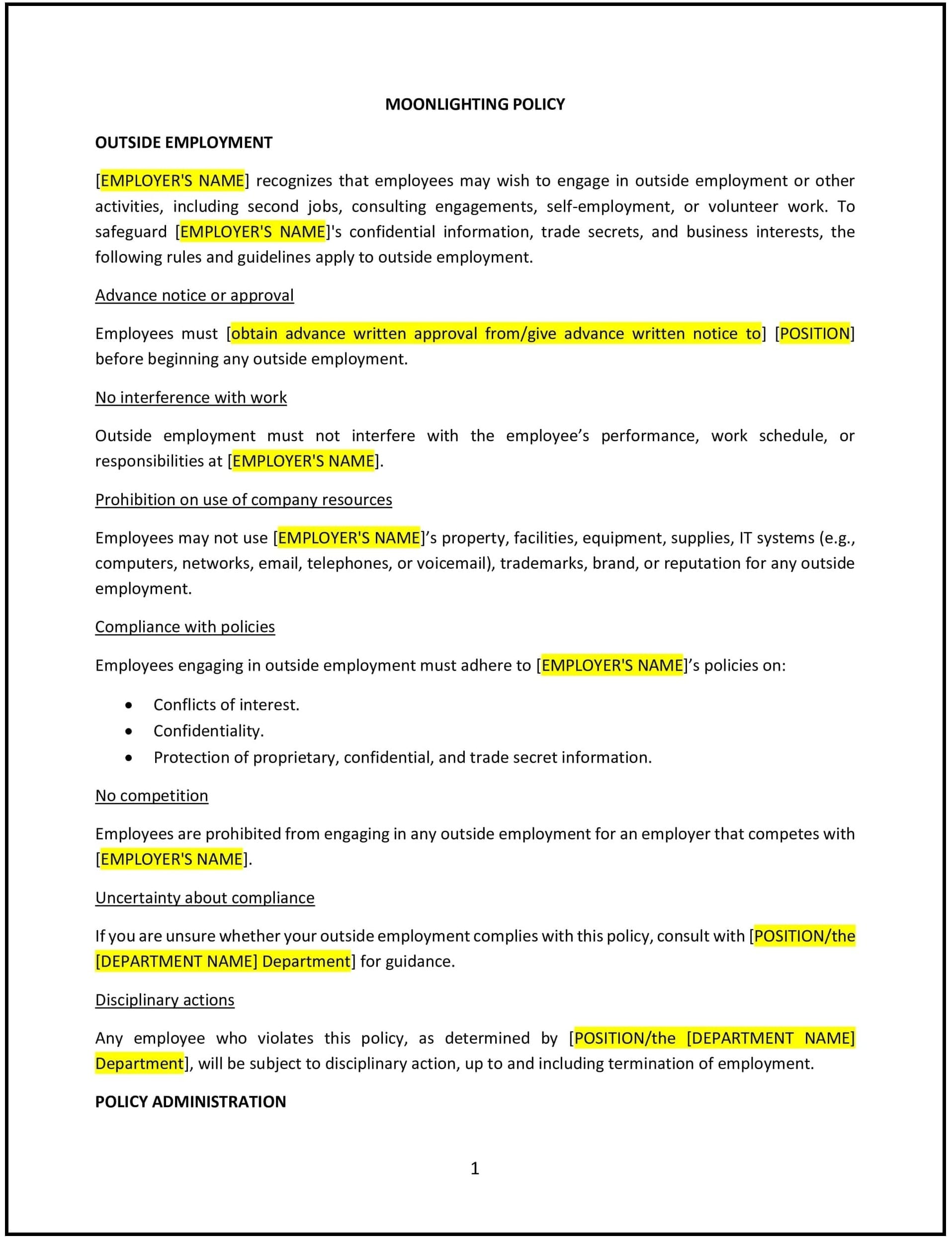
Moonlighting policy (Delaware): Free template
Governs secondary employment to prevent conflicts of interest and maintain performance in Delaware workplaces.
- Policies
- Delaware
Moonlighting policy (Delaware)
A moonlighting policy helps Delaware businesses provide clear guidelines regarding employees engaging in additional employment or freelance work outside their primary job. This policy outlines permissible activities, potential conflicts of interest, and disclosure requirements to ensure that secondary work does not interfere with the company’s operations or create legal risks.
By implementing this policy, businesses can maintain productivity, protect confidential information, and manage potential conflicts of interest.
How to use this moonlighting policy (Delaware)
- Define acceptable activities: Specify what types of secondary employment or freelance work are permissible, ensuring they do not conflict with the employee’s primary job responsibilities.
- Require disclosure: Establish procedures for employees to disclose outside employment, particularly if it relates to similar industries or poses potential conflicts of interest.
- Prohibit conflicts of interest: Clearly state that employees cannot engage in activities that compete with the company, use company resources, or affect performance in their primary role.
- Address confidentiality: Emphasize that employees must safeguard company proprietary information and avoid using it in secondary work.
- Outline disciplinary actions: Detail consequences for policy violations, ranging from warnings to termination, based on the severity of the infraction.
- Encourage open communication: Create an environment where employees feel comfortable discussing their secondary work to address potential issues proactively.
Benefits of using this moonlighting policy (Delaware)
This policy offers several benefits for Delaware businesses:
- Maintains productivity: Ensures that secondary work does not interfere with employees’ performance in their primary roles.
- Protects company interests: Reduces the risk of conflicts of interest, misuse of company resources, or breaches of confidentiality.
- Promotes transparency: Encourages open communication about secondary employment, fostering trust between employees and management.
- Reduces legal risks: Aligns with Delaware labor laws, minimizing potential disputes related to outside employment.
- Enhances fairness: Provides clear and consistent guidelines for all employees, reducing ambiguity.
Tips for using this moonlighting policy (Delaware)
- Communicate the policy clearly: Ensure all employees understand the guidelines and their responsibilities related to outside employment.
- Provide training: Educate managers on how to address moonlighting disclosures and identify potential conflicts of interest.
- Monitor compliance: Regularly review disclosed activities to ensure they align with the policy and do not impact the business.
- Update periodically: Revise the policy to reflect changes in Delaware labor laws, company practices, or emerging trends in freelance work.
- Foster transparency: Encourage employees to disclose potential conflicts early to address them proactively and collaboratively.
Frequently asked questions (FAQs)
Similar templates
Where deals go from offer to paid
