Got contracts to review? While you're here for policies, let Cobrief make contract review effortless—start your free review now.
Customize this template for free
Moonlighting policy (Hawaiʻi)
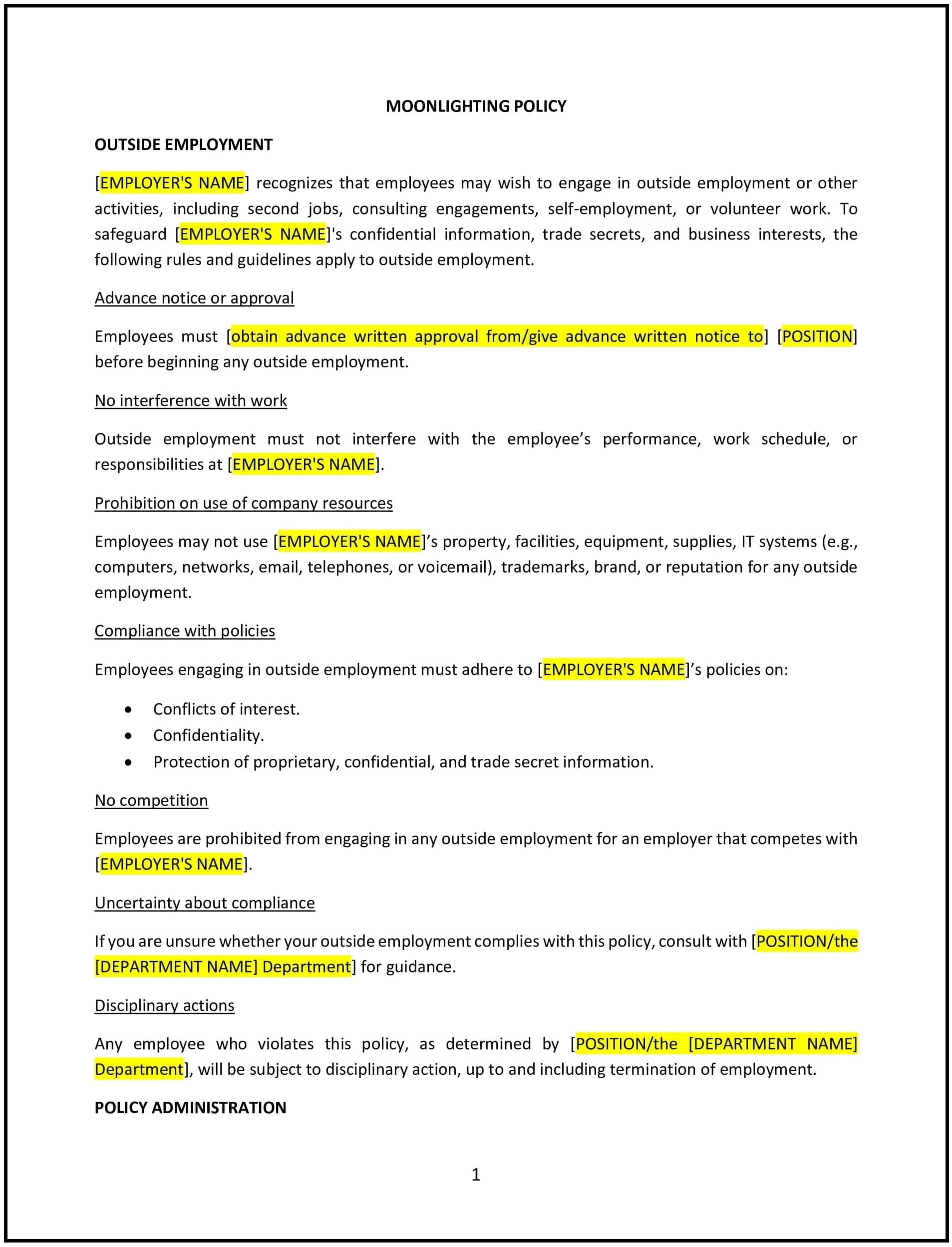
A moonlighting policy helps Hawaiʻi businesses establish guidelines for employees who wish to take on additional work outside their primary job. This policy outlines procedures for disclosing secondary employment, managing potential conflicts of interest, and ensuring that outside work does not interfere with job performance. Tailored to Hawaiʻi’s unique cultural and business environment, this policy is designed to promote transparency, protect business interests, and maintain a productive work environment.
By implementing this policy, businesses in Hawaiʻi can address potential conflicts, support employee well-being, and ensure that outside work does not negatively impact the workplace.
How to use this moonlighting policy (Hawaiʻi)
- Define moonlighting: Clearly outline what constitutes moonlighting, such as taking on a second job, freelance work, or self-employment outside of regular working hours.
- Establish disclosure requirements: Specify that employees must disclose any secondary employment to their supervisor or HR department for approval.
- Address conflicts of interest: Provide guidelines for identifying and managing potential conflicts, such as working for a competitor or using company resources for outside work.
- Set performance expectations: Clarify that outside work must not interfere with the employee’s primary job responsibilities, including attendance, productivity, or availability.
- Communicate the policy: Share the policy with employees during onboarding and through internal communications to ensure awareness and understanding.
- Train managers: Educate supervisors on how to evaluate moonlighting requests, identify conflicts of interest, and enforce the policy consistently.
- Monitor compliance: Regularly review moonlighting disclosures and address any issues, such as performance concerns or conflicts of interest, promptly.
- Review and update the policy: Regularly assess the policy’s effectiveness and make adjustments as needed to reflect changes in workplace dynamics or business needs.
Benefits of using this moonlighting policy (Hawaiʻi)
This policy offers several advantages for Hawaiʻi businesses:
- Promotes transparency: Clear guidelines encourage employees to disclose secondary employment and address potential conflicts proactively.
- Protects business interests: A structured policy minimizes the risk of conflicts of interest, misuse of company resources, or reduced job performance.
- Supports employee well-being: Allowing moonlighting, when appropriate, can help employees achieve financial stability or pursue personal interests.
- Enhances workplace culture: A fair and transparent policy fosters trust and mutual respect between employees and management.
- Aligns with legal standards: The policy helps businesses comply with Hawaiʻi state laws and federal regulations related to employment practices.
- Encourages accountability: Employees understand their responsibilities for disclosing secondary employment and avoiding conflicts of interest.
- Builds trust: A clear and supportive approach to moonlighting demonstrates the business’s commitment to fairness and employee well-being.
Tips for using this moonlighting policy (Hawaiʻi)
- Communicate the policy effectively: Share the policy with employees during onboarding and through regular reminders, such as emails or training sessions.
- Provide training: Educate managers on how to evaluate moonlighting requests, identify conflicts of interest, and enforce the policy consistently.
- Be flexible: Consider individual circumstances when evaluating moonlighting requests, such as financial needs or personal goals.
- Monitor compliance: Regularly review moonlighting disclosures and address any issues, such as performance concerns or conflicts of interest, promptly.
- Be transparent: Clearly explain the policy’s purpose, benefits, and expectations to employees to build trust and cooperation.
- Review the policy periodically: Update the policy as needed to reflect changes in workplace dynamics or business needs.