Got contracts to review? While you're here for policies, let Cobrief make contract review effortless—start your free review now.
Customize this template for free
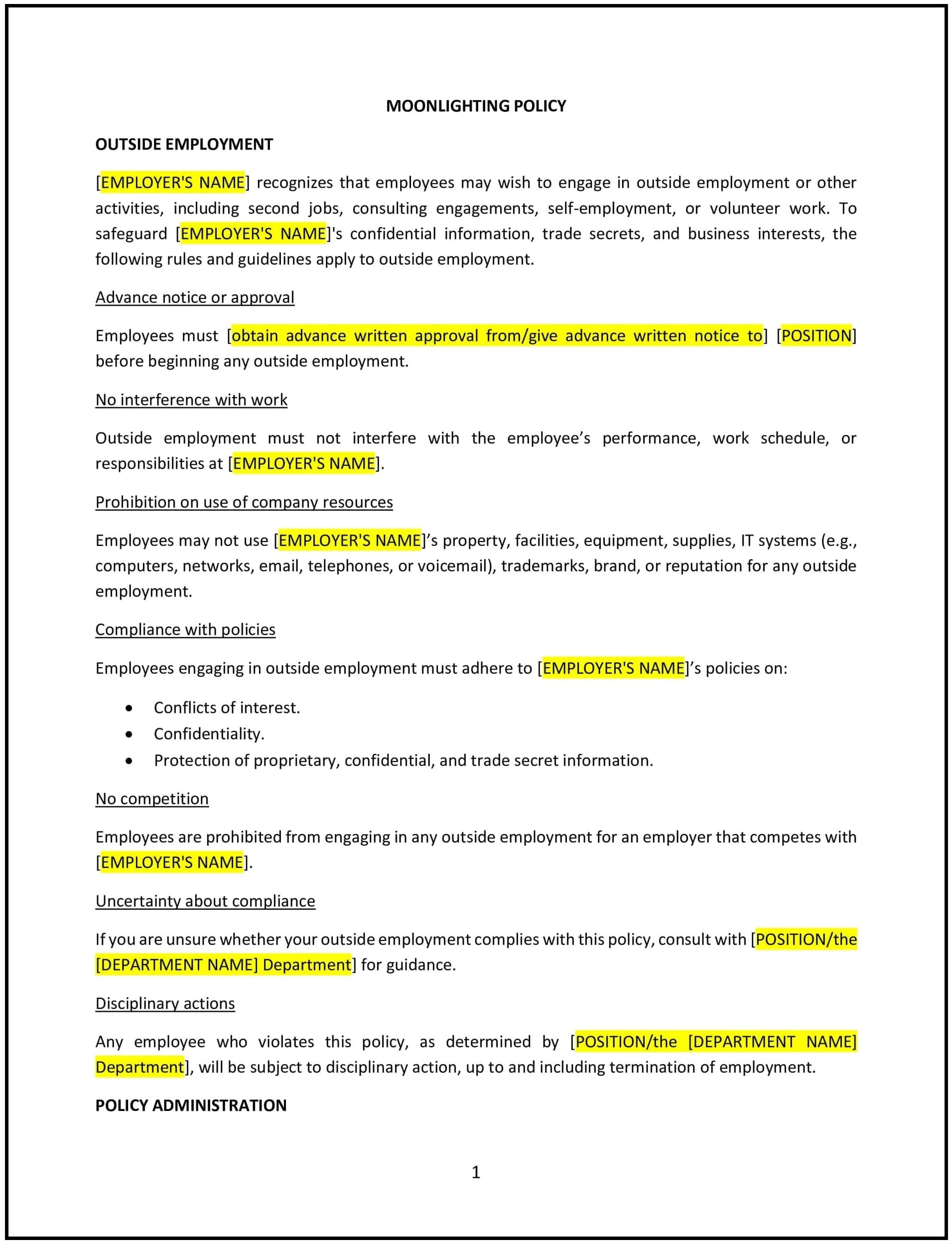
Moonlighting policy (Maine): Free template
This moonlighting policy is designed to help Maine businesses manage employees who engage in secondary employment, or "moonlighting," outside their primary job. It outlines guidelines to ensure that secondary employment does not interfere with job performance, create conflicts of interest, or violate company standards.
By implementing this policy, Maine businesses can maintain productivity, protect intellectual property, and ensure that employees’ outside work does not negatively impact their role within the organization.
How to use this moonlighting policy (Maine)
- Define moonlighting: Clearly explain what constitutes moonlighting, such as taking on a second job or freelance work outside the primary employment.
- Set guidelines for secondary employment: Establish acceptable conditions for moonlighting, including hours, types of work, and any potential conflicts of interest.
- Address conflicts of interest: Prohibit employees from engaging in work that competes with the business, directly or indirectly, or could create a conflict of interest.
- Establish performance expectations: Clarify that employees must meet performance standards in their primary role, and that moonlighting should not interfere with their job duties.
- Require disclosure: Require employees to inform management or HR if they engage in moonlighting, particularly if it could affect their performance or create conflicts.
- Include non-compete clauses: If applicable, specify any non-compete restrictions that apply to employees engaging in outside work, especially in similar industries or positions.
- Review regularly: Update the policy to reflect changes in business needs, legal requirements, or workplace standards.
Benefits of using this moonlighting policy (Maine)
Implementing this policy provides several benefits for Maine businesses:
- Protects productivity: Ensures that employees’ secondary employment does not interfere with their performance or work hours.
- Mitigates conflicts of interest: Prevents employees from engaging in outside work that competes with the business or creates ethical dilemmas.
- Clarifies expectations: Provides employees with clear guidelines on what is acceptable regarding moonlighting and secondary employment.
- Reduces legal risks: Protects intellectual property and confidential information by addressing potential conflicts in secondary jobs.
- Maintains fairness: Ensures that all employees are treated equally when engaging in outside work, avoiding favoritism or preferential treatment.
Tips for using this moonlighting policy (Maine)
- Communicate the policy: Make sure employees are aware of the moonlighting policy from the beginning, during onboarding, and as part of the employee handbook.
- Be transparent: Encourage employees to disclose any secondary employment opportunities to management so that potential conflicts can be addressed early.
- Monitor performance: Regularly assess employee performance to ensure that moonlighting is not negatively impacting work responsibilities.
- Be consistent: Apply the policy consistently across all employees, regardless of position or department, to avoid perceptions of favoritism.
- Stay compliant: Regularly review the policy to ensure it complies with Maine state laws and industry-specific regulations.
- Encourage open dialogue: Allow employees to discuss their secondary employment plans and be open to adjustments to avoid conflicts.