Got contracts to review? While you're here for policies, let Cobrief make contract review effortless—start your free review now.
Customize this template for free
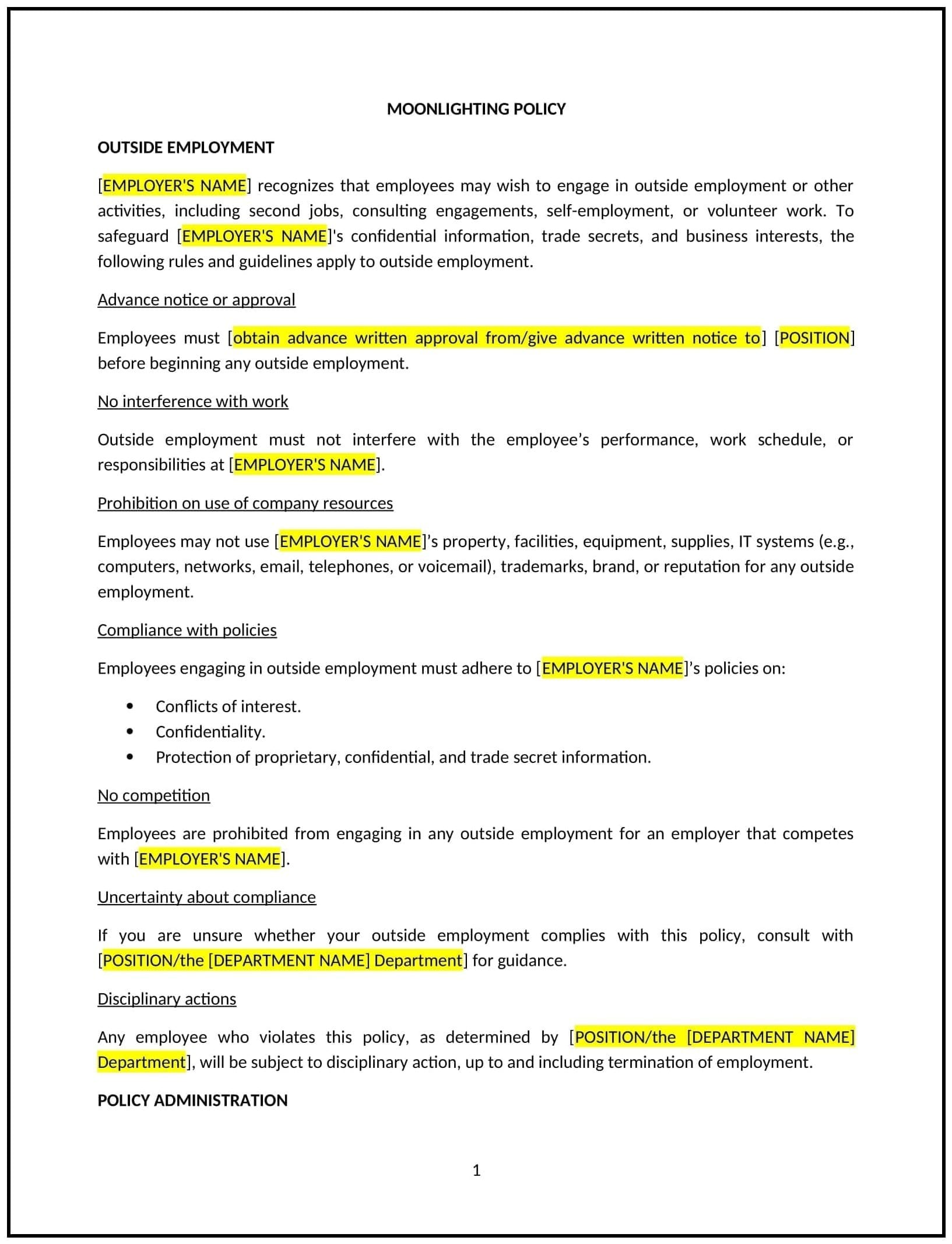
Moonlighting policy (Minnesota)
This moonlighting policy is designed to help Minnesota businesses manage employees who engage in secondary employment outside of their primary job responsibilities. It establishes guidelines for employees who may seek outside work, ensuring that their outside employment does not interfere with their performance, availability, or the company’s interests.
By implementing this policy, businesses can ensure transparency, protect confidential information, and maintain productivity, while respecting employees’ rights to pursue additional employment opportunities.
How to use this moonlighting policy (Minnesota)
- Define moonlighting: Clearly define what constitutes moonlighting, including any paid work or business activities outside of the employee’s primary employment with the company.
- Set expectations for performance: Specify that employees’ primary job performance must not be affected by any outside employment, and that their moonlighting activities should not interfere with their work responsibilities, productivity, or attendance.
- Address conflicts of interest: Clearly outline any situations where moonlighting could create a conflict of interest, such as working for a competitor, using company resources for outside work, or engaging in activities that harm the company’s reputation.
- Establish disclosure requirements: Require employees to disclose outside employment if it could potentially interfere with their work performance or create a conflict of interest. Provide a process for employees to request approval from HR or management if needed.
- Set boundaries on business activities: Outline any specific types of outside work that are prohibited, such as working for direct competitors, using proprietary knowledge or company resources for outside business activities, or engaging in activities that undermine the company's values.
- Offer support: Encourage open communication, allowing employees to address any concerns regarding moonlighting or its impact on their work, and provide guidance if an employee is unsure about whether a particular job or activity conflicts with the policy.
Benefits of using a moonlighting policy (Minnesota)
Implementing this policy provides several advantages for Minnesota businesses:
- Protects company interests: A clear policy helps prevent employees from engaging in work that could present a conflict of interest or harm the company’s operations, reputation, or proprietary information.
- Promotes transparency: The policy ensures that employees are open about their outside employment, which allows the company to assess potential conflicts or performance issues early.
- Maintains employee productivity: By ensuring that moonlighting does not interfere with primary job responsibilities, businesses can maintain productivity levels and prevent distractions or absenteeism.
- Enhances employee engagement: Clear guidelines and transparent communication foster trust between employees and management, helping to avoid misunderstandings or issues related to outside work.
- Reflects Minnesota-specific considerations: Tailors the policy to Minnesota’s labor market, acknowledging state-specific laws, regulations, and cultural attitudes towards secondary employment.
Tips for using this moonlighting policy (Minnesota)
- Communicate expectations: Ensure that employees are aware of the policy and the company’s stance on moonlighting, including the need to maintain job performance and avoid conflicts of interest.
- Be flexible: While the company may impose certain restrictions on moonlighting, it should be flexible in accommodating outside employment that does not interfere with the employee’s work duties.
- Monitor performance: Managers should keep an eye on employee performance and address any concerns that may arise regarding an employee’s ability to balance their primary job and outside work.
- Encourage disclosure: Create an open environment where employees feel comfortable discussing their outside work with HR or management, particularly if they believe it could interfere with their role or raise concerns.
- Review regularly: Periodically review the policy to ensure it remains aligned with evolving business needs, employee expectations, and changes to Minnesota employment law.