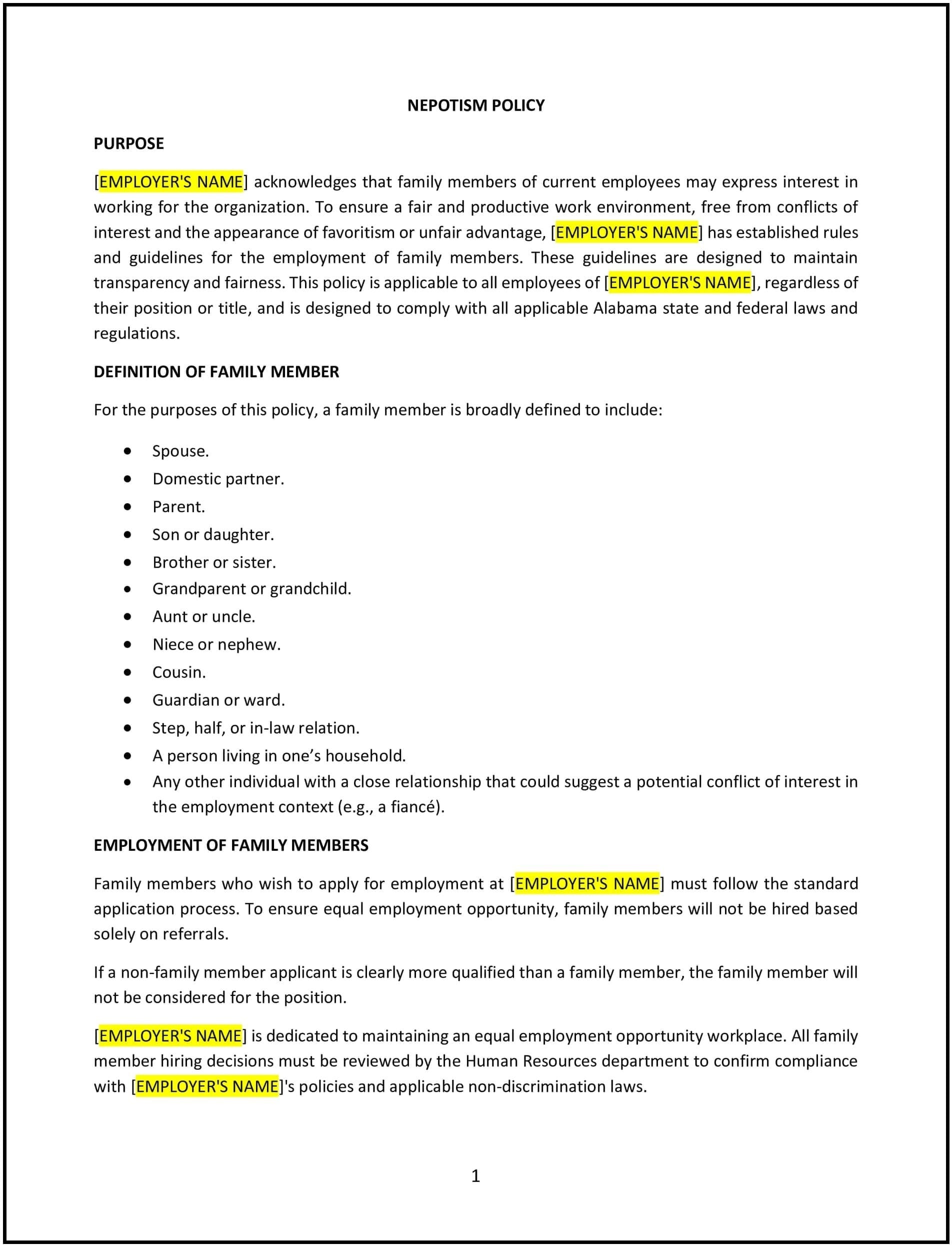
Nepotism policy (Alabama): Free template
Discourages favoritism by setting boundaries on hiring or supervising relatives in Alabama-based workplaces.
- Policies
- Alabama
Nepotism policy (Alabama)
A nepotism policy establishes guidelines to prevent favoritism or conflicts of interest arising from personal relationships in the workplace. For SMBs in Alabama, this policy promotes fairness and ensures that hiring, promotion, and management decisions are based on merit rather than personal connections.
This policy outlines acceptable practices, disclosure requirements, and management procedures for addressing potential conflicts, fostering a professional and equitable work environment.
How to use this nepotism policy (Alabama)
- Define nepotism: Clearly explain what constitutes nepotism, such as hiring, promoting, or managing family members or individuals with close personal relationships.
- Require disclosure: Establish a process for employees to disclose relationships that could create potential conflicts of interest or favoritism.
- Set boundaries: Prohibit direct reporting relationships or influence over employment decisions involving family members or close associates.
- Assign management oversight: Designate an impartial party, such as HR, to review situations involving personal relationships and ensure policy compliance.
- Address non-compliance: Outline consequences for violating the policy, such as reassignment, disciplinary action, or termination.
Benefits of using a nepotism policy (Alabama)
A nepotism policy helps create a transparent and fair workplace by addressing potential conflicts of interest. Here’s how it helps:
- Promotes fairness: Ensures hiring and promotion decisions are based on qualifications and performance, not personal relationships.
- Reduces conflicts: Minimizes the risk of workplace disputes or resentment due to perceived favoritism.
- Protects the business: Demonstrates a commitment to ethical practices, safeguarding the company’s reputation and reducing legal risks.
- Encourages accountability: Provides a framework for addressing conflicts of interest consistently and impartially.
- Fosters professionalism: Reinforces a culture of merit-based decision-making and equal opportunity for all employees.
Tips for implementing a nepotism policy (Alabama)
- Communicate clearly: Ensure employees understand the policy and its importance during onboarding and through regular company updates.
- Maintain confidentiality: Handle disclosures and investigations related to personal relationships with discretion to protect employee privacy.
- Provide training: Offer training for managers and HR staff on recognizing and addressing nepotism-related concerns effectively.
- Regularly review compliance: Periodically assess workplace relationships and practices to identify potential conflicts and ensure adherence to the policy.
- Apply consistently: Enforce the policy fairly across all employees, regardless of role or seniority, to build trust and accountability.
Frequently asked questions (FAQs)
Similar templates
Where deals go from offer to paid
