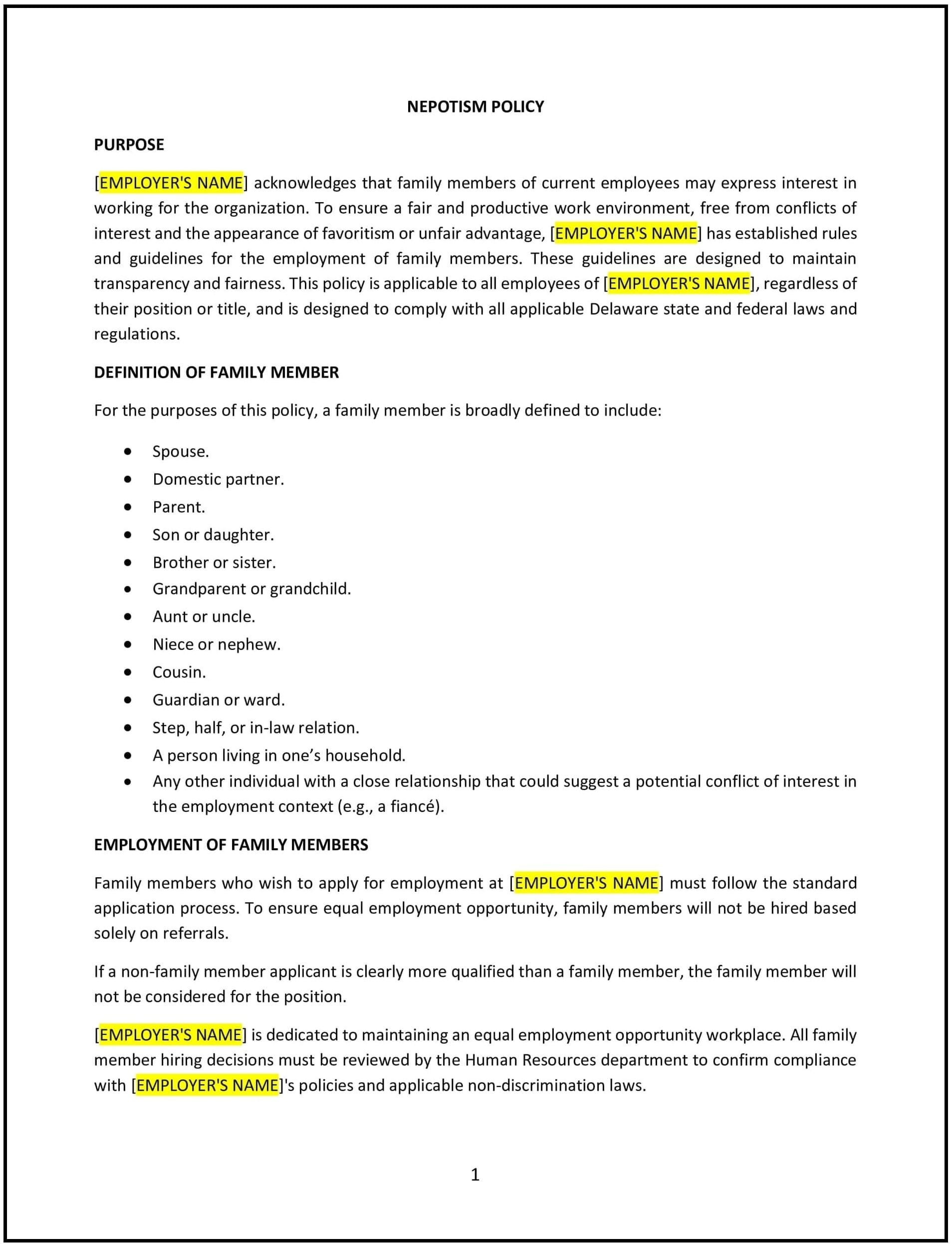
Nepotism policy (Delaware): Free template
Restricts supervision or hiring of close relatives to uphold fairness and integrity within Delaware companies.
- Policies
- Delaware
Nepotism policy (Delaware)
A nepotism policy helps Delaware businesses establish clear guidelines for managing employment relationships involving relatives or close personal connections. This policy ensures fairness, prevents conflicts of interest, and promotes transparency in hiring, promotion, and supervision decisions.
By implementing this policy, businesses can maintain a professional work environment, reduce perceived favoritism, and ensure compliance with Delaware labor laws.
How to use this nepotism policy (Delaware)
- Define relationships covered: Specify the types of relationships subject to the policy, such as spouses, siblings, parents, children, or close relatives.
- Establish hiring guidelines: Prohibit or restrict hiring decisions involving relatives to avoid potential conflicts of interest or favoritism.
- Address supervision concerns: Clearly state that employees cannot directly supervise or be supervised by a relative or close personal connection.
- Require disclosure: Mandate that employees disclose any personal relationships that may affect workplace dynamics or decisions.
- Implement conflict resolution procedures: Provide steps for addressing concerns or disputes related to nepotism or perceived favoritism.
- Monitor compliance: Regularly review the application of the policy to ensure it is being enforced consistently and fairly.
Benefits of using this nepotism policy (Delaware)
This policy offers several benefits for Delaware businesses:
- Promotes fairness: Ensures that hiring, promotion, and supervision decisions are based on merit rather than personal relationships.
- Reduces workplace conflicts: Prevents issues related to favoritism, perceived bias, or conflicts of interest.
- Enhances transparency: Encourages employees to disclose relevant relationships, fostering trust and accountability.
- Protects the company: Aligns with Delaware labor laws and reduces the risk of legal disputes related to discriminatory practices.
- Supports professionalism: Maintains a balanced and professional workplace culture by minimizing the impact of personal relationships.
Tips for using this nepotism policy (Delaware)
- Communicate the policy clearly: Ensure all employees and managers understand the policy and its importance in promoting fairness and transparency.
- Provide training: Equip HR and supervisors with the tools to address nepotism-related concerns professionally and consistently.
- Encourage early disclosure: Create a safe environment where employees feel comfortable disclosing personal relationships without fear of retaliation.
- Monitor implementation: Regularly review hiring and supervisory practices to ensure compliance with the policy.
- Update as needed: Revise the policy to reflect changes in Delaware labor laws, company practices, or organizational needs.
Frequently asked questions (FAQs)
Similar templates
Where deals go from offer to paid
