Got contracts to review? While you're here for policies, let Cobrief make contract review effortless—start your free review now.
Customize this template for free
Nepotism policy (Idaho)
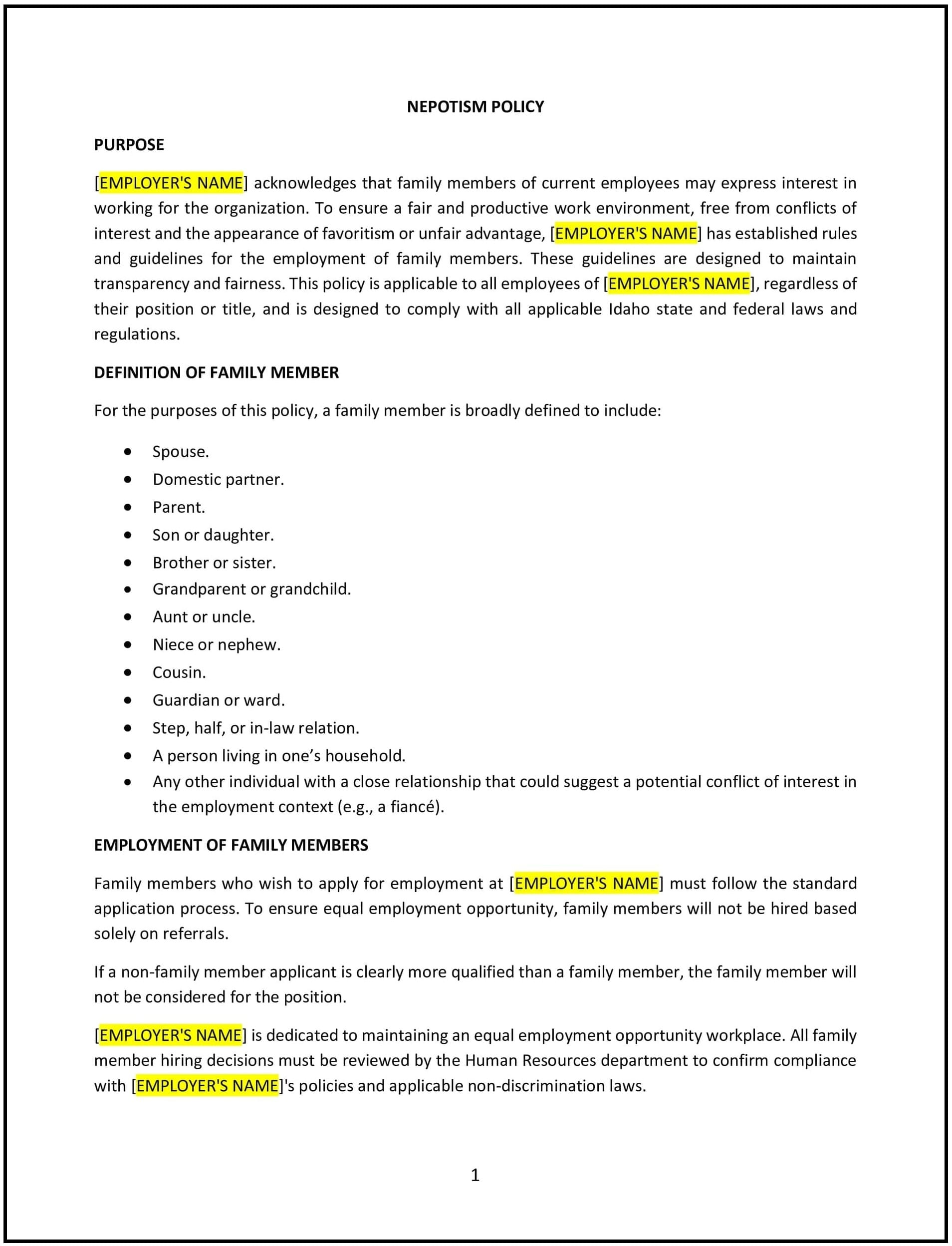
A nepotism policy helps Idaho businesses establish guidelines for hiring and managing employees who are related to existing staff members. This policy outlines procedures for addressing potential conflicts of interest, favoritism, and fairness in the workplace. It also emphasizes the importance of maintaining professionalism, transparency, and equal opportunities for all employees.
By implementing this policy, businesses can promote a fair and inclusive work environment, reduce the risk of favoritism, and ensure decisions are based on merit and qualifications.
How to use this nepotism policy (Idaho)
- Define relationships covered: Specify which relationships fall under the policy, such as family members, spouses, or close personal connections. This ensures clarity and consistency in applying the policy.
- Establish hiring guidelines: Outline procedures for hiring relatives, such as requiring disclosure of relationships and ensuring the hiring process is transparent and based on merit.
- Address conflicts of interest: Provide guidelines for managing situations where relatives work in the same department or report to one another, including reassignment or recusal from decision-making processes.
- Set expectations for professionalism: Emphasize that all employees, including relatives, must adhere to the same standards of conduct, performance, and accountability.
- Communicate the policy: Share the policy with employees during onboarding and through internal communication channels to ensure awareness and understanding.
- Train managers: Provide training for managers on how to handle situations involving relatives, including avoiding favoritism and maintaining fairness in evaluations and promotions.
- Review and update the policy: Periodically assess the policy’s effectiveness and make adjustments based on business needs, employee feedback, or changes in Idaho labor laws.
Benefits of using this nepotism policy (Idaho)
This policy offers several advantages for Idaho businesses:
- Promotes fairness and transparency: Clear guidelines help ensure hiring, promotions, and evaluations are based on merit rather than personal relationships.
- Reduces favoritism: The policy minimizes the risk of perceived or actual favoritism, fostering a more equitable work environment.
- Enhances workplace morale: Employees are more likely to feel valued and respected when decisions are made fairly and transparently.
- Protects the business’s reputation: A structured approach to nepotism helps maintain the business’s credibility and professionalism.
- Supports compliance: The policy aligns with best practices for workplace fairness and reduces the risk of legal disputes related to discrimination or favoritism.
- Encourages accountability: Clear expectations and consequences help employees and managers understand their responsibilities in maintaining a fair workplace.
Tips for using this nepotism policy (Idaho)
- Communicate the policy clearly: Share the policy with employees during onboarding and through internal communication channels to ensure awareness and understanding.
- Train managers: Provide training for managers on how to handle situations involving relatives, including avoiding favoritism and maintaining fairness in evaluations and promotions.
- Encourage transparency: Foster a culture where employees feel comfortable disclosing relationships and confident that decisions are made fairly.
- Monitor compliance: Regularly review hiring, promotion, and evaluation processes to ensure the policy is being applied consistently and fairly.
- Document everything: Maintain records of disclosures, hiring decisions, and any actions taken to address conflicts of interest, ensuring accountability and transparency.
- Review the policy regularly: Update the policy as needed to reflect changes in business operations, workforce dynamics, or Idaho labor laws.