Got contracts to review? While you're here for policies, let Cobrief make contract review effortless—start your free review now.
Customize this template for free
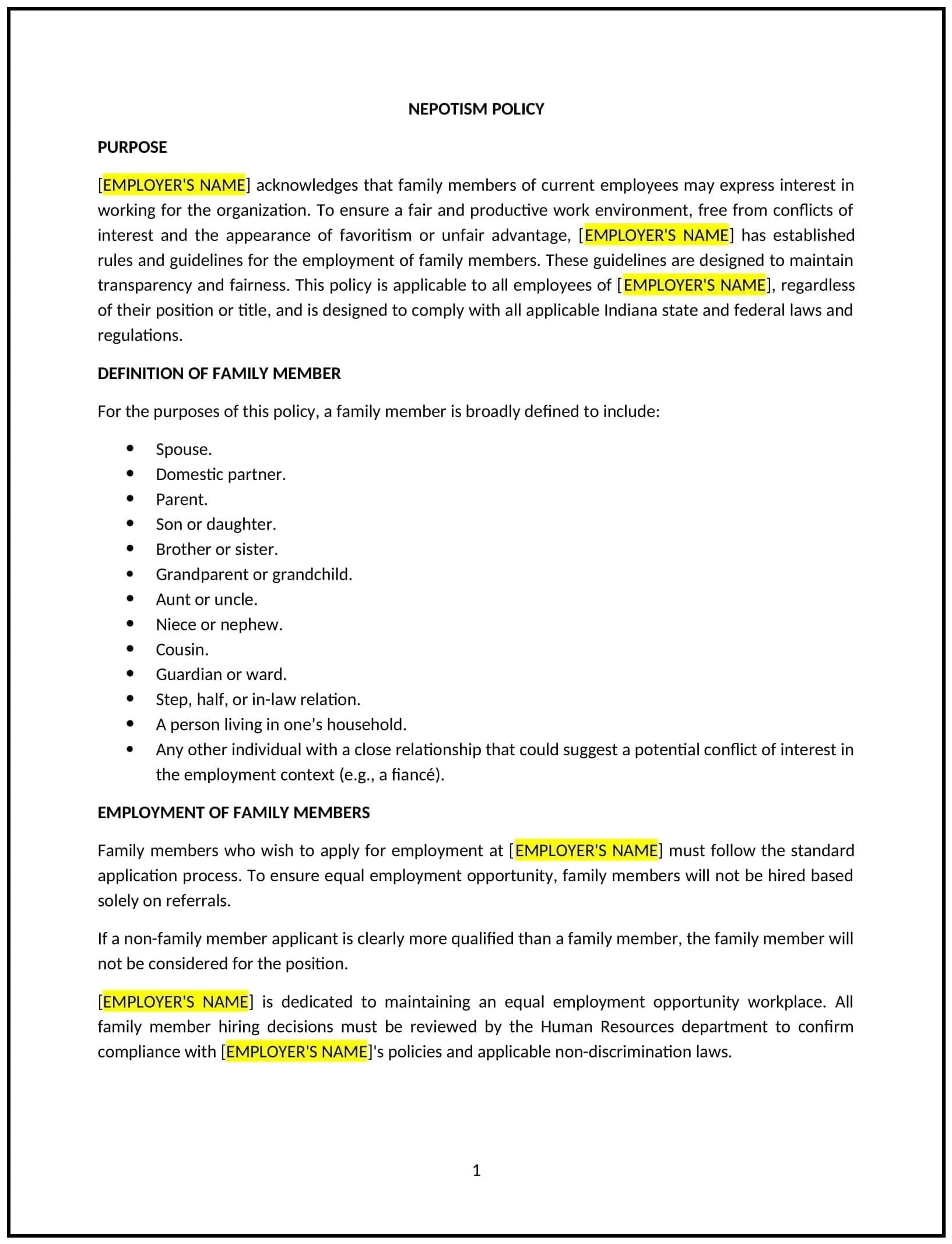
Nepotism policy (Indiana): Free template
This nepotism policy helps Indiana businesses establish clear guidelines regarding the employment of family members or close relatives within the company. This policy addresses potential conflicts of interest, the perception of favoritism, and the company’s approach to ensuring fair treatment in hiring, promotion, and other employment decisions. By using this template, businesses can avoid potential legal issues and maintain a professional and equitable work environment while ensuring that family relationships do not interfere with business operations.
By implementing this policy, Indiana businesses can foster a workplace where hiring and promotion decisions are based on merit, and all employees are treated fairly, regardless of family connections.
How to use this nepotism policy (Indiana)
- Define family relationships: Clearly define who qualifies as a family member under this policy. This typically includes spouses, children, parents, siblings, in-laws, and sometimes extended family members such as cousins or grandparents. The policy should specify which relationships are covered and how they may impact employment decisions.
- Establish guidelines for hiring family members: Outline the circumstances under which family members can be hired within the organization. The policy should specify whether family members can be employed in the same department, hold positions that report to one another, or be involved in decision-making processes that may affect each other’s roles.
- Address conflicts of interest: Clearly state that family members should not be involved in making decisions that directly impact the hiring, promotion, compensation, or discipline of a relative. The policy should include mechanisms to prevent conflicts of interest, such as requiring disclosure of relationships and recusal from decision-making.
- Set guidelines for reporting family relationships: Employees should be required to disclose any familial relationships with other employees or potential hires. This ensures transparency and allows the company to manage potential conflicts of interest effectively. The policy should specify how employees should report these relationships.
- Provide management and HR responsibilities: The policy should outline the responsibilities of HR and management to ensure that nepotism does not occur in hiring or promotions. This could include reviewing and approving any employment decisions involving family members to ensure they are made impartially.
- Address family members in the same team or department: Specify how family members can be placed in the same department or team. This includes guidelines for ensuring that no preferential treatment or conflicts arise. The policy should encourage fairness in team dynamics and ensure that family members are not given undue influence over each other’s work.
- Allow exceptions under certain conditions: While the policy aims to prevent nepotism, there may be circumstances where hiring family members is necessary or acceptable. For example, if a family member has the necessary qualifications for a role and there is no conflict of interest. The policy should provide a clear process for requesting and approving exceptions.
- Ensure transparency and fairness: The policy should emphasize that all hiring and promotion decisions are based on qualifications, experience, and merit. It should also outline the company’s commitment to fairness, transparency, and non-discriminatory practices in every aspect of employment.
- Review and update regularly: The policy should be reviewed periodically to ensure it remains in line with current legal requirements and best practices. This includes any changes in the company’s structure, family relationships within the workforce, or legal standards related to nepotism.
Benefits of using this nepotism policy (Indiana)
Implementing this policy provides several key benefits for Indiana businesses:
- Promotes fairness in hiring and promotions: The policy ensures that employment decisions are based on qualifications and merit, rather than family connections, which helps maintain a fair and equitable work environment.
- Reduces conflicts of interest: By addressing potential conflicts of interest proactively, the policy helps prevent situations where family members could influence hiring, promotions, or disciplinary decisions.
- Enhances transparency: The policy fosters transparency by requiring employees to disclose familial relationships and setting clear guidelines for decision-making, which helps prevent any perception of favoritism.
- Protects against legal risks: The policy helps reduce the risk of legal claims related to nepotism, discrimination, or favoritism in hiring and promotion practices, by ensuring that family relationships do not unduly influence employment decisions.
- Strengthens company culture: By promoting a culture of fairness and merit-based decisions, the policy can improve employee morale and trust in the organization, which can increase overall job satisfaction and productivity.
- Demonstrates commitment to ethical practices: A clear nepotism policy demonstrates the company’s commitment to maintaining high ethical standards, which can positively impact its reputation with employees, clients, and other stakeholders.
Tips for using this nepotism policy (Indiana)
- Communicate the policy effectively: Ensure that all employees are aware of the nepotism policy by including it in the employee handbook, during onboarding, and through ongoing communications. Employees should understand the company’s stance on nepotism and how it applies to hiring and promotions.
- Ensure transparency in hiring processes: In all hiring and promotion decisions, make sure that the process is transparent, merit-based, and documented. This includes ensuring that family relationships are disclosed upfront and that family members do not participate in decisions that could lead to conflicts of interest.
- Monitor for compliance: HR and management should regularly monitor and review hiring and promotion decisions to ensure that the nepotism policy is being followed. This includes checking that no favoritism or bias is being shown to family members during the hiring process or in the workplace.
- Address potential issues early: If a situation arises where a family member is involved in a hiring or promotion decision, address it early and ensure that the process is impartial. The policy should make it clear that family members must recuse themselves from decisions that could affect each other’s roles.
- Periodically review the policy: Regularly review the nepotism policy to ensure it remains effective and aligned with changes in the company’s structure, workforce, or legal requirements. Any changes in family relationships or shifts in company practices should be addressed through updates to the policy.