Got contracts to review? While you're here for policies, let Cobrief make contract review effortless—start your free review now.
Customize this template for free
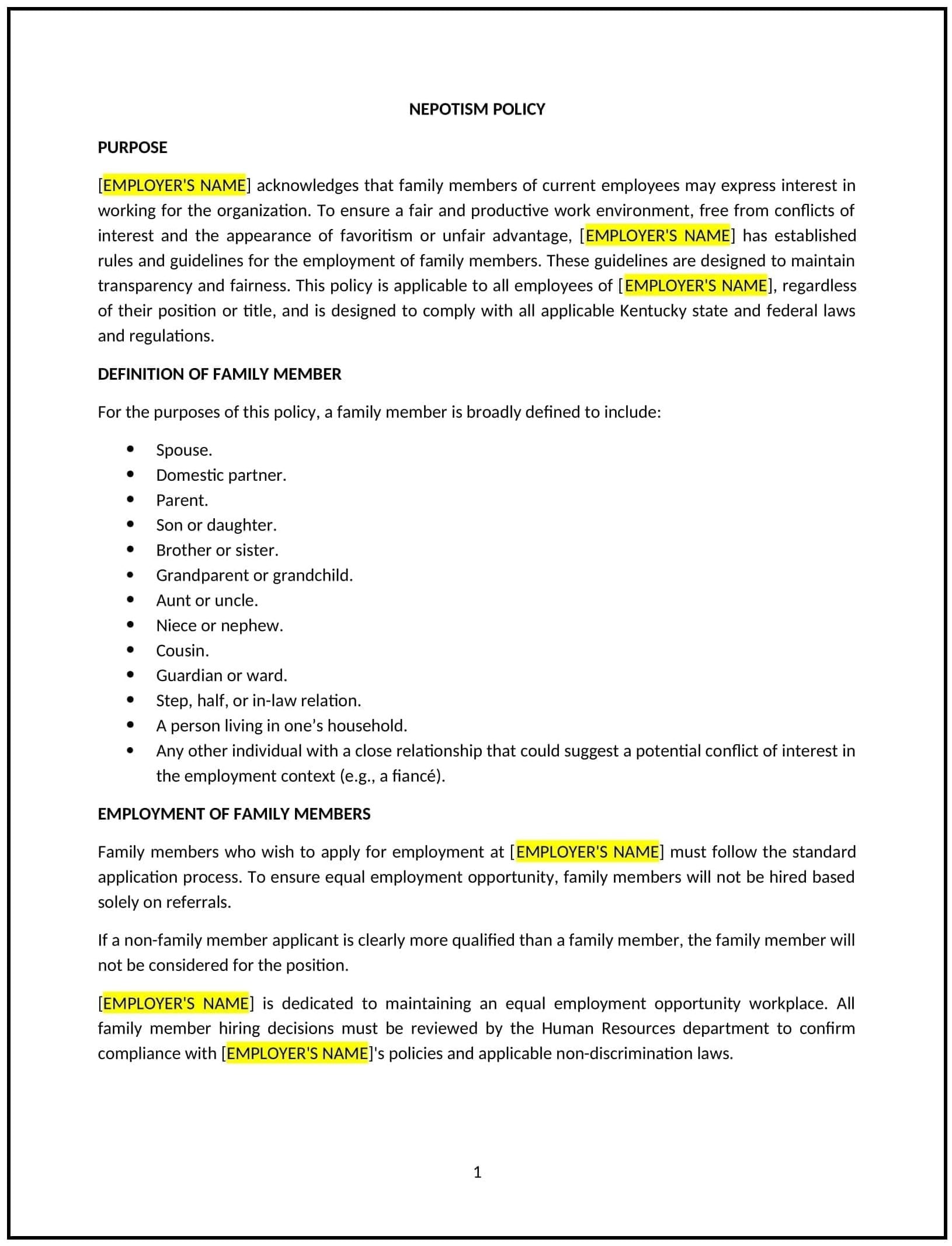
Nepotism policy (Kentucky)
A nepotism policy outlines the guidelines Kentucky businesses use to prevent favoritism and conflicts of interest when employees have personal or familial relationships within the workplace. This policy ensures that hiring, promotions, and workplace decisions are based on merit and align with the organization’s values.
By adopting this policy, businesses can promote fairness, transparency, and a professional work environment.
How to use this nepotism policy (Kentucky)
- Define nepotism: Clearly explain what constitutes nepotism, including favoritism in hiring, promotions, or other workplace decisions based on personal relationships.
- Specify disclosure requirements: Require employees to disclose familial or personal relationships that may affect workplace decisions or create potential conflicts of interest.
- Outline prohibited practices: Identify actions that are not allowed, such as directly supervising a relative, influencing employment decisions for family members, or engaging in favoritism.
- Set approval processes: Provide a procedure for managing situations where personal relationships exist, such as obtaining HR approval for certain arrangements or exceptions.
- Address reporting structure conflicts: Establish guidelines for reassigning roles or responsibilities to avoid conflicts of interest in reporting lines.
- Promote equal opportunity: Emphasize the business’s commitment to fair and merit-based hiring and advancement practices.
- Include disciplinary actions: Specify consequences for failing to disclose relationships or violating the policy, ranging from warnings to termination.
Benefits of using this nepotism policy (Kentucky)
This policy provides several key benefits for Kentucky businesses:
- Promotes fairness: Ensures that all employment decisions are based on qualifications and performance rather than personal relationships.
- Reduces conflicts of interest: Helps prevent situations where personal relationships interfere with professional responsibilities.
- Enhances workplace morale: Creates an environment where employees trust that decisions are impartial and merit-based.
- Protects the business: Reduces the risk of legal disputes or accusations of favoritism that can harm the organization’s reputation.
- Builds accountability: Encourages employees to disclose relationships and adhere to professional standards.
Tips for using this nepotism policy (Kentucky)
- Communicate the policy: Ensure employees are aware of the nepotism policy through onboarding, training, and employee handbooks.
- Train managers: Provide training for managers to recognize and address nepotism-related conflicts of interest.
- Review reporting structures: Regularly assess reporting lines to identify and address potential conflicts caused by personal relationships.
- Encourage transparency: Foster a workplace culture where employees feel comfortable disclosing relationships that could impact the organization.
- Update regularly: Revise the policy as needed to reflect changes in Kentucky laws, business needs, or workplace dynamics.