Got contracts to review? While you're here for policies, let Cobrief make contract review effortless—start your free review now.
Customize this template for free
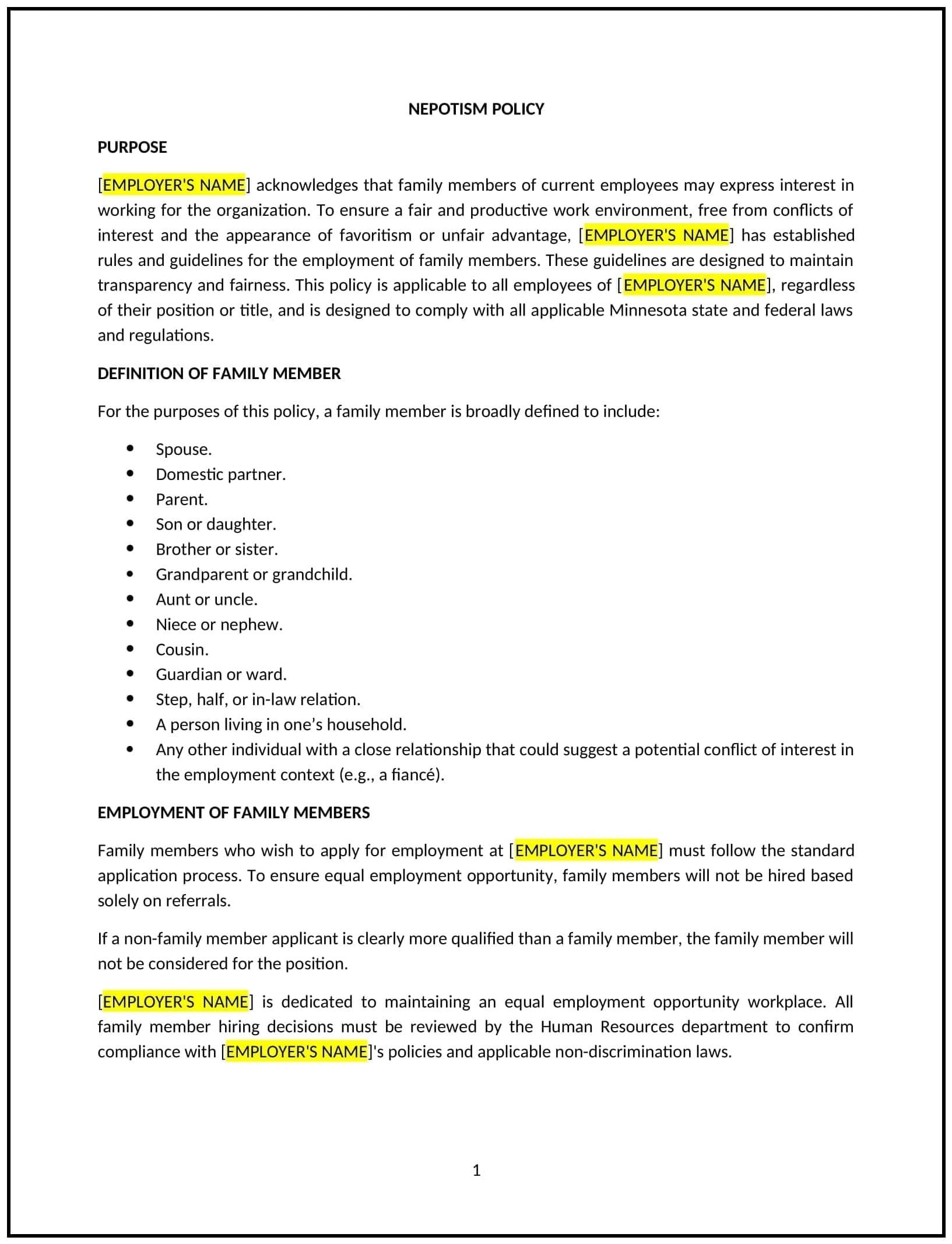
Nepotism policy (Minnesota)
This nepotism policy is designed to help Minnesota businesses address the hiring and employment of relatives within the organization. It establishes guidelines for managing potential conflicts of interest, ensuring fairness in hiring, and maintaining transparency in decision-making when family members are employed in the same organization.
By implementing this policy, businesses can prevent any preferential treatment, maintain objectivity in employment decisions, and promote a fair and equitable workplace.
How to use this nepotism policy (Minnesota)
- Define nepotism: Clearly define nepotism within the context of the workplace, including the hiring, promotion, or supervision of relatives or family members within the organization.
- Set disclosure requirements: Employees should be required to disclose any family relationships with colleagues or supervisors, particularly when applying for positions or when such relationships may create a perceived conflict of interest.
- Establish guidelines for hiring relatives: Specify whether family members are allowed to work together in the same department or under the same management and under what conditions.
- Prevent conflicts of interest: Outline the steps to mitigate any potential conflicts of interest, such as ensuring that relatives do not report to or supervise each other or have influence over decisions involving family members.
- Provide an approval process: Establish a process for reviewing and approving any potential hiring or promotion decisions involving family members to ensure that these decisions are made without bias or favoritism.
- Ensure fairness in promotions: Clearly state that family relationships should not influence career progression. Promotions should be based solely on merit and performance, not on familial connections.
Benefits of using a nepotism policy (Minnesota)
Implementing this policy provides several advantages for Minnesota businesses:
- Promotes fairness: By setting clear rules for the employment of family members, businesses can ensure that all employees are treated fairly, with decisions based on merit rather than family relationships.
- Reduces the risk of favoritism: This policy helps prevent favoritism in hiring, promotions, or resource allocation, promoting a healthy work environment where all employees feel equally valued.
- Prevents conflicts of interest: By clearly addressing nepotism, businesses can avoid conflicts of interest, where personal relationships might interfere with work decisions, thus maintaining professional objectivity.
- Enhances transparency: A formal policy fosters transparency in the hiring and promotion process, making it clear that all employees, including those with family connections, are held to the same standards.
- Reflects Minnesota-specific considerations: The policy can be tailored to align with Minnesota’s workplace regulations and business culture, ensuring that it complies with local labor laws while addressing employee concerns.
Tips for using this nepotism policy (Minnesota)
- Communicate clearly: Make sure all employees are aware of the nepotism policy, especially when they are applying for roles or working with family members within the company.
- Encourage transparency: Encourage employees to disclose family relationships when applying for positions or when they join the company, fostering an open and honest workplace culture.
- Monitor for fairness: Regularly assess the company’s hiring and promotion practices to ensure they are being implemented consistently and without bias.
- Provide training: Offer training for managers and HR staff on how to handle situations involving family members in the workplace, focusing on ensuring fairness, avoiding conflicts of interest, and maintaining professionalism.
- Review regularly: Periodically review and update the policy to ensure it remains relevant, effective, and aligned with Minnesota’s labor laws and the evolving needs of the organization.