Got contracts to review? While you're here for policies, let Cobrief make contract review effortless—start your free review now.
Customize this template for free
Nepotism policy (North Dakota)
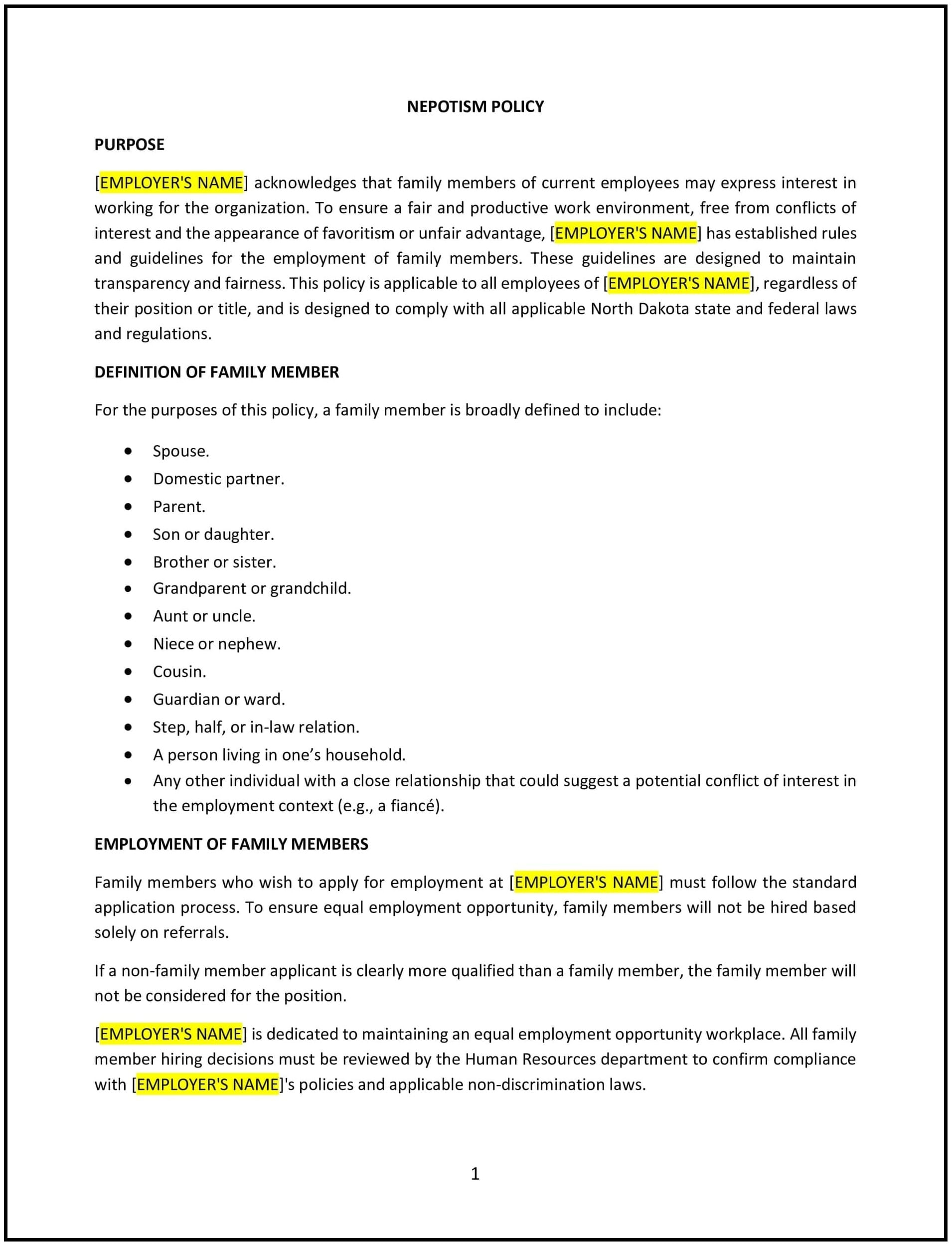
This nepotism policy is designed to help North Dakota businesses establish guidelines for hiring and managing employees with familial relationships within the organization. The policy outlines potential conflicts, hiring procedures, and reporting structures.
By implementing this policy, businesses can promote fairness, avoid conflicts of interest, and maintain a transparent hiring process.
How to use this nepotism policy (North Dakota)
- Define nepotism restrictions: Specify whether and under what conditions family members can work together.
- Establish hiring guidelines: Ensure recruitment processes are based on merit and qualifications.
- Address supervisory relationships: Prohibit direct reporting lines between relatives.
- Require disclosure: Mandate employees to report family relationships within the company.
- Set conflict resolution procedures: Outline steps to address nepotism-related concerns.
- Provide equal opportunity policies: Ensure all hiring decisions are unbiased.
- Review regularly: Update the policy based on workplace needs and organizational growth.
Benefits of using this nepotism policy (North Dakota)
Implementing this policy provides several advantages for North Dakota businesses:
- Promotes workplace fairness: Ensures hiring decisions are based on merit.
- Prevents conflicts of interest: Avoids favoritism in promotions and decision-making.
- Enhances workplace professionalism: Maintains clear and unbiased reporting structures.
- Reduces potential grievances: Establishes transparency in employment practices.
- Reflects North Dakota-specific considerations: Addresses regional workforce dynamics and business needs.
Tips for using this nepotism policy (North Dakota)
- Require employees to disclose relationships with potential hires.
- Prohibit family members from working in supervisory roles over each other.
- Ensure hiring decisions are based on experience and qualifications.
- Establish alternative reporting structures if necessary.
- Adjust as needed: Update policies based on workforce structure and legal requirements.