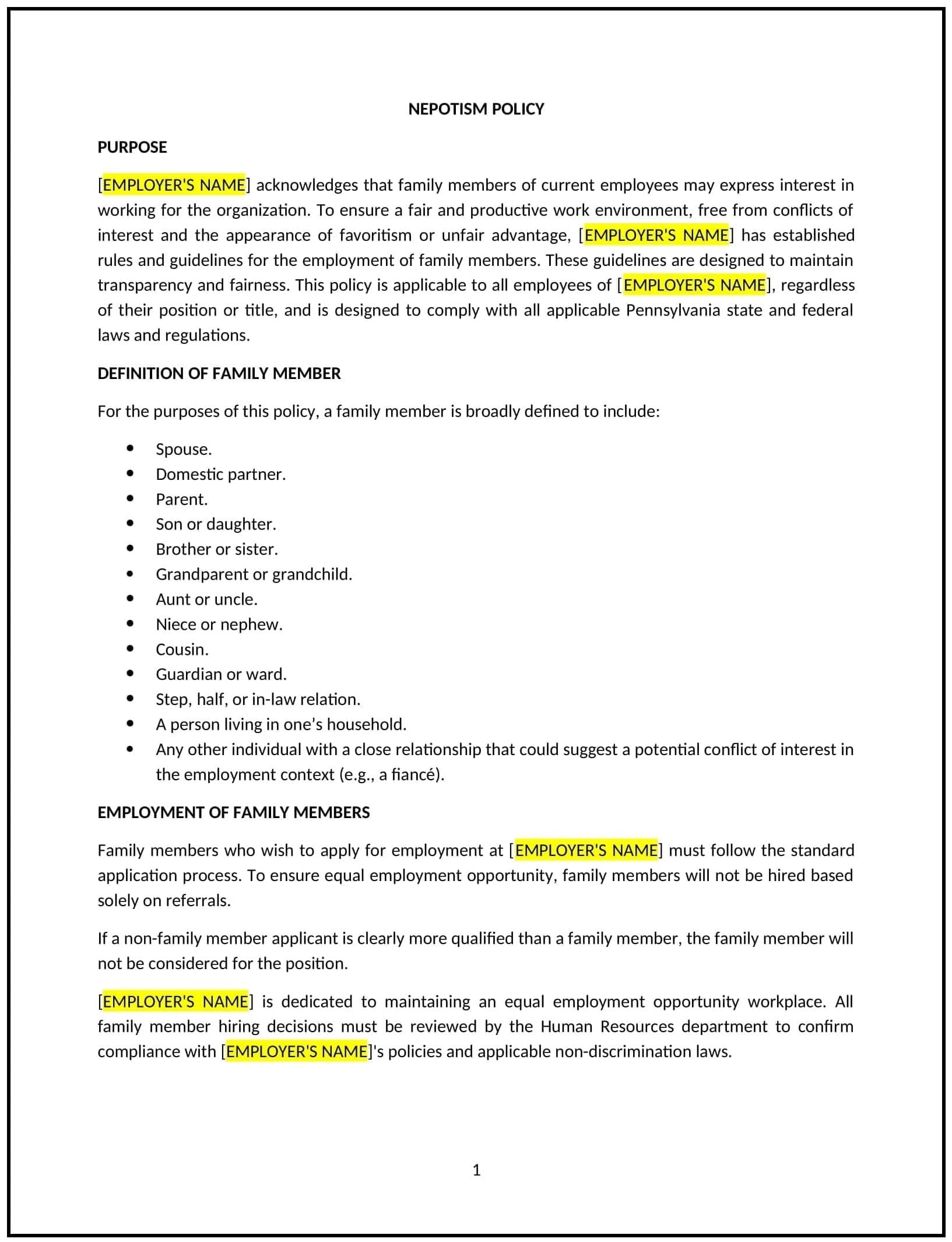
Nepotism policy (Pennsylvania): Free template
Prevents favoritism by establishing fair hiring and supervisory practices involving family members.
- Policies
- Pennsylvania
Nepotism policy (Pennsylvania)
This nepotism policy is designed to help businesses in Pennsylvania establish guidelines for hiring, promoting, or supervising relatives and close personal connections. By addressing potential conflicts of interest and promoting fairness, this template ensures that hiring decisions are made objectively while aligning with Pennsylvania labor laws and industry best practices.
By using this template, businesses can promote transparency, reduce favoritism, and maintain a fair and inclusive workplace.
How to use this nepotism policy (Pennsylvania)
- Define nepotism: Clearly explain what constitutes nepotism, such as preferential treatment in hiring, promotions, or performance evaluations for relatives or close personal connections.
- Outline restrictions: Specify rules for hiring, managing, or supervising family members, including prohibited practices and exceptions.
- Include disclosure requirements: Provide instructions for employees to disclose relationships that could create a conflict of interest.
- Address decision-making processes: Detail how the organization will ensure objective decision-making in hiring and promotions to avoid perceived or actual favoritism.
- Reflect Pennsylvania-specific considerations: Tailor the policy to address state workforce needs and industry dynamics, such as regulations applicable to public sector roles or closely-held businesses.
Benefits of using a nepotism policy (Pennsylvania)
A well-structured nepotism policy supports fairness and workplace transparency. Here's how it helps:
- Promotes fairness: Ensures hiring and promotion decisions are based on merit rather than personal relationships.
- Reduces conflicts of interest: Mitigates the risks of favoritism and perceived bias in the workplace.
- Encourages transparency: Requires employees to disclose relationships that could impact workplace decisions.
- Protects workplace morale: Demonstrates a commitment to maintaining a fair and inclusive workplace.
- Reflects local needs: Considers Pennsylvania-specific workforce dynamics, such as common family-owned businesses or public sector regulations.
Tips for using a nepotism policy (Pennsylvania)
- Communicate the policy: Share the policy with employees during onboarding to ensure awareness of the organization’s stance on nepotism.
- Monitor compliance: Regularly review hiring and supervisory practices to identify and address potential nepotism concerns.
- Encourage disclosure: Foster an open culture where employees feel comfortable disclosing potential conflicts of interest.
- Enforce consistently: Apply the policy uniformly across all employees to avoid perceptions of bias or favoritism.
- Review periodically: Update the policy to reflect changes in Pennsylvania labor laws, workplace practices, or organizational goals.
Frequently asked questions (FAQs)
Similar templates
Where deals go from offer to paid
