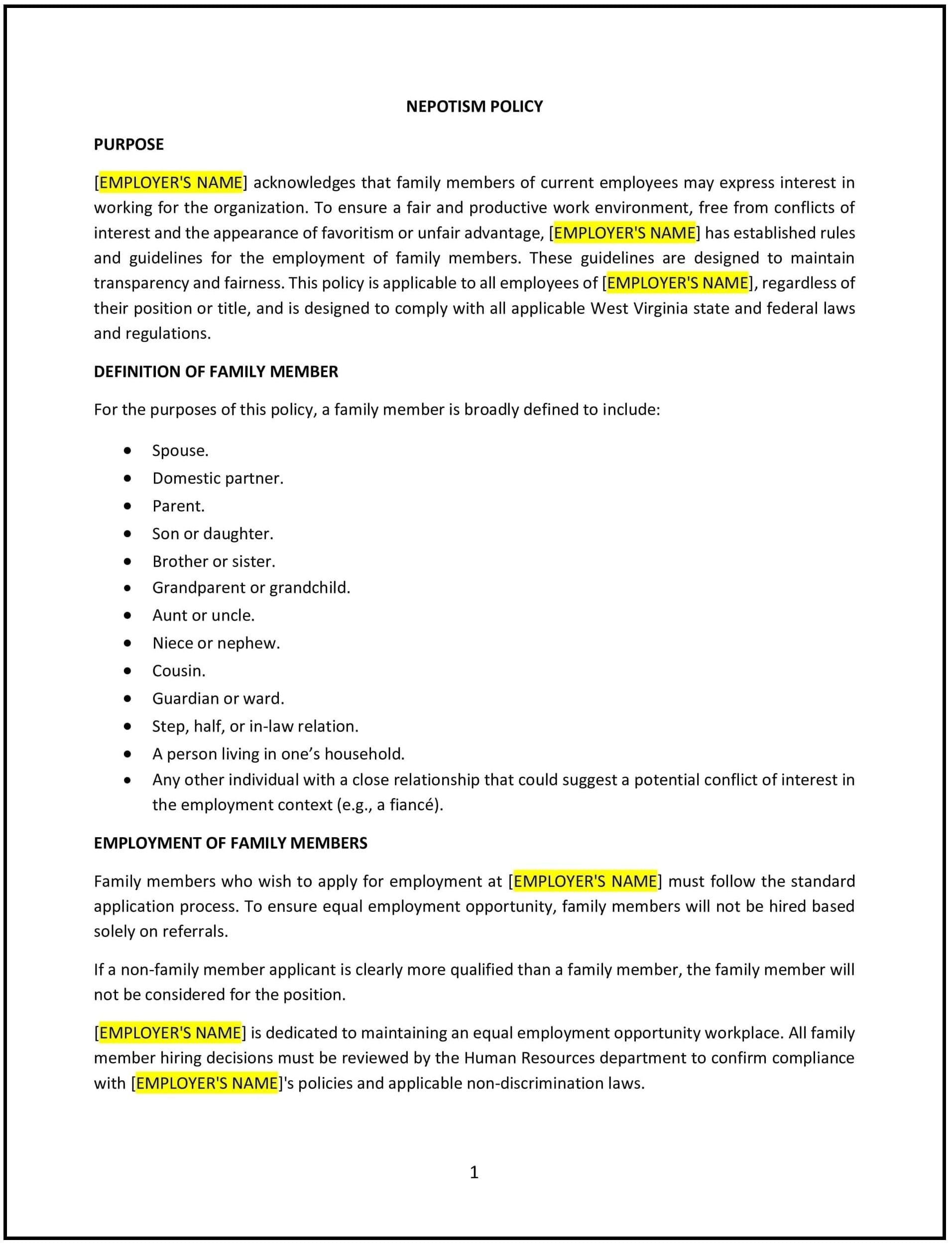
Nepotism policy (West Virginia): Free template
Prevents favoritism in hiring and supervision by regulating employment of family members.
- Policies
- West Virginia
Nepotism policy (West Virginia)
In West Virginia, a nepotism policy establishes clear guidelines to prevent favoritism or conflicts of interest arising from personal relationships in the workplace. This policy promotes fairness, professionalism, and transparency by ensuring that hiring, promotions, and other employment decisions are based on merit rather than personal connections.
The policy outlines prohibited practices, disclosure requirements, and procedures for managing conflicts of interest related to nepotism.
How to use this nepotism policy (West Virginia)
- Define nepotism: Clearly explain what constitutes nepotism, including favoritism in hiring, promotions, or other employment decisions involving family members or close personal relationships.
- Outline prohibited practices: Specify restrictions, such as direct reporting relationships between relatives or involvement in employment decisions affecting family members.
- Establish disclosure requirements: Require employees to disclose personal relationships that may create a conflict of interest, such as family or romantic connections within the workplace.
- Detail conflict resolution procedures: Provide steps for addressing and managing conflicts of interest, including reassignments or adjustments to reporting structures.
- Support compliance: Ensure the policy aligns with West Virginia labor laws and federal anti-discrimination regulations to promote fairness and transparency.
Benefits of using a nepotism policy (West Virginia)
- Promotes fairness: Ensures employment decisions are based on merit and qualifications rather than personal relationships.
- Supports compliance: Aligns with West Virginia labor laws and federal regulations to prevent workplace discrimination or favoritism.
- Enhances professionalism: Fosters a workplace culture of objectivity, accountability, and transparency.
- Reduces conflicts of interest: Provides clear guidelines for managing relationships that could compromise workplace integrity.
- Improves employee morale: Demonstrates the organization’s commitment to equal opportunities for all employees.
Tips for using a nepotism policy (West Virginia)
- Communicate clearly: Share the policy with employees during onboarding and ensure it is accessible for reference.
- Train managers: Provide training on identifying and addressing potential nepotism issues to ensure fair employment practices.
- Monitor compliance: Regularly review employment decisions to ensure adherence to the policy and address any concerns promptly.
- Encourage disclosure: Create an environment where employees feel comfortable disclosing relationships to avoid potential conflicts of interest.
- Review periodically: Update the policy to reflect changes in West Virginia laws, workplace practices, or organizational needs.
Frequently asked questions (FAQs)
Similar templates
Where deals go from offer to paid
