Open source software policy (Connecticut): Free template
Got contracts to review? While you're here for policies, let Cobrief make contract review effortless—start your free review now.
Customize this template for free
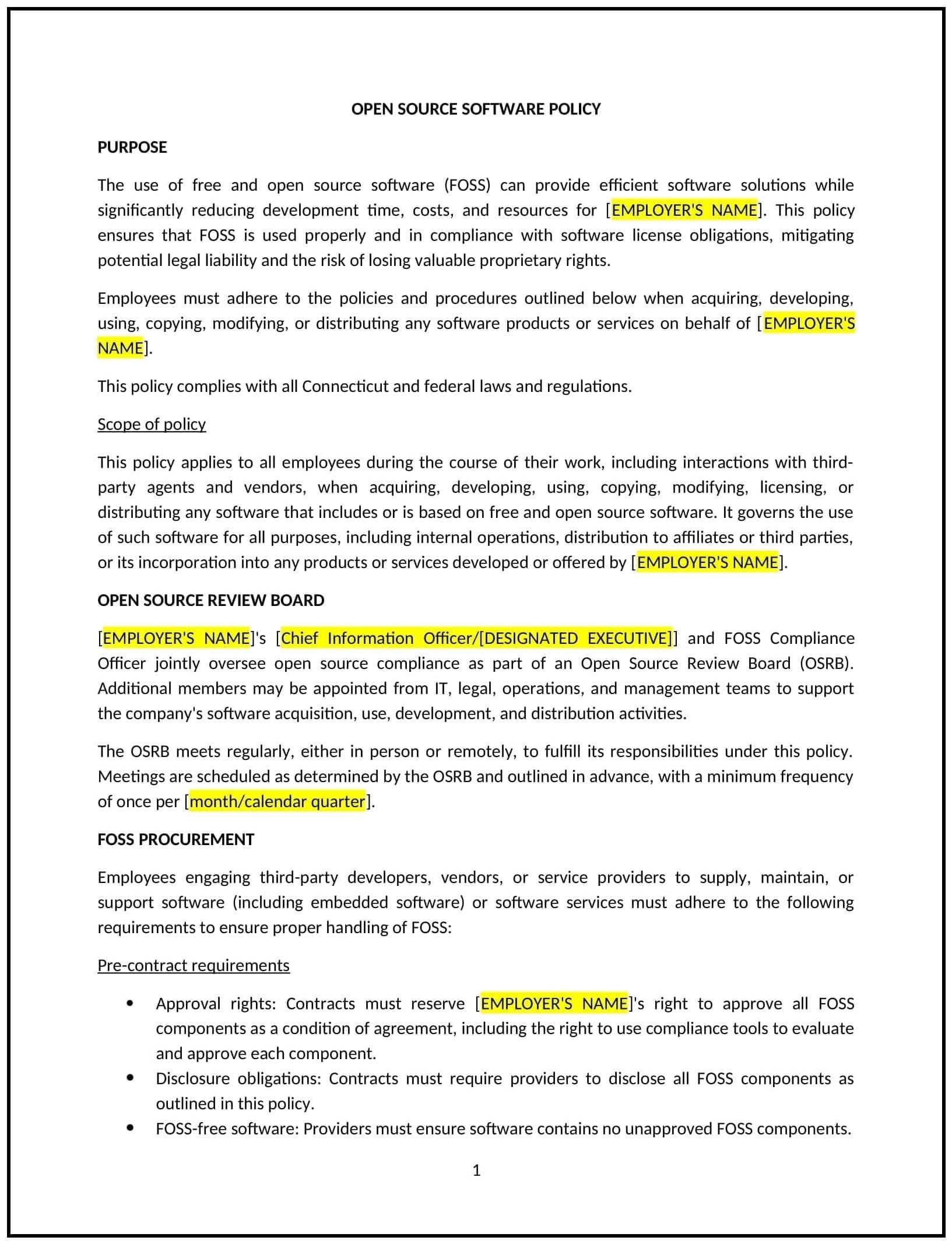
Open source software policy (Connecticut)
An open source software policy helps Connecticut businesses manage the use, distribution, and contribution to open source software in a way that aligns with legal and business requirements. This policy outlines guidelines for using open source software, ensuring compliance with licensing terms, protecting intellectual property, and avoiding legal risks associated with distribution or modification of open source code.
By implementing this policy, businesses can foster innovation, contribute to the open source community, and ensure that open source software is used responsibly and in accordance with company values and legal obligations.
How to use this open source software policy (Connecticut)
- Define open source software: Clearly explain what constitutes open source software, including the types of licenses that apply and what these licenses allow (e.g., modification, distribution).
- Establish usage guidelines: Provide guidelines on how employees can use open source software within the company, including the process for evaluating and selecting open source tools or components.
- Compliance with licenses: Ensure that employees understand the importance of adhering to open source licenses, including providing proper attribution, making source code available, and complying with license-specific obligations.
- Contribution to open source: Outline the company’s policy on contributing to open source projects, including approval procedures for making contributions, ensuring that contributions align with the company’s strategic goals, and protecting proprietary information.
- Protect intellectual property: Ensure that employees do not inadvertently contribute proprietary code to open source projects and that any modifications to open source software are done in compliance with company policies regarding intellectual property.
- Security and risk management: Provide guidelines for assessing the security and reliability of open source software, ensuring that it meets the company’s security standards before use or distribution.
Benefits of using this open source software policy (Connecticut)
This policy offers several benefits for Connecticut businesses:
- Ensures legal compliance: Helps the business comply with open source licenses, protecting the company from potential legal challenges and ensuring that intellectual property rights are respected.
- Promotes innovation: Encourages the use of open source software and contributions to the open source community, fostering innovation and collaboration.
- Protects proprietary information: Helps safeguard the company’s intellectual property by ensuring that proprietary code is not accidentally contributed to open source projects or disclosed through improper use of open source software.
- Reduces risk: Provides a structured approach to managing the risks associated with open source software, including security vulnerabilities and compliance issues.
- Enhances reputation: By contributing to the open source community, the business can build a positive reputation as a responsible corporate citizen, improving brand image and relationships with developers and other stakeholders.
Tips for using this open source software policy (Connecticut)
- Communicate the policy clearly: Ensure that all employees understand the guidelines for using and contributing to open source software, as well as the company’s approach to intellectual property and licensing compliance.
- Provide training: Offer training for employees involved in software development or IT to help them understand open source licenses, how to evaluate open source software, and how to avoid legal risks.
- Monitor compliance: Regularly audit the use and contribution of open source software within the company to ensure compliance with the policy and applicable licenses.
- Foster collaboration: Encourage employees to contribute to open source projects in a way that aligns with the company’s business goals and protects its intellectual property.
- Review periodically: Update the policy regularly to reflect changes in open source licensing, security concerns, and company practices to ensure it remains effective and compliant.