Got contracts to review? While you're here for policies, let Cobrief make contract review effortless—start your free review now.
Customize this template for free
Open source software policy (Idaho)
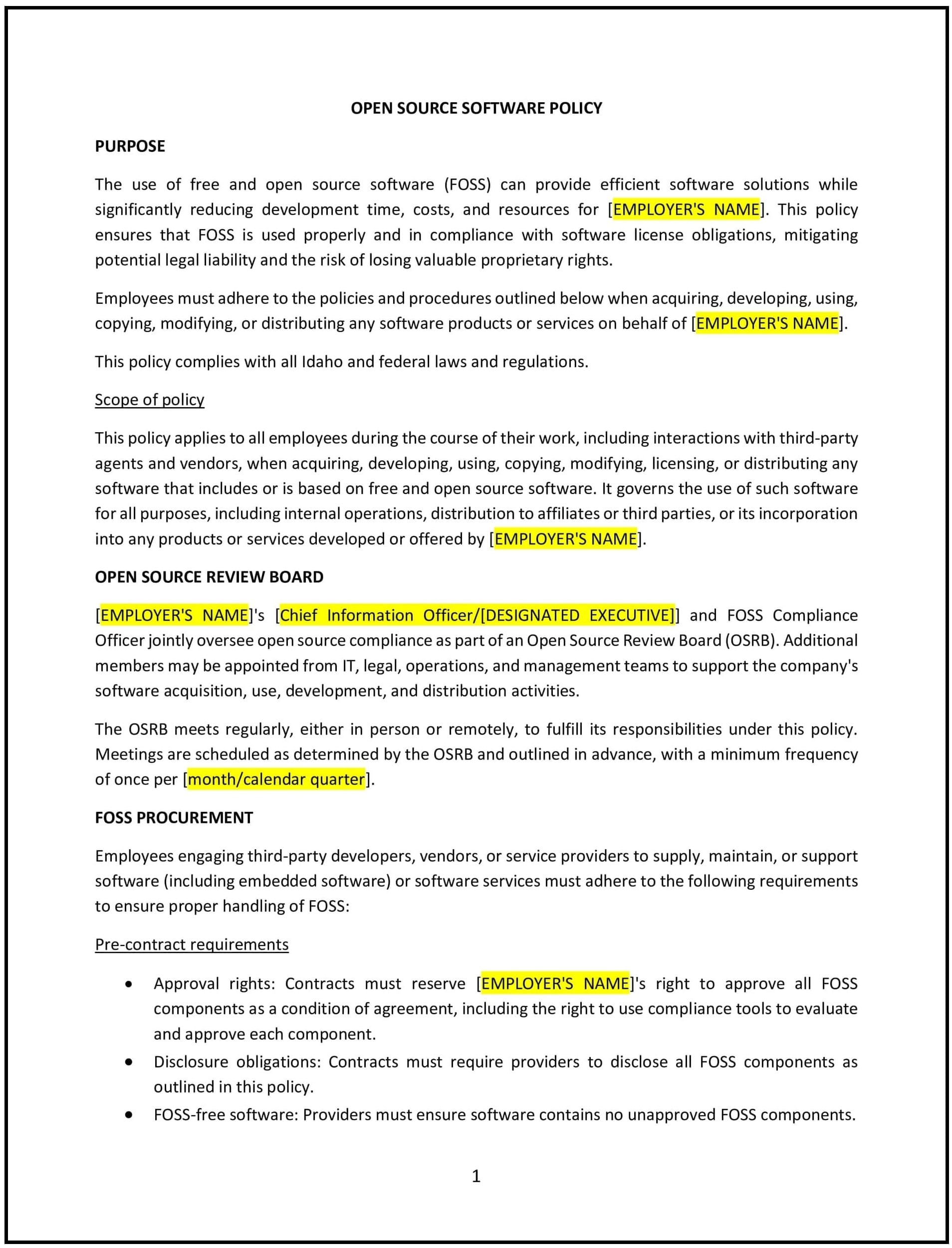
An open source software policy helps Idaho businesses establish guidelines for using, contributing to, and managing open source software (OSS) within their operations. This policy outlines procedures for evaluating OSS licenses, addressing security risks, and ensuring proper attribution and compliance with licensing terms. It also emphasizes the importance of balancing innovation with risk management when leveraging OSS.
By implementing this policy, businesses can harness the benefits of open source software while protecting their intellectual property, maintaining security, and fostering responsible use.
How to use this open source software policy (Idaho)
- Define the scope: Specify which types of open source software are covered by the policy, including software used internally, distributed to customers, or incorporated into proprietary products.
- Establish evaluation procedures: Create a process for reviewing OSS licenses, security risks, and compatibility with business goals before adopting or contributing to open source projects.
- Address licensing requirements: Outline guidelines for complying with OSS license terms, such as providing attribution, sharing modifications, or avoiding proprietary use of copyleft-licensed software.
- Manage contributions: Provide procedures for employees contributing to open source projects, including obtaining approval, documenting contributions, and ensuring they align with the business’s interests.
- Monitor security risks: Implement measures to assess and mitigate security vulnerabilities in OSS, such as regular updates, vulnerability scans, and adherence to secure coding practices.
- Train employees: Educate employees on the policy, including how to evaluate OSS, comply with licensing terms, and contribute responsibly to open source projects.
- Review and update the policy: Periodically assess the policy’s effectiveness and make adjustments based on changes in OSS trends, business needs, or Idaho laws.
Benefits of using this open source software policy (Idaho)
This policy provides several advantages for Idaho businesses:
- Encourages innovation: Open source software provides access to cutting-edge tools and technologies, enabling businesses to innovate and stay competitive.
- Reduces costs: Leveraging OSS can lower software development and licensing expenses, freeing up resources for other business priorities.
- Enhances transparency: Open source software allows businesses to review and modify code, improving transparency and reducing reliance on proprietary vendors.
- Supports collaboration: Contributing to open source projects fosters collaboration with the developer community and enhances the business’s reputation.
- Manages risks: The policy helps businesses address legal, security, and operational risks associated with using and contributing to OSS.
- Promotes responsible use: Clear guidelines ensure employees use and contribute to open source software in a way that aligns with the business’s goals and values.
Tips for using this open source software policy (Idaho)
- Communicate the policy clearly: Share the policy with employees through onboarding materials, training sessions, or internal communication platforms to ensure awareness and understanding.
- Create an OSS review board: Establish a team responsible for evaluating open source software, assessing risks, and approving its use or contribution.
- Document OSS usage: Maintain an inventory of all open source software used by the business, including license types, versions, and any modifications made.
- Monitor license compliance: Regularly review OSS usage to ensure compliance with licensing terms, such as providing attribution or sharing modifications.
- Stay informed about OSS trends: Keep up-to-date with developments in the open source community, including new licenses, security vulnerabilities, and best practices.
- Review the policy regularly: Update the policy as needed to reflect changes in OSS trends, business needs, or Idaho laws.