Got contracts to review? While you're here for policies, let Cobrief make contract review effortless—start your free review now.
Customize this template for free
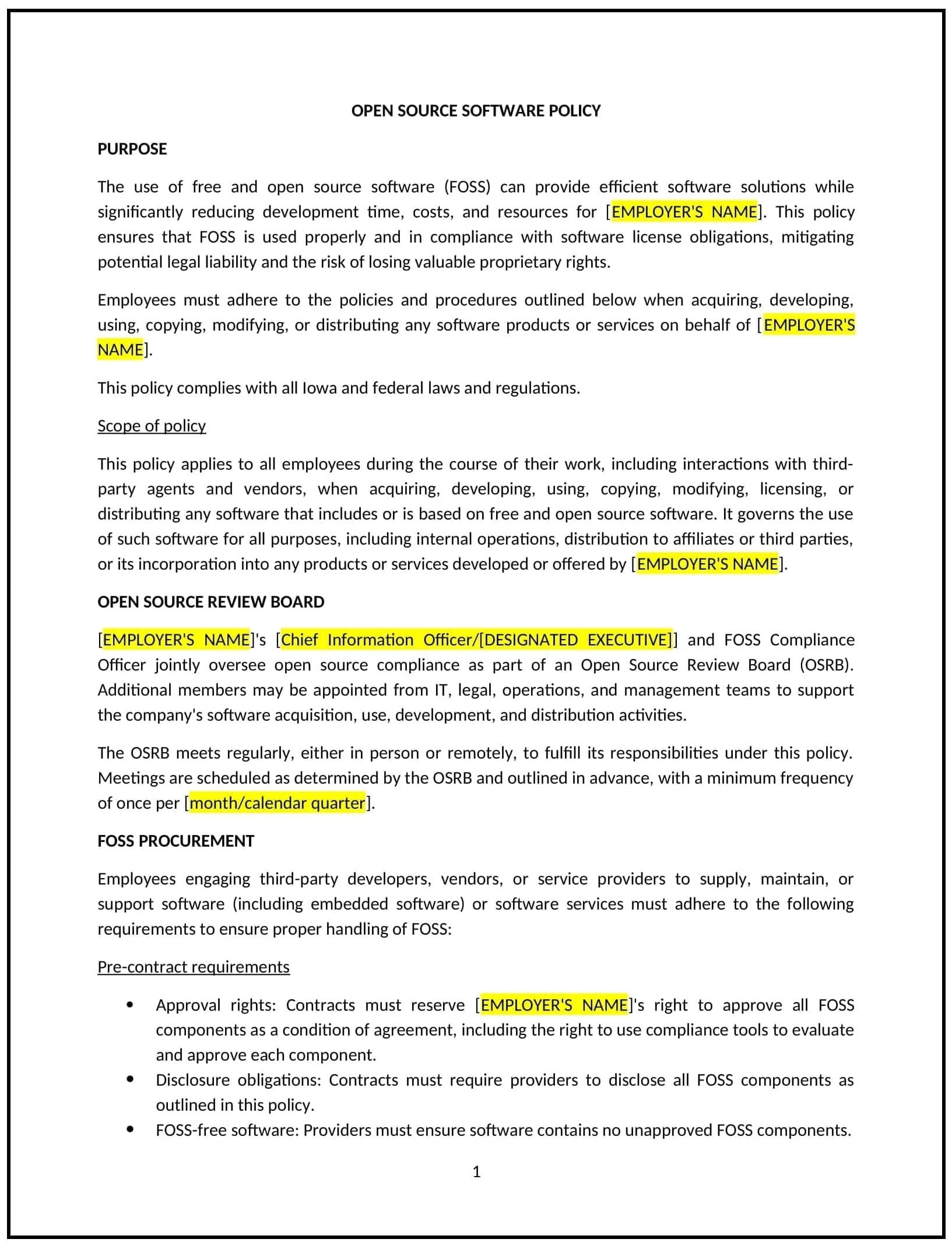
Open source software policy (Iowa)
An open source software policy helps Iowa businesses establish clear guidelines for the use, modification, and distribution of open source software within the organization. This policy outlines the legal, operational, and security considerations associated with integrating open source software into the business environment, ensuring that the organization maximizes its benefits while mitigating potential risks.
By adopting this policy, businesses can manage the use of open source software effectively, ensuring it aligns with the organization’s goals, legal requirements, and IT infrastructure.
How to use this open source software policy (Iowa)
- Define open source software: Provide a clear definition of what constitutes open source software, distinguishing it from proprietary software and explaining the licensing models commonly used in the open-source community.
- Set guidelines for usage: Establish criteria for when open source software can be used within the organization, including considerations for security, functionality, and support. This should also include guidelines for selecting open source software for business-critical systems.
- Address licensing compliance: Ensure that employees are aware of the terms and conditions of open source licenses, and specify how the business will comply with these terms, including distributing software and providing attribution when required.
- Create an approval process: Implement a process for reviewing and approving the use of open source software within the organization. This should involve legal, IT, and security teams to ensure all legal and technical aspects are considered.
- Establish guidelines for modification and distribution: Set rules for modifying open source software and the distribution of any modifications, ensuring that modifications align with the terms of the relevant open-source license.
- Ensure security and updates: Develop procedures for evaluating the security of open source software, tracking vulnerabilities, and ensuring that the software is kept up to date with the latest patches and security fixes.
- Provide training: Offer training for employees on the use of open source software, licensing requirements, security risks, and best practices for integrating open source components into proprietary software or IT infrastructure.
- Review and update regularly: Periodically review and update the policy to reflect changes in open source software trends, licensing laws, and the organization’s IT needs.
Benefits of using this open source software policy (Iowa)
This policy offers several key benefits for Iowa businesses:
- Mitigates legal risks: By addressing licensing compliance and usage guidelines, businesses reduce the risk of violating open source licenses, which can lead to legal consequences.
- Enhances security: Clear guidelines on evaluating and managing open source software help prevent security vulnerabilities that could arise from using unpatched or unsupported open source components.
- Maximizes productivity: By integrating open source software effectively into the business, businesses can leverage cost-effective tools while maintaining control over their IT infrastructure and software solutions.
- Promotes innovation: Open source software allows businesses to access a wide range of freely available tools and technologies that can foster innovation, customization, and collaboration.
- Facilitates collaboration: Encouraging the responsible use of open source software fosters collaboration with external developers, communities, and organizations, creating opportunities for knowledge sharing and contribution.
- Builds a strong IT infrastructure: Proper management of open source software ensures that businesses maintain a secure, reliable, and well-supported IT environment that meets their operational needs.
Tips for using this open source software policy (Iowa)
- Communicate licensing obligations clearly: Businesses should educate employees on the importance of understanding and adhering to open source software licenses to avoid accidental violations.
- Stay updated on security vulnerabilities: Implement a process for regularly reviewing and addressing any security vulnerabilities in open source software used by the organization, and ensure that patches or updates are applied promptly.
- Create a repository of approved software: Maintain a list of approved open source software, making it easier for employees to select software that meets legal and security standards.
- Foster collaboration with the open source community: Encourage employees to contribute to open source projects and collaborate with external developers, building the company’s reputation within the open source community.
- Regularly audit open source software use: Conduct periodic audits to ensure that open source software is being used in accordance with the policy, and that all necessary licenses and compliance requirements are being met.
- Document software modifications: Keep detailed records of any changes made to open source software and ensure that modifications are compatible with the original license terms.