Open source software policy (Minnesota): Free template
Got contracts to review? While you're here for policies, let Cobrief make contract review effortless—start your free review now.
Customize this template for free
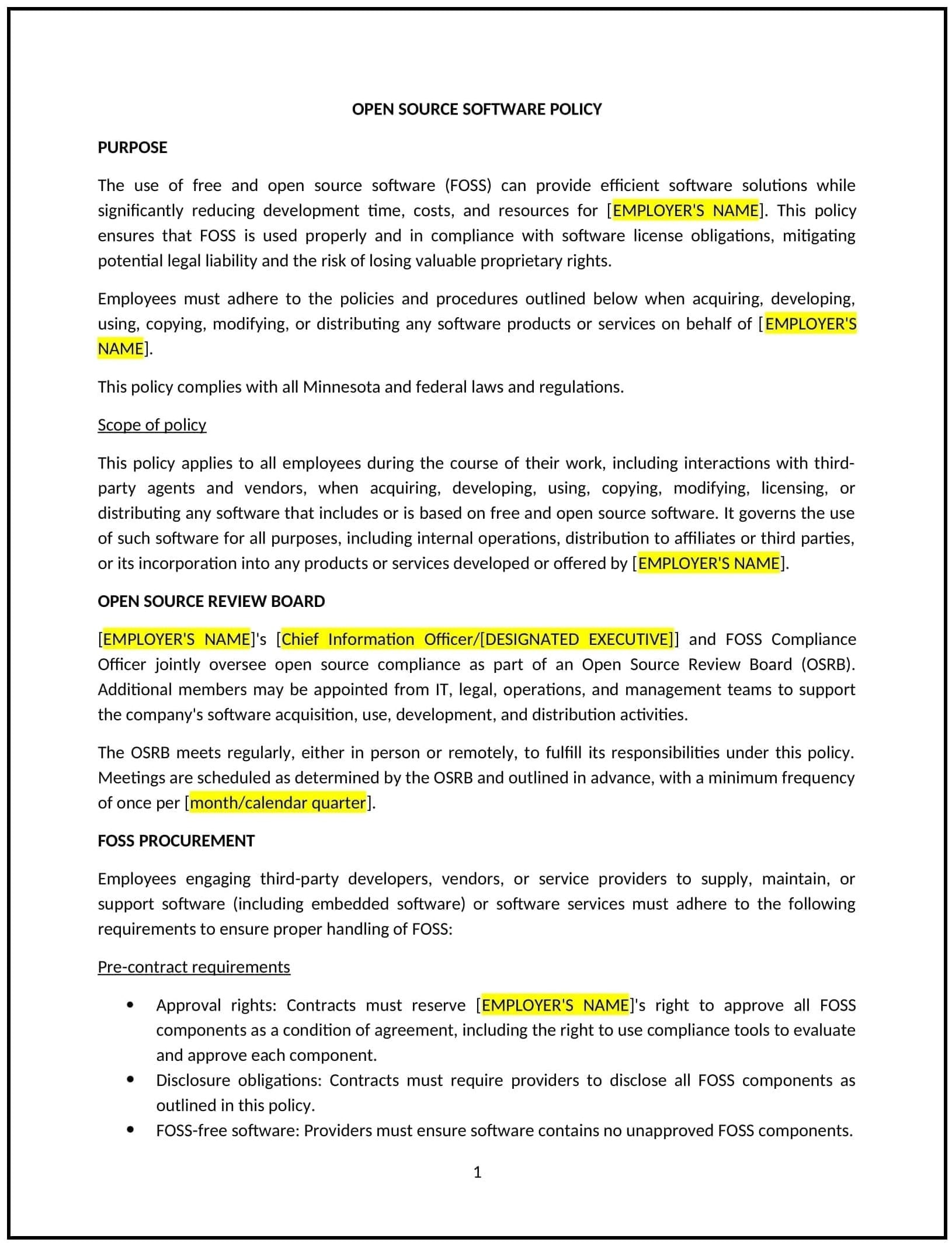
Open source software policy (Minnesota)
This open source software policy is designed to help Minnesota businesses manage the use, contribution, and integration of open-source software within their operations. The policy provides guidelines on the appropriate use of open-source software, addressing potential legal, security, and operational risks, while fostering innovation and collaboration within the company.
By implementing this policy, businesses can ensure that they are using open-source software responsibly, mitigating legal and security risks, and aligning with best practices in the tech industry.
How to use this open source software policy (Minnesota)
- Define open source software: Clearly define what constitutes open-source software and differentiate it from proprietary software, emphasizing that open-source software is software that is freely available for use, modification, and distribution under specific licenses.
- Set approval procedures: Establish a process for evaluating and approving the use of open-source software within the company, including assessing the software’s security, functionality, and licensing requirements.
- Address licensing requirements: Specify that all open-source software used by the business must comply with the terms of the relevant open-source licenses (e.g., GPL, MIT, Apache), and employees should be trained to understand these licensing obligations.
- Define contribution guidelines: Outline the process for employees who wish to contribute to open-source projects, ensuring that any contributions align with the company’s interests and intellectual property rights.
- Address security concerns: Provide guidelines on how open-source software should be evaluated for security vulnerabilities before being used in production environments. Encourage regular updates and patches to mitigate risks associated with outdated software.
- Set intellectual property (IP) management procedures: Ensure employees understand how to handle intellectual property when using or contributing to open-source software, including ownership of modifications and adherence to license agreements.
Benefits of using an open source software policy (Minnesota)
Implementing this policy provides several advantages for Minnesota businesses:
- Encourages innovation: Open-source software often offers flexibility and a wide range of community-driven solutions, which can foster innovation and enhance the company’s technological capabilities.
- Reduces costs: By using open-source software, businesses can reduce costs associated with licensing proprietary software, which can be especially beneficial for startups and SMBs.
- Mitigates legal risks: A clear policy ensures that the company complies with open-source licenses and avoids potential legal issues related to licensing violations or misuse of third-party code.
- Enhances security: By setting clear guidelines for evaluating and maintaining open-source software, businesses can reduce the risks associated with using vulnerable or outdated software in their systems.
- Reflects Minnesota-specific considerations: Tailors the policy to Minnesota’s tech landscape, ensuring that it aligns with the state’s growing open-source software community and the specific needs of local businesses.
Tips for using this open source software policy (Minnesota)
- Communicate clearly: Ensure that all employees are aware of the open-source software policy and understand the requirements for using and contributing to open-source software within the company.
- Perform thorough evaluations: Before integrating any open-source software into the company’s operations, conduct a thorough review to assess its compatibility, security, and licensing terms.
- Encourage responsible contributions: When contributing to open-source projects, ensure that employees understand the company’s IP rights and that any contributions do not inadvertently release proprietary code or violate licensing agreements.
- Keep software up to date: Regularly monitor open-source software for updates, security patches, and new versions to minimize vulnerabilities and ensure the software remains secure.
- Review and update regularly: Review the policy periodically to ensure it aligns with changes in open-source licensing, security standards, and the company’s evolving technology needs.