Parental and pregnancy leave policy (Alaska): Free template
Got contracts to review? While you're here for policies, let Cobrief make contract review effortless—start your free review now.
Customize this template for free
Parental and pregnancy leave policy (Alaska)
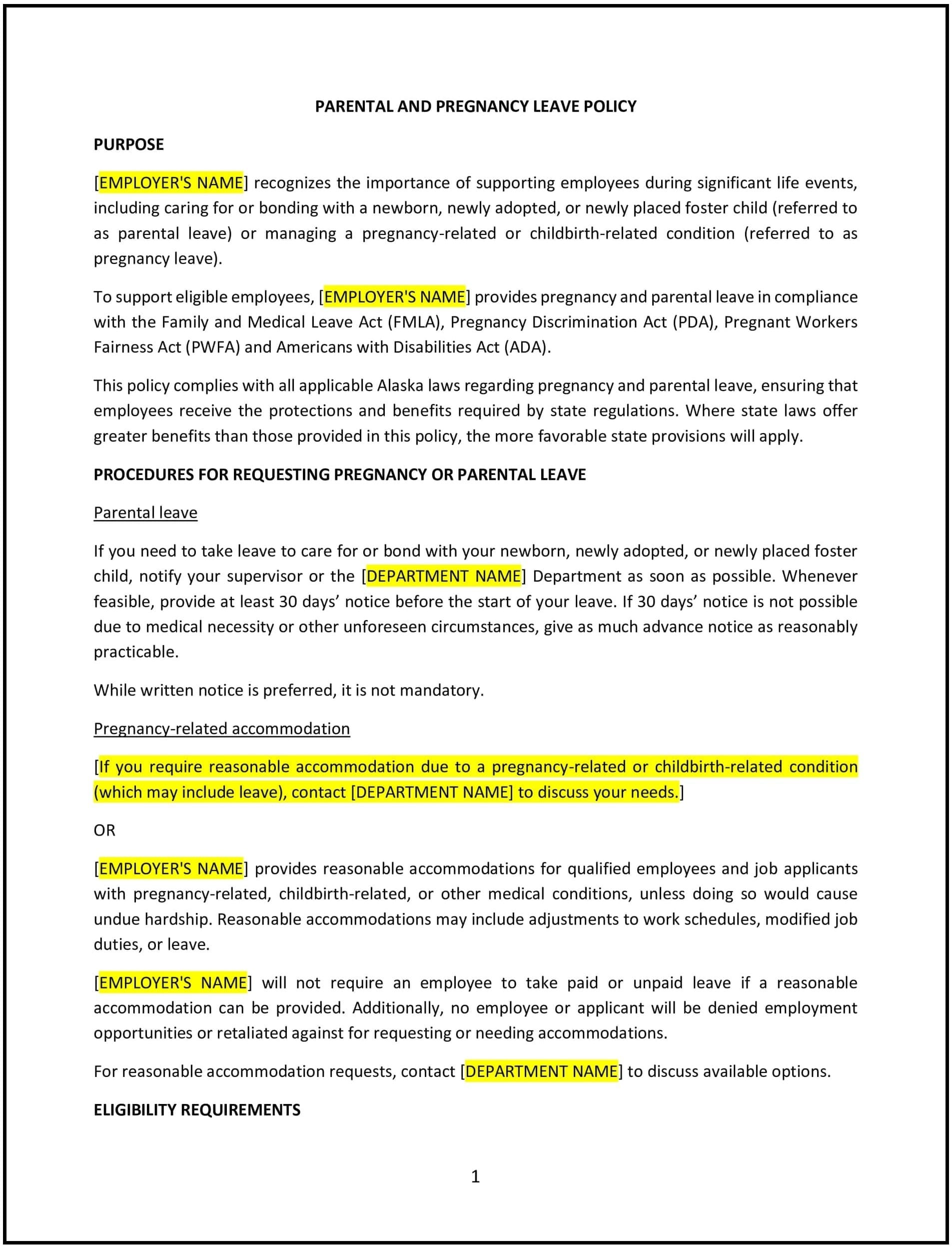
In Alaska, a parental and pregnancy leave policy provides employees with guidelines for taking time off to care for a new child, recover from childbirth, or address pregnancy-related medical needs. This policy ensures compliance with federal regulations such as the Family and Medical Leave Act (FMLA) and outlines company-specific benefits to support employees during this significant life event.
By implementing this policy, businesses can foster a supportive and inclusive workplace culture.
How to use this parental and pregnancy leave policy (Alaska)
- Define eligibility: Specify which employees qualify for leave, such as those who meet tenure and hours-worked requirements under FMLA or other applicable laws.
- Outline leave duration: Clearly state the maximum duration of leave for parental and pregnancy-related absences, including paid and unpaid options.
- Address medical accommodations: Include provisions for flexible work arrangements or reduced schedules for pregnancy-related medical needs before or after childbirth.
- Include documentation requirements: Require employees to submit appropriate documentation, such as medical certificates or adoption papers, to validate leave requests.
- Communicate benefits: Provide details on company-specific benefits, such as paid leave options, continuation of health insurance, and job protection during leave.
Benefits of using a parental and pregnancy leave policy (Alaska)
A parental and pregnancy leave policy provides several advantages for businesses in Alaska. Here’s how it helps:
- Supports compliance: Ensures adherence to federal laws, such as FMLA, and applicable state regulations, reducing the risk of legal disputes.
- Enhances employee well-being: Demonstrates a commitment to supporting employees during life events, fostering loyalty and job satisfaction.
- Promotes workplace equity: Provides equal opportunities for all employees to balance work and family responsibilities.
- Boosts retention: Reduces turnover by offering supportive leave options that encourage employees to return to work after their leave period.
- Builds reputation: Establishes the company as a family-friendly employer, enhancing its ability to attract and retain top talent.
Tips for using a parental and pregnancy leave policy (Alaska)
- Address remote work: Include guidelines for remote employees, such as flexibility in leave documentation or virtual accommodations for medical appointments.
- Monitor compliance: Regularly review leave practices to ensure alignment with FMLA and other relevant regulations.
- Provide manager training: Equip managers with the skills to handle leave requests sensitively and ensure consistent application of the policy.
- Offer reintegration support: Include provisions for phased returns to work or adjusted schedules to help employees transition back smoothly after leave.
- Update as needed: Revise the policy to reflect changes in laws, workforce needs, or company benefits.