Parental and pregnancy leave policy (California): Free template
Got contracts to review? While you're here for policies, let Cobrief make contract review effortless—start your free review now.
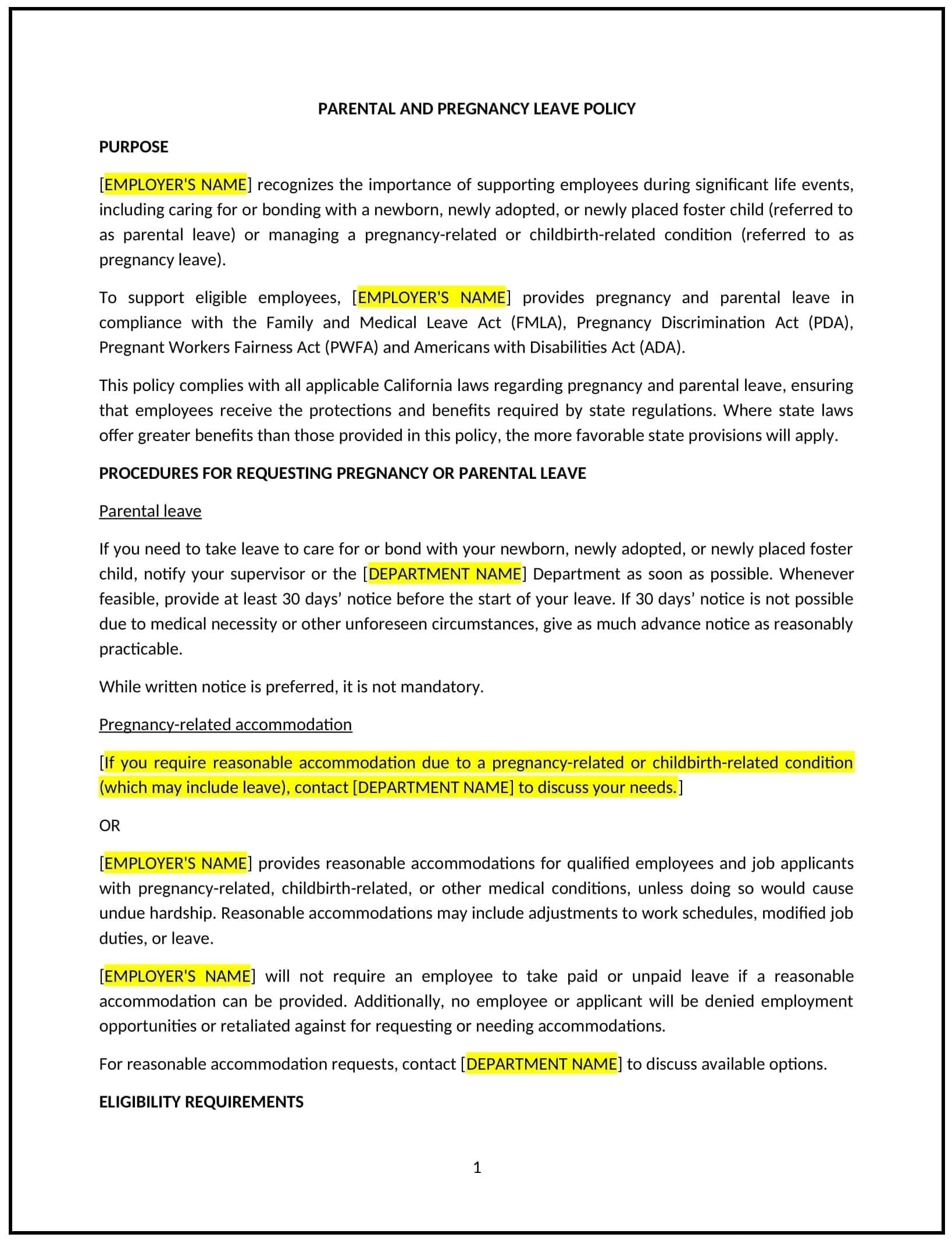
Customize this template for free
Parental and pregnancy leave policy (California)
In California, a parental and pregnancy leave policy provides businesses with guidelines for granting employees time off for pregnancy, childbirth, bonding with a new child, or related medical conditions. This policy supports compliance with the California Family Rights Act (CFRA), the Pregnancy Disability Leave (PDL) law, and other applicable state and federal regulations.
This policy outlines eligibility, leave duration, and procedures for requesting leave. By implementing this policy, California businesses can promote employee well-being, demonstrate inclusivity, and ensure legal compliance.
How to use this parental and pregnancy leave policy (California)
- Define eligibility: Specify which employees qualify for leave under CFRA and PDL based on their length of service and hours worked.
- Outline leave types: Distinguish between medical leave for pregnancy-related conditions under PDL and bonding leave under CFRA.
- Specify leave duration: Clarify the maximum duration of leave, such as up to 4 months for PDL and 12 weeks for CFRA bonding leave.
- Establish request procedures: Provide clear steps for employees to request leave, including notice requirements and necessary medical documentation.
- Communicate return-to-work guidelines: Detail the process for returning to work after leave, including accommodations for transitioning back.
Benefits of using this parental and pregnancy leave policy (California)
This policy offers several advantages for California businesses:
- Supports compliance: Reflects state laws like CFRA and PDL, ensuring lawful management of parental and pregnancy leave.
- Promotes fairness: Provides consistent guidelines for all employees, ensuring equitable access to leave.
- Enhances morale: Demonstrates the business’s commitment to supporting employees during significant life events.
- Reduces risks: Minimizes potential legal disputes by adhering to state and federal requirements.
- Encourages planning: Helps the business manage workloads and operational needs during employee absences.
Tips for using this parental and pregnancy leave policy (California)
- Reflect California-specific laws: Address CFRA and PDL requirements, including protections for pregnancy-related disabilities and bonding leave.
- Train managers: Provide training on handling leave requests and ensuring compliance with state and federal regulations.
- Document processes: Maintain records of leave requests, approvals, and accommodations to support transparency and legal compliance.
- Monitor workloads: Plan for temporary staffing or task reallocation to manage employee absences effectively.
- Review regularly: Update the policy to reflect changes in California laws or workplace practices.