Parental and pregnancy leave policy (Florida): Free template
Got contracts to review? While you're here for policies, let Cobrief make contract review effortless—start your free review now.
Customize this template for free
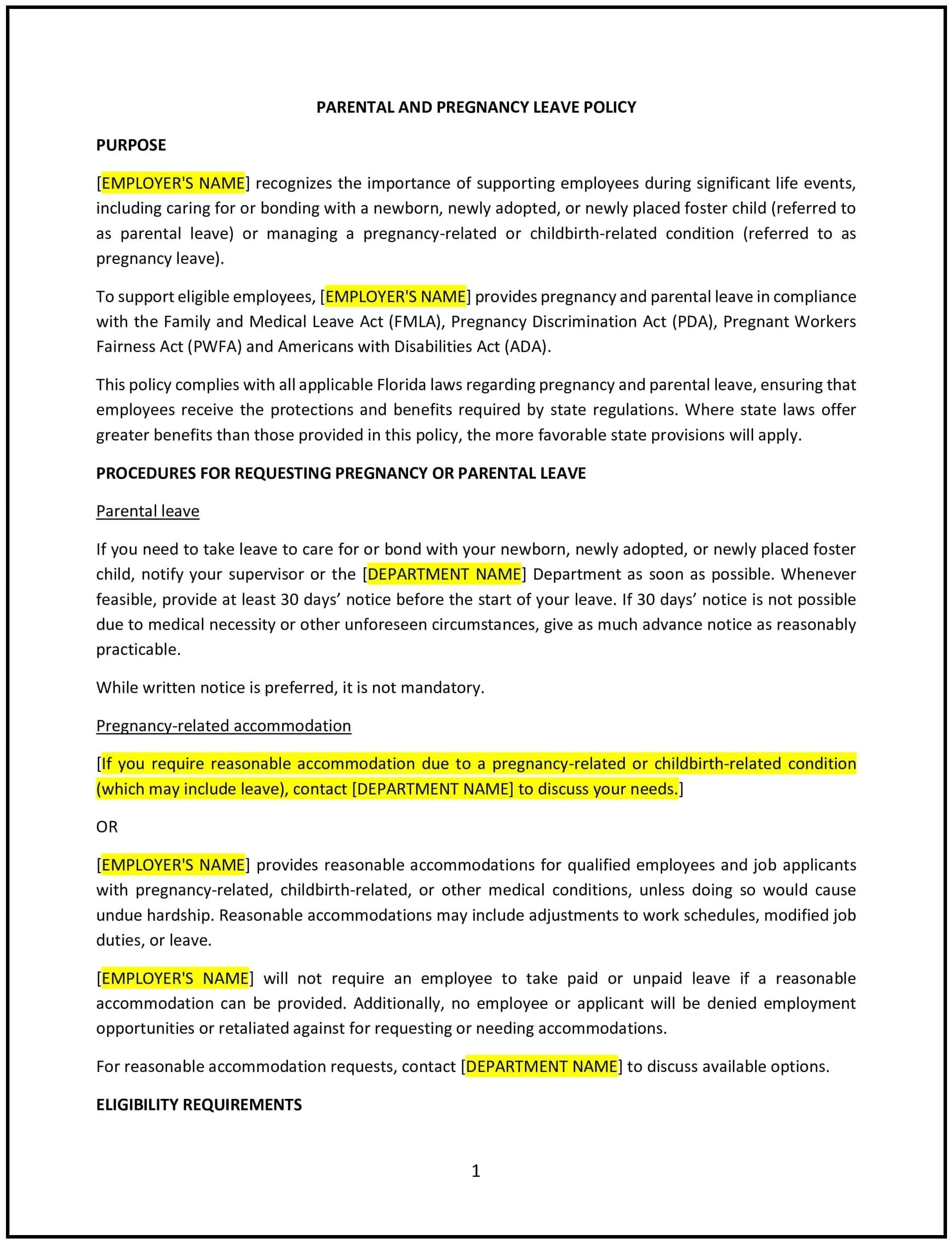
Parental and pregnancy leave policy (Florida)
A parental and pregnancy leave policy helps Florida businesses support employees who are expecting or have recently given birth, as well as those caring for newborns or newly adopted children. This policy outlines procedures for requesting, approving, and managing leave while maintaining operational efficiency. It is designed to promote work-life balance, reduce stress, and provide clear guidelines for handling parental and pregnancy leave requests.
By implementing this policy, businesses in Florida can demonstrate their commitment to supporting employees during significant life events, foster goodwill, and align with the state’s focus on family-friendly practices.
How to use this parental and pregnancy leave policy (Florida)
- Define eligible employees: Clearly specify which employees qualify for parental and pregnancy leave, such as full-time or part-time staff.
- Establish request procedures: Outline how employees should notify the business of their leave, including whom to contact and how to document requests.
- Address leave duration: Explain how much leave is available for pregnancy and parental purposes, including any differences between paid and unpaid leave.
- Specify return-to-work expectations: Provide guidance on how employees should communicate their return date and resume work responsibilities.
- Provide support resources: Offer information about employee assistance programs (EAPs), counseling services, or local resources for support.
- Communicate the policy: Share the policy with employees during onboarding and through regular communications to ensure awareness and understanding.
- Monitor adherence: Regularly review how the policy is applied and address any concerns or discrepancies promptly.
- Update the policy: Periodically assess the policy to reflect changes in workplace dynamics, legal standards, or business needs.
Benefits of using this parental and pregnancy leave policy (Florida)
This policy offers several advantages for Florida businesses:
- Promotes work-life balance: Supporting employees during significant life events helps them manage personal and professional responsibilities more effectively.
- Reduces stress: Providing clear guidelines helps employees navigate leave without added work-related pressure.
- Builds trust: A clear policy demonstrates the business’s commitment to fairness and employee well-being.
- Aligns with community values: Reflects Florida’s emphasis on family-friendly workplaces and mutual support.
- Enhances reputation: Demonstrates the business’s dedication to ethical practices and employee support.
- Improves retention: Offering parental and pregnancy leave contributes to higher employee satisfaction and loyalty.
- Supports growth: A robust policy facilitates a more engaged and productive workforce.
Tips for using this parental and pregnancy leave policy (Florida)
- Communicate clearly: Ensure employees understand the policy by providing written materials and discussing it during meetings or training sessions.
- Train managers: Educate supervisors on how to handle parental and pregnancy leave requests sensitively and consistently.
- Be flexible: Allow for reasonable adjustments based on individual circumstances to ensure effectiveness.
- Track usage: Maintain records of parental and pregnancy leave requests and approvals to monitor trends and ensure fairness.
- Stay informed: Keep up with changes in societal norms, workplace expectations, or state-specific guidelines that may affect leave practices.
- Encourage feedback: Solicit input from employees to identify areas for improvement and ensure the policy meets their needs.
- Review periodically: Assess the policy’s effectiveness and make updates as needed to reflect changes in workplace dynamics or business goals.