Parental and pregnancy leave policy (Iowa): Free template
Got contracts to review? While you're here for policies, let Cobrief make contract review effortless—start your free review now.
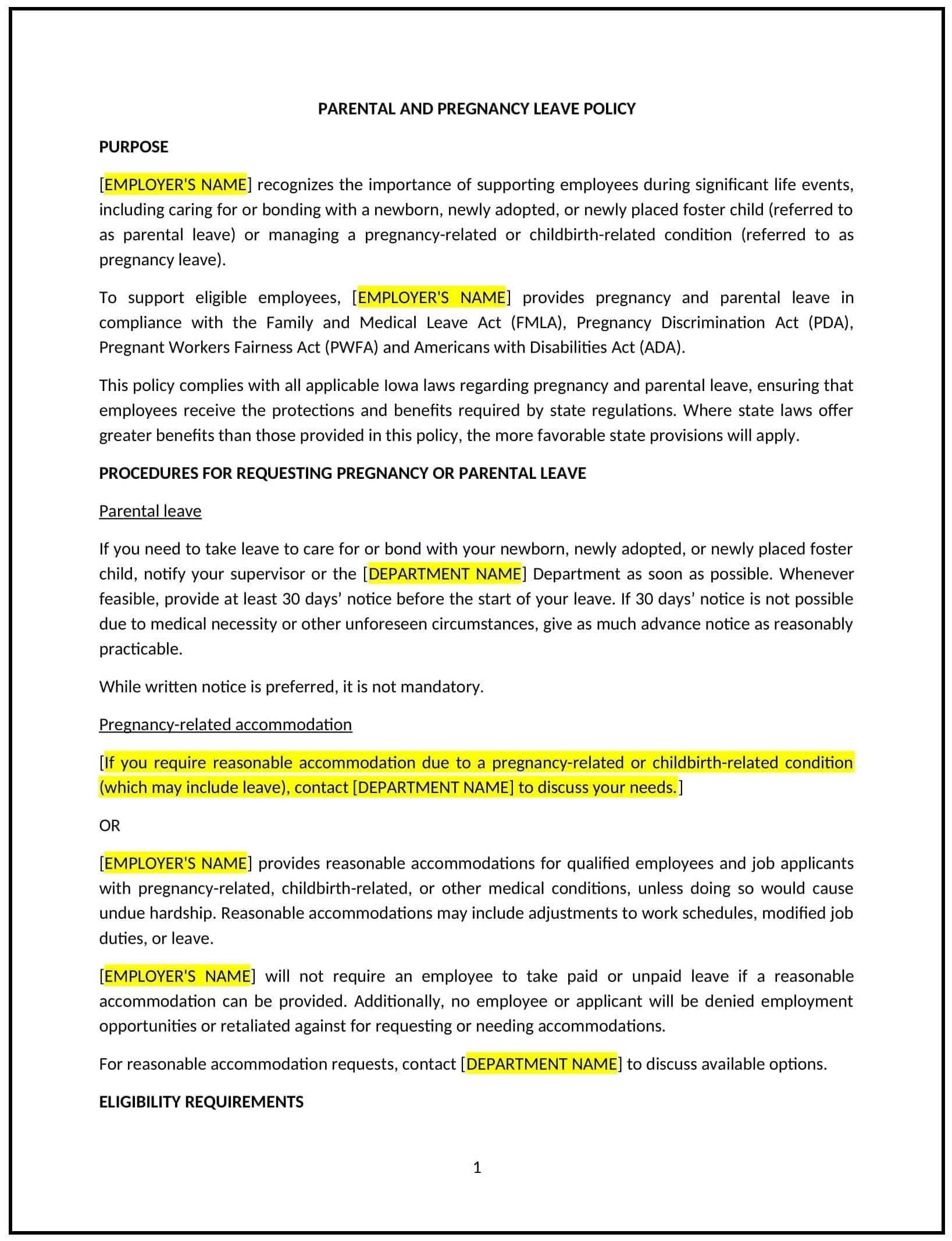
Customize this template for free
Parental and pregnancy leave policy (Iowa)
A parental and pregnancy leave policy helps Iowa businesses support employees during pregnancy, childbirth, and the early stages of parenthood. This policy outlines the rights and responsibilities of both the business and the employee regarding leave for pregnancy, childbirth, and caring for a newborn or adopted child. It specifies the duration of leave, the process for requesting it, and whether the employee will receive pay or benefits during the leave period.
By adopting this policy, businesses in Iowa can create a supportive work environment for parents, support legal compliance, and foster employee retention and well-being during significant life events.
How to use this parental and pregnancy leave policy (Iowa)
- Define eligibility: Specify which employees are eligible for parental and pregnancy leave, including full-time, part-time, and temporary employees, and the length of service required to qualify for leave.
- Set leave duration: Outline how much parental and pregnancy leave employees are entitled to, in accordance with Iowa state law and applicable federal regulations. Clarify whether the leave is paid or unpaid, and for how long it lasts.
- Outline the leave request process: Establish a process for employees to request parental or pregnancy leave, including timelines for submitting requests, required documentation, and how far in advance the request should be made.
- Ensure job protection: Clearly state that employees taking parental or pregnancy leave will be entitled to return to their previous position or a similar position upon their return, in accordance with state and federal law.
- Provide for benefits continuation: Specify whether benefits, such as health insurance, will continue during the leave period and outline the employee’s responsibilities regarding their benefits during leave.
- Address fathers, partners, and adoptive parents: Make sure the policy is inclusive of all parents, including fathers, partners, and adoptive parents, and clearly specify their leave entitlements.
- Review and update regularly: Periodically review and update the policy to reflect any changes in state law, federal regulations, or organizational needs.
Benefits of using this parental and pregnancy leave policy (Iowa)
This policy offers several key benefits for Iowa businesses:
- Supports employee well-being: By providing parental and pregnancy leave, businesses support the health and well-being of employees during pregnancy, childbirth, and the early stages of parenthood, contributing to a positive work-life balance.
- Enhances employee retention: Offering paid or unpaid parental leave shows that the business values its employees, increasing the likelihood of employee loyalty and reducing turnover.
- Promotes equality and inclusivity: A comprehensive leave policy ensures that all employees, regardless of gender, have access to leave for parenting responsibilities, promoting fairness and inclusivity.
- Reduces legal risks: By following state and federal laws regarding parental and pregnancy leave, businesses reduce the risk of legal challenges or discrimination claims from employees.
- Improves workplace culture: A supportive and inclusive parental leave policy fosters a culture of trust and respect, enhancing employee morale and job satisfaction.
- Attracts top talent: Offering generous parental leave helps businesses attract and retain highly skilled workers who are looking for family-friendly workplaces.
Tips for using this parental and pregnancy leave policy (Iowa)
- Communicate the policy clearly: Make sure that all employees are aware of the parental and pregnancy leave policy, how to request leave, and their rights under the policy.
- Plan for adequate coverage: When an employee takes leave, ensure that the business can continue operating smoothly by cross-training other employees or hiring temporary staff if necessary.
- Be flexible with the timing: While the policy may set minimum notice requirements, businesses should be flexible with the timing of leave to accommodate the diverse needs of employees during pregnancy or after the birth or adoption of a child.
- Foster a supportive environment: Create a work environment where employees feel comfortable discussing their leave needs without fear of discrimination or retaliation.
- Track leave requests and usage: Implement a system to monitor leave requests and ensure that employees are receiving the appropriate amount of time off based on their entitlements.
- Address the return-to-work process: Set clear guidelines for employees returning from leave, including any necessary adjustments to their workload, schedule, or duties to support their reintegration into the workplace.