Parental and pregnancy leave policy (Kansas): Free template
Got contracts to review? While you're here for policies, let Cobrief make contract review effortless—start your free review now.
Customize this template for free
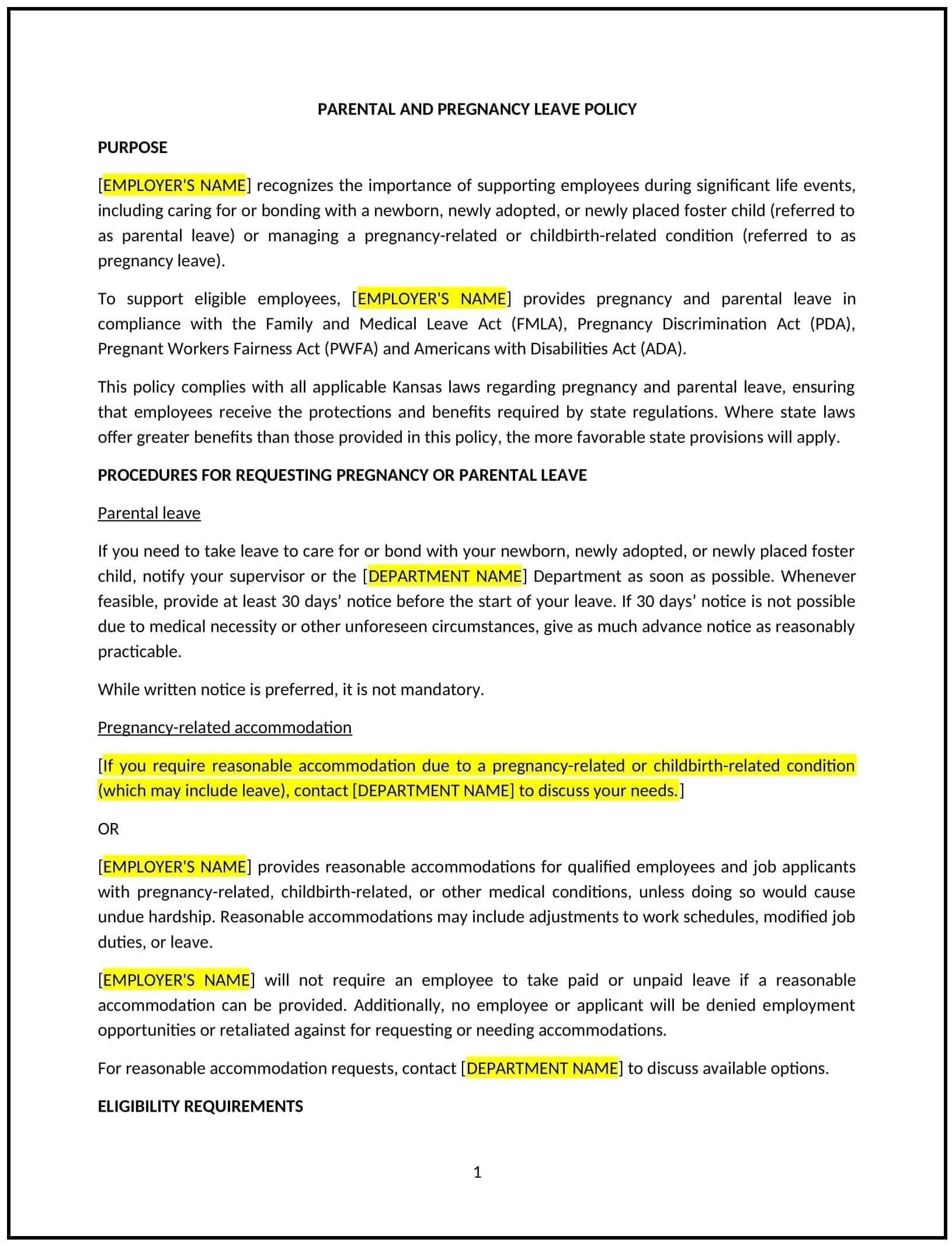
Parental and pregnancy leave policy (Kansas)
A parental and pregnancy leave policy helps Kansas businesses support employees during pregnancy, childbirth, and child-rearing. This policy outlines the company's approach to providing leave for pregnancy, childbirth recovery, and parental bonding, ensuring that employees can take time off without fear of losing their job or benefits.
By implementing this policy, businesses can demonstrate their commitment to supporting work-life balance, promoting gender equality, and retaining valuable employees.
How to use this parental and pregnancy leave policy (Kansas)
- Define eligibility: Businesses should specify which employees are eligible for parental and pregnancy leave, including tenure requirements, full-time or part-time status, and any necessary documentation (e.g., medical certificates or birth certificates).
- Outline types of leave: The policy should clearly distinguish between pregnancy leave, maternity leave, paternity leave, and adoption leave, and outline the specific conditions and durations for each type of leave.
- Set the duration of leave: Businesses should specify how long employees are entitled to take off for pregnancy or parental leave, including whether leave is paid or unpaid, and if it can be taken all at once or in intervals.
- Maintain benefits during leave: Businesses should clarify whether employees on parental or pregnancy leave will continue to receive health insurance, retirement contributions, or other benefits.
- Provide job protection: Employees should be guaranteed the right to return to their original job or an equivalent position after taking parental or pregnancy leave, without penalty or loss of seniority.
- Outline the process for requesting leave: Businesses should establish a clear procedure for employees to request parental or pregnancy leave, including required notice periods and any necessary documentation.
- Review and update regularly: Businesses should periodically review the policy to ensure it aligns with evolving legal requirements, company practices, and employee needs.
Benefits of using a parental and pregnancy leave policy (Kansas)
- Supports work-life balance: Offering parental and pregnancy leave allows employees to care for their families while maintaining their professional careers, enhancing job satisfaction and retention.
- Promotes gender equality: A clear policy ensures that both mothers and fathers are supported during pregnancy, childbirth, and parental bonding, promoting equal treatment in the workplace.
- Retains valuable employees: By offering parental and pregnancy leave, businesses show their commitment to employees’ well-being, which can improve retention and reduce turnover.
- Enhances company reputation: Businesses with family-friendly policies are viewed more favorably by both current employees and potential recruits, helping to attract top talent.
- Improves employee morale: Employees feel more valued and supported when they know their employer cares about their family responsibilities, leading to increased morale and productivity.
- Reduces legal risks: A well-defined policy helps businesses comply with applicable family leave laws, minimizing the risk of legal challenges or disputes related to parental or pregnancy leave.
Tips for using this parental and pregnancy leave policy (Kansas)
- Communicate the policy clearly: Businesses should ensure that all employees understand the parental and pregnancy leave policy, including eligibility, procedures for requesting leave, and the benefits they are entitled to during leave.
- Maintain flexibility: While the policy should set clear guidelines, businesses should also be flexible in accommodating the unique needs of employees, such as offering additional unpaid leave or part-time return options.
- Foster a supportive culture: Managers should be trained to support employees taking parental or pregnancy leave, ensuring that employees feel comfortable and confident in using their leave.
- Track leave requests: Businesses should have a system for tracking parental and pregnancy leave requests to ensure that all documentation is submitted on time and that leave is granted according to the policy.
- Regularly review the policy: Businesses should review the policy periodically to ensure it remains compliant with state and federal laws and continues to meet the evolving needs of their employees.