Payroll and compensation policy (Iowa): Free template
Got contracts to review? While you're here for policies, let Cobrief make contract review effortless—start your free review now.
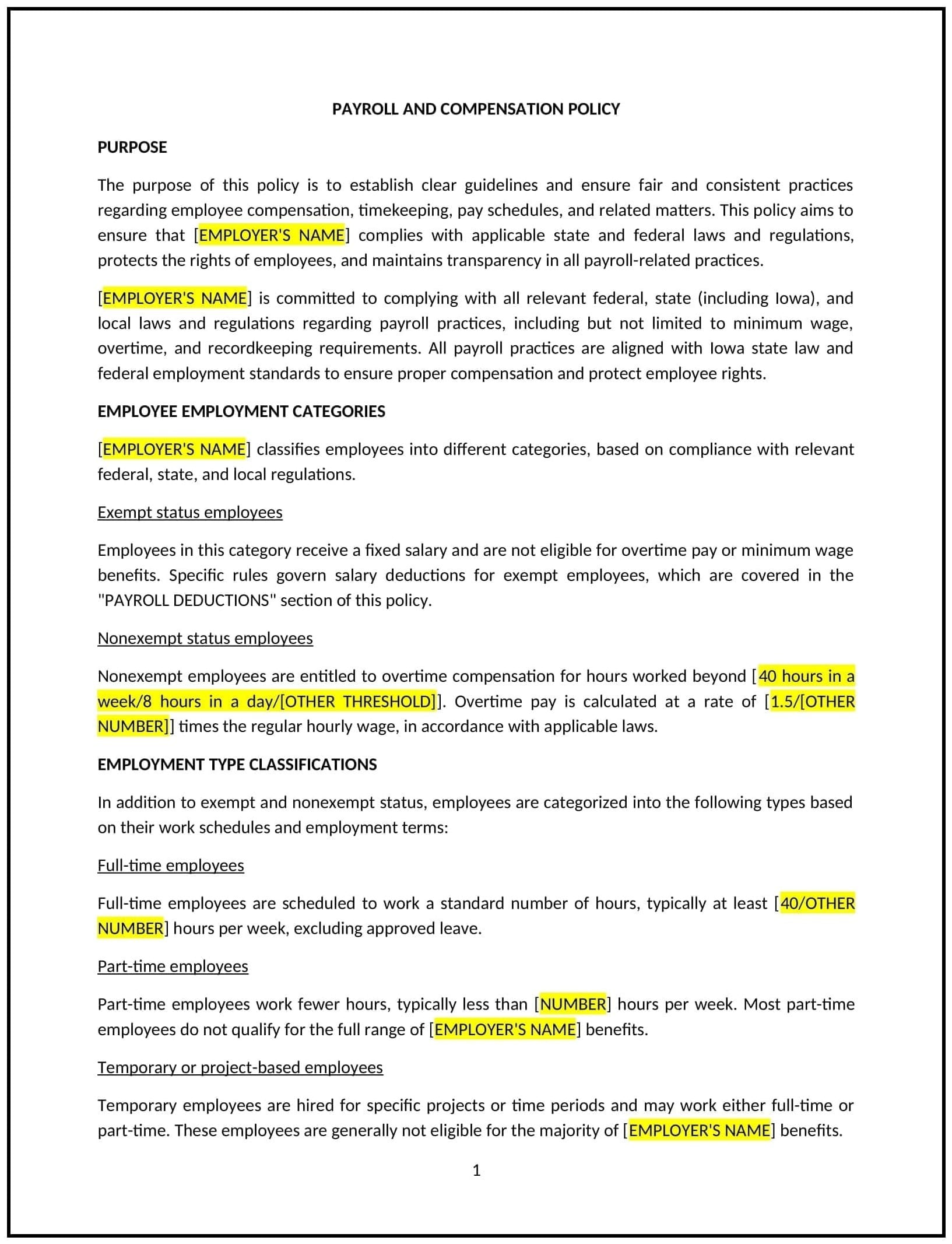
Customize this template for free
Payroll and compensation policy (Iowa)
A payroll and compensation policy helps Iowa businesses define the structure of employee compensation, ensuring that employees are paid fairly and on time. This policy outlines the salary and wage system, benefits, bonuses, and other forms of compensation, as well as the procedures for payroll processing. It also establishes clear guidelines for deductions, overtime, and payment frequency, ensuring consistency and transparency across the organization.
By implementing this policy, businesses can promote fairness in compensation, maintain accurate payroll records, and support compliance with relevant legal requirements, creating a positive work environment for employees.
How to use this payroll and compensation policy (Iowa)
- Define compensation structure: Establish clear guidelines for determining employee salaries or wages, including base pay, commission, bonuses, and other compensation forms. Specify how compensation is determined based on factors like job role, experience, and performance.
- Set payment frequency: Determine how often employees will be paid (e.g., weekly, biweekly, or monthly) and establish deadlines for payroll submission and disbursement.
- Address overtime and holiday pay: Clearly outline how overtime pay is calculated and any additional compensation for work done on holidays or weekends, in accordance with Iowa state law and federal regulations.
- Specify payroll deductions: Detail the types of deductions that will be made from employees' paychecks, such as taxes, insurance premiums, retirement contributions, and garnishments, and explain how these are calculated.
- Establish benefits package: Outline the benefits offered by the business, including health insurance, retirement plans, paid time off, and other perks, and clarify how benefits are administered and when employees are eligible.
- Communicate payroll issues: Set procedures for employees to raise concerns or issues related to their pay, deductions, or compensation, and establish how these issues will be addressed.
- Review and update regularly: Periodically review and update the policy to reflect changes in compensation laws, business practices, and employee needs.
Benefits of using this payroll and compensation policy (Iowa)
This policy offers several key benefits for Iowa businesses:
- Promotes fairness and equity: By establishing clear compensation guidelines, businesses ensure that all employees are paid fairly for their work, reducing the risk of discrimination or favoritism.
- Enhances employee satisfaction: Clear compensation practices help employees understand how their pay is determined, improving transparency and trust between employees and management.
- Reduces payroll errors: A structured payroll and compensation policy helps businesses streamline payroll processing, reducing errors in pay, deductions, and benefits.
- Ensures legal compliance: By following state and federal regulations for compensation, businesses reduce the risk of non-compliance, fines, or legal challenges related to pay and benefits.
- Strengthens employee retention: Offering competitive compensation and benefits packages can improve employee morale and retention, reducing turnover and recruiting costs.
- Improves financial planning: A consistent payroll and compensation policy allows businesses to budget effectively, plan for expenses, and track labor costs more accurately.
Tips for using this payroll and compensation policy (Iowa)
- Communicate pay schedules: Ensure that employees are aware of when they will be paid and any deadlines for payroll submissions. Clear communication helps avoid confusion or frustration related to pay.
- Monitor overtime and exempt status: Businesses should closely monitor overtime worked and ensure proper classification of employees as exempt or non-exempt based on Iowa state law and federal regulations.
- Review compensation regularly: Periodically assess whether compensation is competitive with industry standards, making adjustments to ensure employee retention and satisfaction.
- Address payroll discrepancies promptly: Establish a clear process for employees to report pay discrepancies and resolve these issues quickly to maintain trust and minimize disruption.
- Provide accessible payroll records: Employees should have access to their payroll records and pay stubs, which help them track their earnings, deductions, and benefits.
- Stay up to date with legal changes: Regularly review changes in federal and state compensation laws, including minimum wage increases, tax law changes, and benefits requirements, to ensure the policy remains compliant.
- Evaluate employee benefits: Businesses should regularly assess their benefits package to ensure it remains competitive and meets employee needs, particularly in areas such as healthcare, retirement, and paid time off.