Payroll and compensation policy (Kansas): Free template
Got contracts to review? While you're here for policies, let Cobrief make contract review effortless—start your free review now.
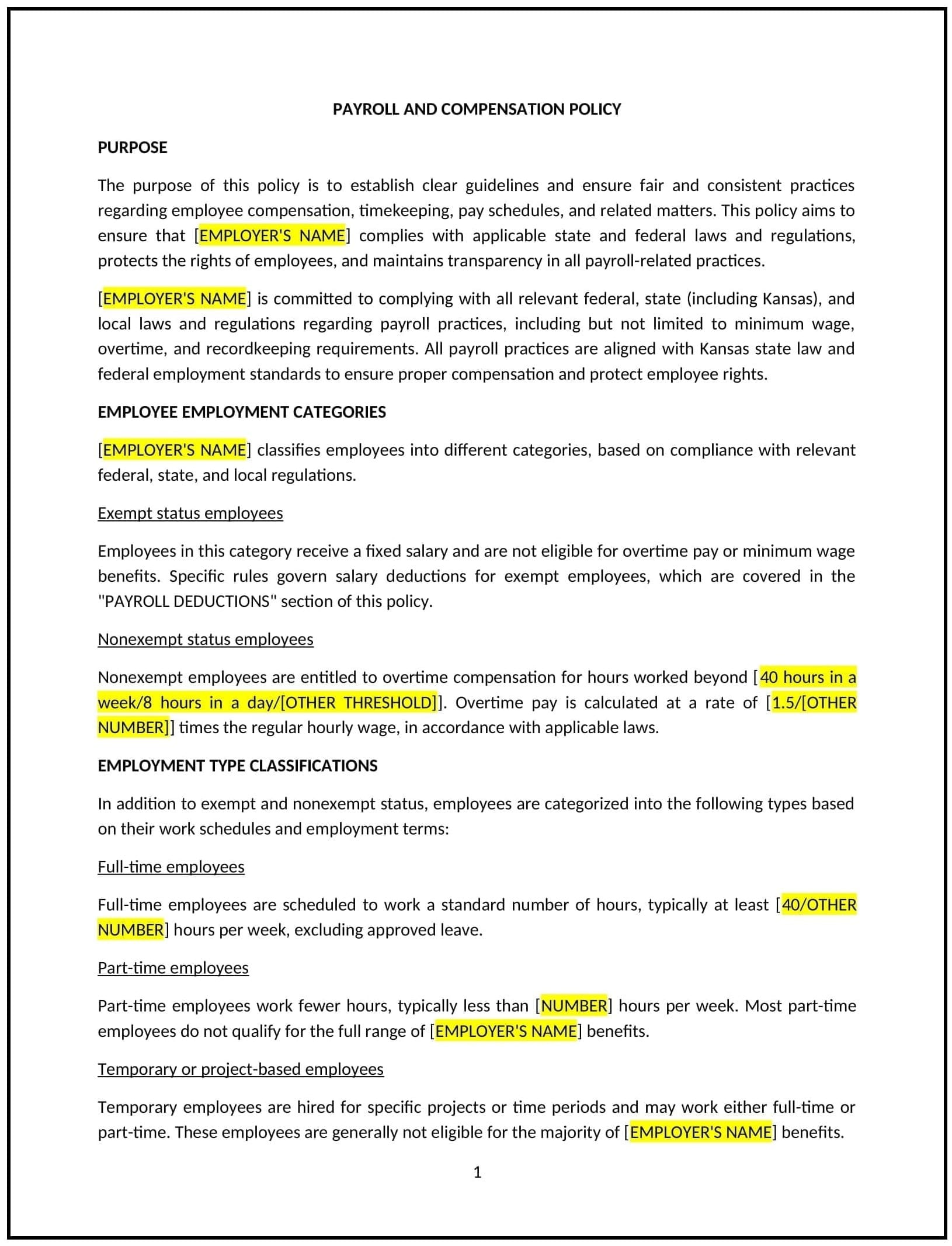
Customize this template for free
Payroll and compensation policy (Kansas)
A payroll and compensation policy helps Kansas businesses establish clear guidelines for employee compensation, including salary structure, pay schedules, overtime, bonuses, and benefits. This policy outlines how employees will be paid, the frequency of payments, and any deductions or withholdings required by law.
By implementing this policy, businesses can promote fairness, transparency, and consistency in compensation practices while ensuring legal compliance and aligning pay practices with company goals.
How to use this payroll and compensation policy (Kansas)
- Define compensation structure: Businesses should outline how salaries or hourly wages are determined, including any factors such as experience, job responsibilities, performance, and market rates.
- Set pay schedules: The policy should specify the frequency of payments, such as weekly, biweekly, or monthly, and any applicable deadlines for payroll processing.
- Address overtime pay: Businesses should establish guidelines for overtime pay, including how it is calculated (typically at time-and-a-half for hours worked over 40 hours per week) and any applicable legal exemptions.
- Specify deductions: The policy should detail any mandatory deductions, such as federal and state taxes, Social Security, Medicare, and any other deductions like retirement plan contributions or health insurance premiums.
- Define bonuses and incentives: If applicable, businesses should clarify the criteria for earning performance-based bonuses, commissions, or other incentive programs and how these are calculated.
- Address paid time off (PTO) and benefits: Businesses should specify how PTO, sick leave, holiday pay, and other employee benefits are handled, including accrual rates and usage guidelines.
- Review and update regularly: Businesses should periodically review the policy to ensure it aligns with current laws, industry standards, and business practices.
Benefits of using a payroll and compensation policy (Kansas)
- Promotes fairness and consistency: A clear policy ensures that all employees are paid equitably based on their roles, performance, and market value, reducing potential discrimination or bias.
- Increases transparency: By outlining compensation details, businesses foster transparency and trust between management and employees regarding pay expectations.
- Reduces legal risks: A formal policy helps businesses stay compliant with federal and state labor laws, preventing legal issues related to employee pay.
- Enhances employee satisfaction: Employees are more likely to feel valued and engaged when they understand their compensation structure and benefits, improving morale and retention.
- Supports financial planning: With clear pay schedules and benefits information, employees can better manage their finances and make informed decisions.
- Strengthens company reputation: Businesses known for fair and transparent compensation practices attract top talent and maintain a strong reputation in the industry.
Tips for using this payroll and compensation policy (Kansas)
- Communicate the policy clearly: Businesses should ensure that all employees are aware of the payroll and compensation policy and understand how their pay and benefits are determined.
- Keep detailed records: Businesses should maintain accurate payroll records, including hours worked, overtime calculations, and deductions, to avoid discrepancies or legal issues.
- Monitor pay equity: Businesses should regularly review their compensation structure to ensure they are paying competitive wages and meeting industry standards to retain talent.
- Be transparent with employees: Employees should have access to clear information about their pay structure, overtime eligibility, and benefits, ensuring transparency and reducing misunderstandings.
- Stay updated on legal requirements: Businesses should stay informed about any changes to labor laws, minimum wage rates, and tax regulations to ensure compliance.
- Offer competitive benefits: In addition to salary, businesses should offer attractive benefits packages that include health insurance, retirement plans, and paid time off to attract and retain top talent.