Payroll and compensation policy (Minnesota): Free template
Got contracts to review? While you're here for policies, let Cobrief make contract review effortless—start your free review now.
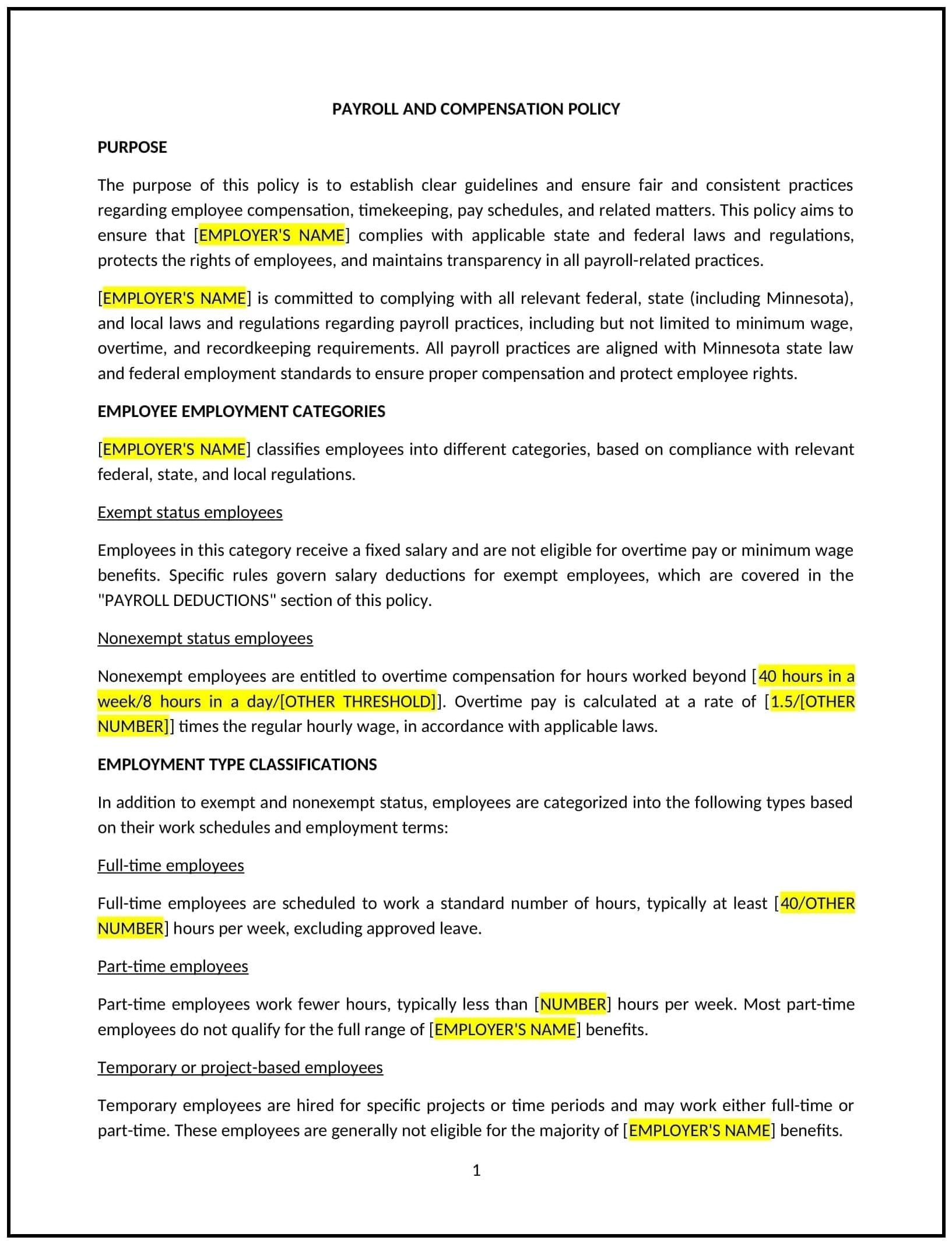
Customize this template for free
Payroll and compensation policy (Minnesota)
This payroll and compensation policy is designed to help Minnesota businesses establish clear, transparent, and fair practices for paying employees. The policy outlines how employees will be compensated for their work, including pay frequency, pay rates, overtime, bonuses, and other forms of compensation. It ensures that payroll processes are aligned with state and federal laws and are fair for all employees.
By implementing this policy, businesses can promote consistency, reduce payroll-related errors, and support compliance with applicable wage laws while fostering employee trust and satisfaction.
How to use this payroll and compensation policy (Minnesota)
- Define pay structure: Clearly outline how pay rates are determined, including base salary, hourly wages, bonuses, and any additional forms of compensation such as commissions, profit sharing, or overtime.
- Establish pay frequency: Specify the frequency of pay periods (e.g., weekly, bi-weekly, or monthly) and the dates employees can expect to receive their paychecks.
- Address overtime: Explain how overtime is handled, including the definition of overtime hours, applicable rates (typically 1.5x the regular hourly wage), and any exceptions based on employee roles or classifications under Minnesota wage laws.
- Set guidelines for deductions: Outline the types of deductions that may be taken from employees' paychecks, such as taxes, retirement contributions, health insurance premiums, and any other legally required or voluntary deductions.
- Establish record-keeping procedures: Clearly define how payroll records will be kept, including the documentation required for each pay period, and the responsibility of both the employee and employer in maintaining these records.
- Provide for pay adjustments: Include guidelines on how pay increases, promotions, and performance bonuses will be handled, including any review processes and criteria for eligibility.
- Ensure transparency: Ensure that employees understand their pay structure, how their pay is calculated, and what deductions are taken from their paychecks. Provide employees with access to payroll records and pay statements.
Benefits of using a payroll and compensation policy (Minnesota)
Implementing this policy provides several advantages for Minnesota businesses:
- Promotes fairness and transparency: A clear, consistent policy ensures that all employees are compensated fairly for their work, minimizing misunderstandings or disputes over pay.
- Reduces payroll errors: By setting out a structured process for calculating pay, including overtime and deductions, businesses can reduce the likelihood of payroll errors or mistakes.
- Enhances employee satisfaction: Employees who feel that they are paid fairly and consistently are more likely to be satisfied with their work and remain engaged in their roles.
- Ensures legal compliance: By adhering to state and federal wage laws, including those specific to Minnesota, businesses can avoid penalties or legal action related to payroll practices.
- Reflects Minnesota-specific considerations: Tailors the policy to Minnesota’s labor laws, including minimum wage, overtime, and other state-specific compensation regulations.
Tips for using this payroll and compensation policy (Minnesota)
- Communicate clearly: Ensure that all employees understand their compensation package, including how their pay is calculated, when they can expect to be paid, and any benefits or deductions they are entitled to.
- Regularly review pay practices: Periodically review pay structures, raises, and bonuses to ensure they remain competitive within the industry and align with employee performance and the company’s financial goals.
- Be transparent about deductions: Provide employees with clear information about what deductions will be made from their paychecks, such as taxes, benefits, and retirement contributions, to avoid confusion.
- Document everything: Keep accurate and up-to-date records of employee pay, hours worked, and any changes to pay rates, bonuses, or deductions.
- Review and update the policy regularly: The policy should be reviewed annually or whenever there are changes to state or federal labor laws, changes in the business structure, or updates to compensation packages.