Personal information protection policy (Alabama): Free template
Got contracts to review? While you're here for policies, let Cobrief make contract review effortless—start your free review now.
Customize this template for free
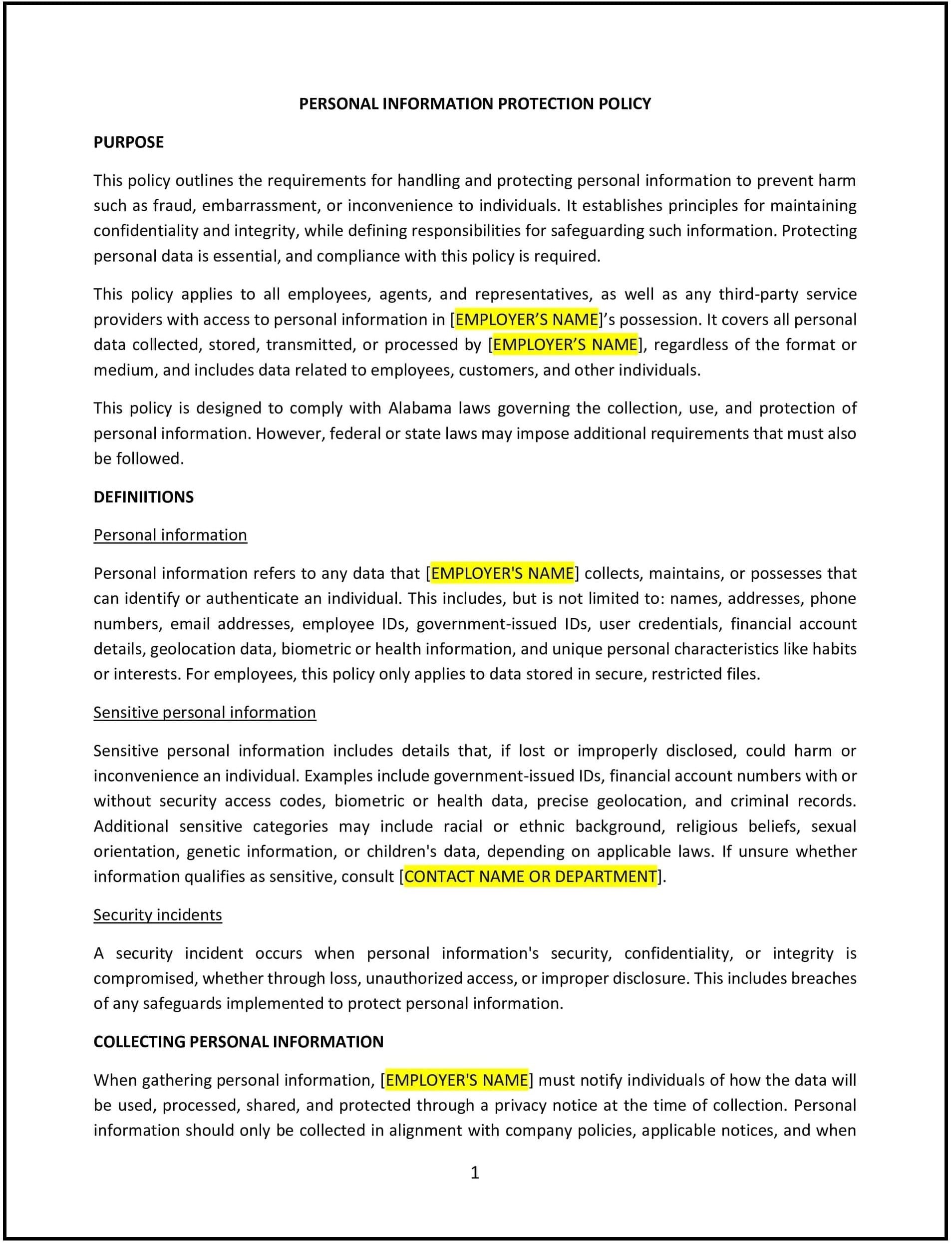
Personal information protection policy (Alabama)
A personal information protection policy outlines the measures a company takes to safeguard sensitive data, such as employee and customer information, against unauthorized access, misuse, or breaches. For SMBs in Alabama, this policy ensures compliance with privacy regulations while fostering trust and accountability in handling personal information.
This policy provides a framework for data security practices, rights management, and breach response procedures, helping to protect the integrity of the company’s operations and reputation.
How to use this personal information protection policy (Alabama)
- Define protected information: Clearly identify the types of data covered under the policy, including names, Social Security numbers, financial details, and medical records.
- Outline data security measures: Specify methods for protecting personal information, such as encryption, access restrictions, and secure storage.
- Address employee responsibilities: Detail employee obligations for handling data securely, including password management and avoiding sharing sensitive information without authorization.
- Establish breach response protocols: Provide a step-by-step process for reporting, investigating, and mitigating data breaches, including notifying affected individuals.
- Include rights and access: Inform individuals about their rights to access, update, or request the deletion of their personal information, as permitted by law.
Benefits of using a personal information protection policy (Alabama)
A personal information protection policy supports responsible data management and strengthens trust. Here’s how it helps:
- Enhances data security: Implements safeguards to reduce the risk of data breaches or unauthorized access.
- Ensures compliance: Aligns with Alabama privacy laws and federal regulations, such as HIPAA or GDPR if applicable.
- Builds customer and employee trust: Demonstrates the company’s commitment to protecting sensitive information.
- Reduces liability: Establishes clear procedures to address and mitigate potential data breaches or legal concerns.
- Streamlines practices: Provides consistent guidelines for managing personal information securely and efficiently.
Tips for implementing a personal information protection policy (Alabama)
- Invest in security tools: Use reliable software for data encryption, access control, and regular monitoring of systems.
- Provide training: Educate employees on the importance of data protection and the steps they must take to safeguard personal information.
- Regularly audit systems: Conduct periodic reviews of data storage and access controls to identify vulnerabilities and ensure compliance.
- Limit data collection: Collect only the information necessary for business operations to reduce exposure to potential risks.
- Update procedures: Revise the policy as needed to reflect changes in laws, technology, or business processes.