Personal information protection policy (Alaska): Free template
Got contracts to review? While you're here for policies, let Cobrief make contract review effortless—start your free review now.
Customize this template for free
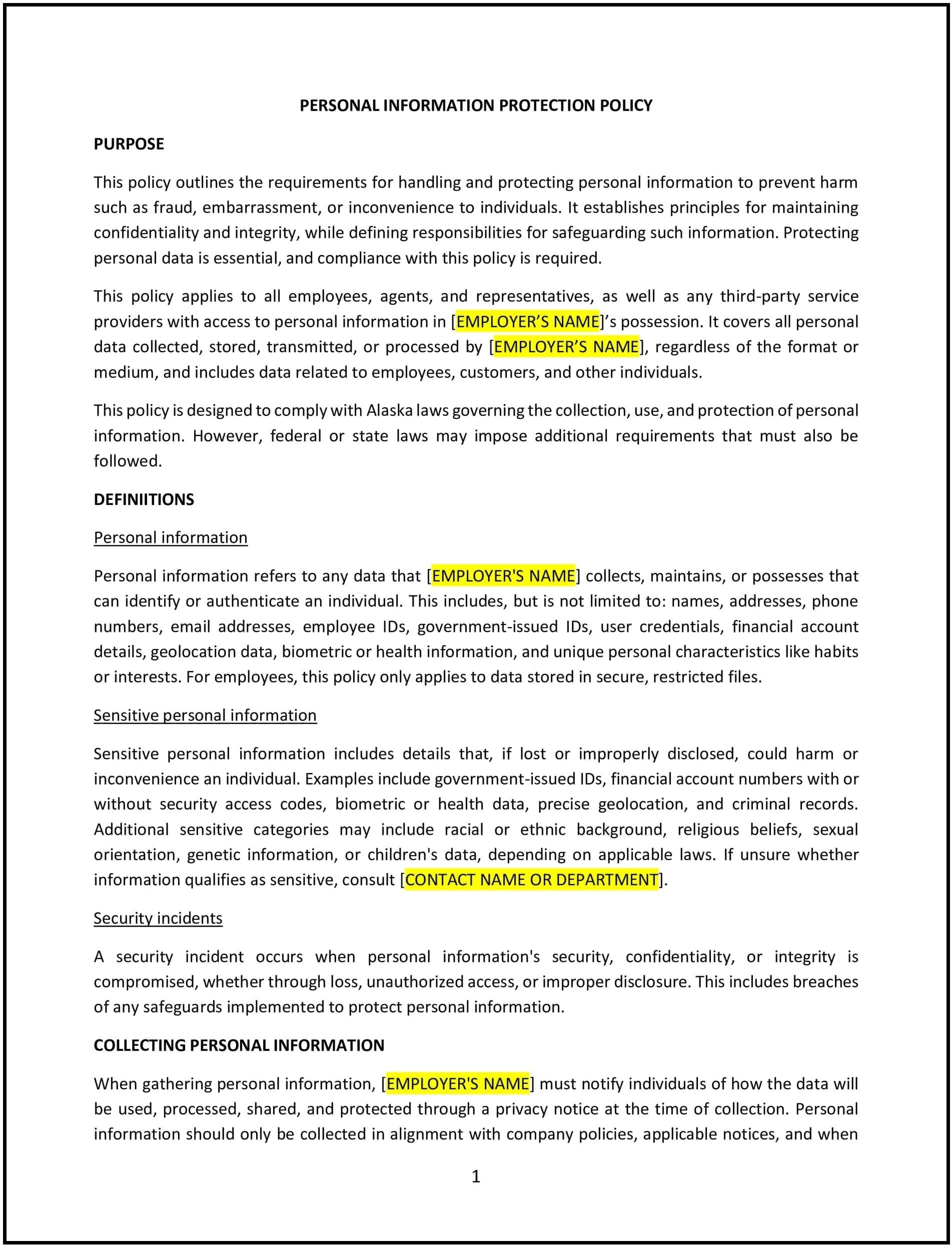
Personal information protection policy (Alaska)
In Alaska, a personal information protection policy outlines guidelines for safeguarding sensitive personal data collected, stored, or processed by a business. This policy ensures compliance with applicable state and federal privacy laws while protecting the privacy of employees, clients, and other stakeholders. By implementing this policy, businesses can mitigate risks associated with data breaches and build trust with their workforce and customers.
Given Alaska’s reliance on remote work and digital communication in certain industries, businesses may need to include specific measures to address these unique operational challenges.
How to use this personal information protection policy (Alaska)
- Define personal information: Clearly outline what constitutes personal information, such as names, addresses, Social Security numbers, financial data, or health records.
- Implement access controls: Restrict access to personal information to authorized personnel only, ensuring data security and minimizing risks of misuse.
- Include data handling procedures: Provide guidelines for collecting, storing, processing, and disposing of personal information securely.
- Establish breach response protocols: Outline steps to be taken in the event of a data breach, including notifying affected individuals and regulatory authorities as required.
- Provide training: Regularly educate employees on their responsibilities under the policy and best practices for safeguarding personal information.
Benefits of using a personal information protection policy (Alaska)
A personal information protection policy offers several advantages for businesses in Alaska. Here’s how it helps:
- Enhances security: Protects sensitive data from unauthorized access, breaches, or misuse, reducing legal and financial risks.
- Supports compliance: Helps businesses adhere to state and federal privacy regulations, such as the Alaska Personal Information Protection Act (APIPA).
- Builds trust: Demonstrates a commitment to data privacy, strengthening relationships with employees, customers, and partners.
- Reduces liability: Provides a framework for handling personal data responsibly, minimizing risks associated with non-compliance or negligence.
- Promotes consistency: Ensures all employees follow standardized practices for managing personal information.
Tips for using a personal information protection policy (Alaska)
- Address remote work: Include guidelines for securing personal information in remote or hybrid work environments, such as using VPNs or encrypting files.
- Use secure systems: Invest in reliable tools for data storage, access control, and encryption to protect personal information effectively.
- Monitor compliance: Conduct regular audits of data handling practices to identify vulnerabilities and ensure adherence to the policy.
- Communicate openly: Inform employees, clients, and stakeholders about the company’s data protection practices to foster transparency.
- Update regularly: Revise the policy to reflect changes in privacy laws, technological advancements, or company operations.