Personal information protection policy (Idaho): Free template
Got contracts to review? While you're here for policies, let Cobrief make contract review effortless—start your free review now.
Customize this template for free
Personal information protection policy (Idaho)
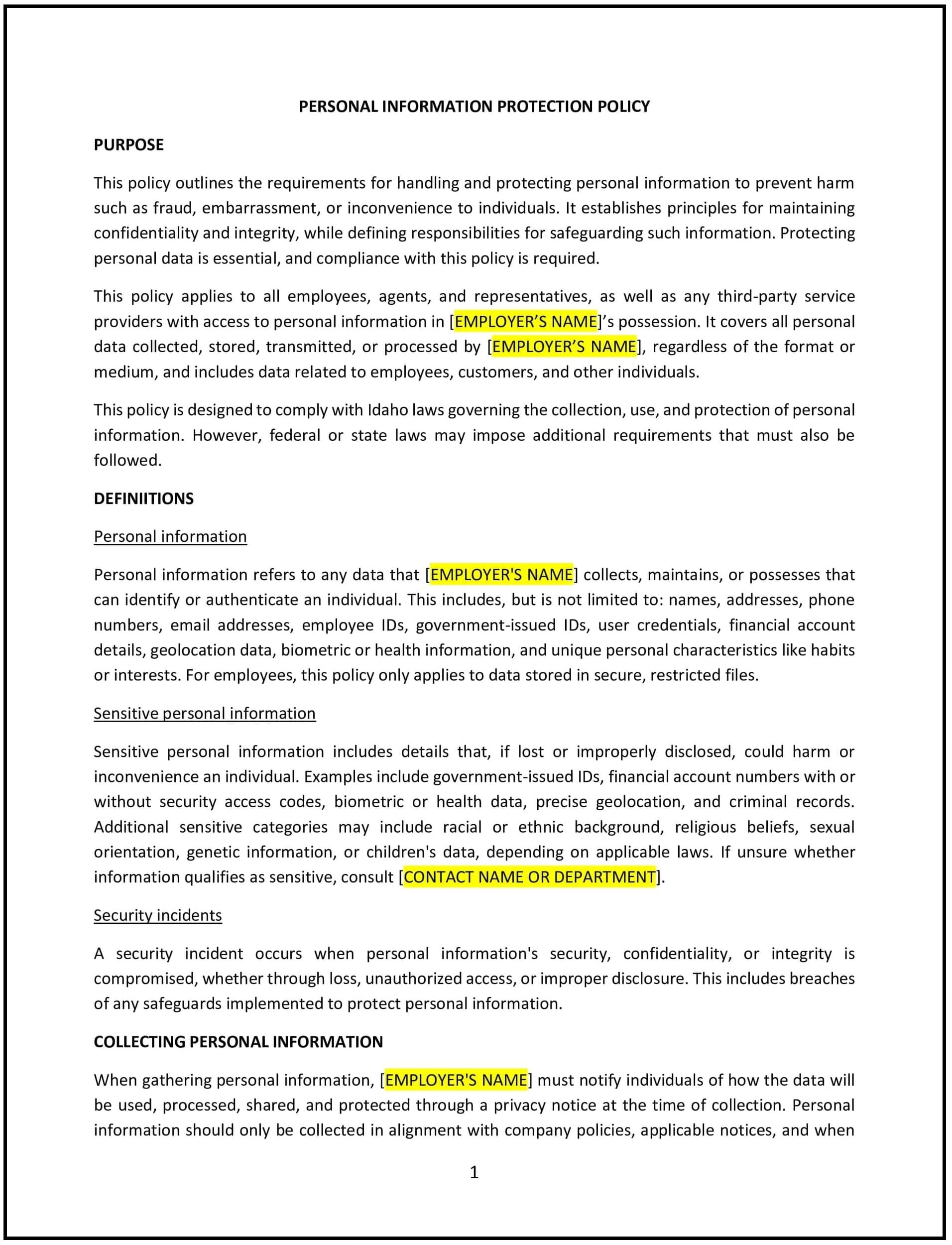
A personal information protection policy helps Idaho businesses establish guidelines for collecting, storing, and safeguarding sensitive employee and customer data. This policy outlines procedures for handling personal information, addressing data breaches, and ensuring compliance with privacy best practices. It also emphasizes the importance of maintaining trust and transparency in data management.
By implementing this policy, businesses can protect sensitive information, reduce the risk of data breaches, and demonstrate their commitment to privacy and security.
How to use this personal information protection policy (Idaho)
- Define personal information: Specify what constitutes personal information, such as names, addresses, Social Security numbers, financial data, and health records, to ensure clarity.
- Establish data collection procedures: Outline how personal information will be collected, including the purposes for which it is gathered and the consent required from individuals.
- Set storage and access guidelines: Provide guidelines for securely storing personal information, including encryption, access controls, and regular audits to prevent unauthorized access.
- Address data sharing: Explain the circumstances under which personal information may be shared with third parties, such as vendors or partners, and the safeguards in place to protect it.
- Develop breach response plans: Create a clear process for responding to data breaches, including notifying affected individuals, mitigating damage, and reporting incidents to relevant authorities.
- Train employees: Provide training for employees on how to handle personal information, recognize potential threats, and follow the policy’s procedures.
- Review and update the policy: Periodically assess the policy’s effectiveness and make adjustments based on changes in technology, business needs, or Idaho laws.
Benefits of using this personal information protection policy (Idaho)
This policy offers several advantages for Idaho businesses:
- Protects sensitive data: Clear guidelines help safeguard personal information from unauthorized access, misuse, or breaches.
- Builds trust: Demonstrating a commitment to protecting personal information fosters trust among employees, customers, and partners.
- Reduces legal risks: The policy helps businesses adhere to privacy best practices and reduce the risk of legal disputes or penalties.
- Enhances reputation: A strong data protection policy enhances the business’s reputation as a responsible and trustworthy organization.
- Supports operational efficiency: Structured procedures streamline data management processes, reducing the risk of errors or inefficiencies.
- Encourages accountability: Clear expectations and consequences help employees understand their responsibilities in protecting personal information.
Tips for using this personal information protection policy (Idaho)
- Communicate the policy clearly: Share the policy with employees during onboarding and through internal communication channels to ensure awareness and understanding.
- Train employees: Provide training on data protection best practices, including how to handle personal information, recognize threats, and respond to breaches.
- Monitor compliance: Regularly review data handling practices to ensure adherence to the policy and identify areas for improvement.
- Stay informed about legal updates: Keep up-to-date with changes to Idaho and federal privacy laws and update the policy as needed.
- Encourage transparency: Foster a culture where employees feel comfortable reporting potential data breaches or privacy concerns.
- Document everything: Maintain records of data collection, storage, and breach response activities to ensure accountability and transparency.