Personal information protection policy (Indiana): Free template
Got contracts to review? While you're here for policies, let Cobrief make contract review effortless—start your free review now.
Customize this template for free
Personal information protection policy (Indiana): Free template
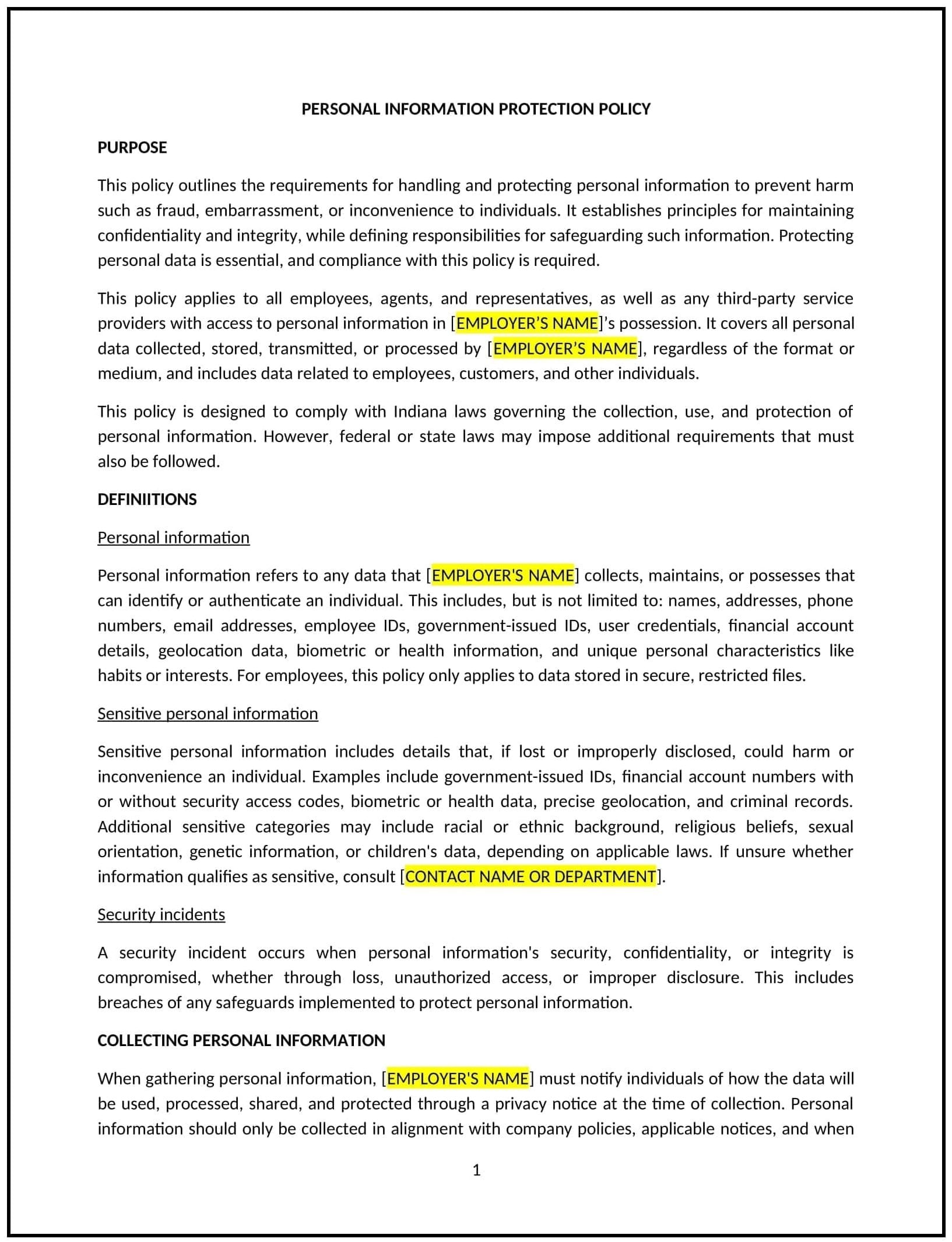
This personal information protection policy is designed to help Indiana businesses safeguard sensitive personal data collected from employees, customers, and other stakeholders. It outlines procedures for collecting, storing, processing, and disposing of personal information to minimize risks of data breaches and ensure privacy best practices. Whether managing employee records, processing customer data, or handling vendor information, this template supports businesses in maintaining secure data practices.
By implementing this policy, Indiana businesses can enhance trust, mitigate risks, and establish a culture of accountability around data protection.
How to use this personal information protection policy (Indiana)
- Identify types of personal information collected: Define the categories of personal data your business collects, such as employee records, customer contact details, or payment information. Clarify how these categories are handled to comply with privacy best practices.
- Establish data handling procedures: Create clear guidelines for collecting, storing, and processing personal information. Specify how data is stored securely, including encryption, access controls, and secure physical storage for paper records.
- Implement access controls: Restrict access to personal information to authorized personnel only. The policy should outline how permissions are granted and reviewed regularly to prevent unauthorized access.
- Set data retention periods: Determine how long personal data will be retained and include procedures for securely disposing of data that is no longer needed. Specify timelines based on business needs and legal requirements in Indiana.
- Provide for employee training: Ensure all employees handling personal data are trained on this policy and best practices for data protection. Training should cover recognizing data breaches, secure data handling, and compliance with applicable regulations.
- Include incident response protocols: Outline steps to follow in case of a data breach, including notifying affected individuals, investigating the breach, and taking corrective action. This section should highlight the importance of prompt and transparent communication.
- Incorporate data-sharing guidelines: Specify when and how personal information can be shared with third parties, such as vendors or service providers. The policy should emphasize the need for data-sharing agreements that outline confidentiality and security expectations.
- Ensure regular audits: Conduct periodic reviews of data protection practices to identify and address vulnerabilities. Specify who will be responsible for audits and how findings will be documented and acted upon.
- Update the policy regularly: Regularly review and update the policy to reflect changes in technology, business operations, or applicable privacy regulations in Indiana.
Benefits of using this personal information protection policy (Indiana)
Implementing this policy provides several key benefits for Indiana businesses:
- Promotes data security: Protects sensitive personal data from breaches and unauthorized access through clear guidelines and procedures.
- Builds trust: Demonstrates a commitment to privacy and security, strengthening relationships with employees, customers, and other stakeholders.
- Minimizes risk: Reduces the likelihood of data breaches and associated legal, financial, and reputational consequences.
- Streamlines compliance efforts: Helps businesses align with Indiana’s privacy regulations and data protection best practices.
- Supports employee training: Equips employees with the knowledge and tools to handle personal information responsibly and securely.
- Encourages accountability: Fosters a culture of responsibility and transparency around data protection within the organization.
Tips for using this personal information protection policy (Indiana)
- Communicate the policy: Share the policy with all employees during onboarding and through ongoing training. Employees should understand their role in protecting personal data and the consequences of failing to follow the policy.
- Monitor data access: Use software tools to track and monitor access to sensitive personal information, ensuring that only authorized personnel can view or edit data.
- Secure physical records: For businesses handling physical documents containing personal information, implement secure storage practices such as locked cabinets or restricted access areas.
- Encourage reporting of breaches: Create a system for employees to report suspected data breaches or security concerns without fear of retaliation. Prompt reporting helps mitigate potential damage.
- Collaborate with vendors: Ensure that vendors handling personal data comply with your data protection standards. Use written agreements to specify expectations around data security and confidentiality.
- Leverage technology: Invest in tools and software that support data encryption, secure storage, and automated monitoring to enhance protection.