Personal information protection policy (Kansas): Free template
Got contracts to review? While you're here for policies, let Cobrief make contract review effortless—start your free review now.
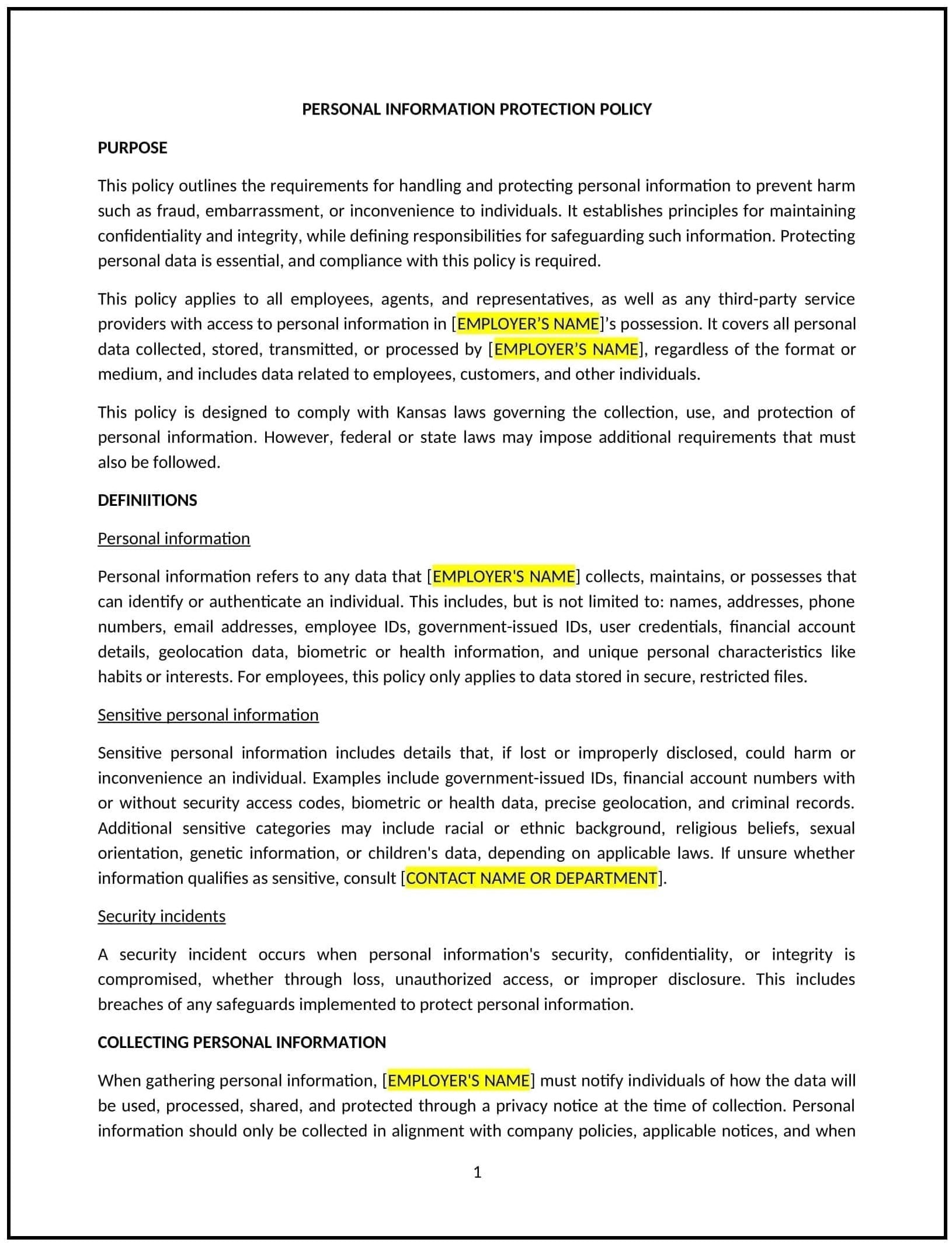
Customize this template for free
Personal information protection policy (Kansas)
A personal information protection policy helps Kansas businesses safeguard the personal information of employees, customers, and clients. This policy outlines how personal data will be collected, stored, processed, and shared, and it establishes guidelines for ensuring that personal information is protected from unauthorized access, loss, or misuse.
By implementing this policy, businesses can maintain the trust of their stakeholders, protect sensitive data, and support compliance with relevant privacy laws.
How to use this personal information protection policy (Kansas)
- Define personal information: Businesses should specify what constitutes personal information, including names, addresses, phone numbers, financial information, and other sensitive data related to employees, customers, and clients.
- Establish data collection practices: The policy should outline how personal information will be collected, including the methods used to obtain data (e.g., through forms, surveys, or online registrations) and the purposes for which it will be used.
- Set storage and retention guidelines: Businesses should define how personal information will be stored, such as in secure databases or physical records, and outline retention periods for keeping personal data before it is securely destroyed.
- Specify access control measures: The policy should establish who has access to personal information within the company and ensure that only authorized personnel can view or manage sensitive data.
- Detail data protection measures: Businesses should implement security measures to protect personal information, such as encryption, firewalls, and secure password management practices.
- Address data sharing and third-party access: The policy should specify under what circumstances personal information may be shared with third parties, such as service providers, and the measures in place to protect data when shared externally.
- Implement incident response procedures: Businesses should define how they will respond to data breaches or unauthorized access to personal information, including how to notify affected parties and take corrective actions.
- Review and update regularly: Businesses should periodically review the policy to ensure it reflects current data protection standards, industry best practices, and applicable laws.
Benefits of using a personal information protection policy (Kansas)
- Protects sensitive data: A clear policy ensures that personal information is securely handled, reducing the risk of data breaches and unauthorized access.
- Builds trust with customers and employees: Businesses that safeguard personal information demonstrate respect for privacy, building trust and confidence among employees, customers, and clients.
- Enhances legal compliance: A formal policy helps businesses comply with data protection laws, such as the Kansas Consumer Protection Act, and any other relevant state or federal regulations.
- Minimizes financial risk: By implementing strong data protection measures, businesses can avoid costly fines, legal fees, and damage to their reputation from data breaches.
- Reduces operational disruptions: A policy that clearly defines roles, responsibilities, and procedures in the event of a breach helps businesses quickly respond to and recover from data security incidents.
- Promotes transparency: A personal information protection policy fosters transparency about how personal data is collected, stored, and used, making it easier for employees, customers, and clients to understand how their information is protected.
Tips for using this personal information protection policy (Kansas)
- Communicate the policy clearly: Businesses should ensure that all employees are aware of the personal information protection policy and understand their role in safeguarding data.
- Regularly train staff: Employees should be trained on how to handle personal information securely, including proper data storage, access control, and how to recognize phishing attempts or other security threats.
- Perform regular audits: Businesses should conduct regular audits of their data protection practices to identify vulnerabilities and ensure that personal information is being handled in accordance with the policy.
- Implement a data minimization strategy: Businesses should only collect personal information that is necessary for business operations and avoid retaining data for longer than needed.
- Monitor for compliance: Businesses should implement monitoring mechanisms to track compliance with the policy and take corrective actions if violations occur.
- Stay informed about privacy laws: Businesses should regularly review and update their policy to comply with changes in state, federal, or international data protection laws.