Personal information protection policy (Minnesota): Free template
Got contracts to review? While you're here for policies, let Cobrief make contract review effortless—start your free review now.
Customize this template for free
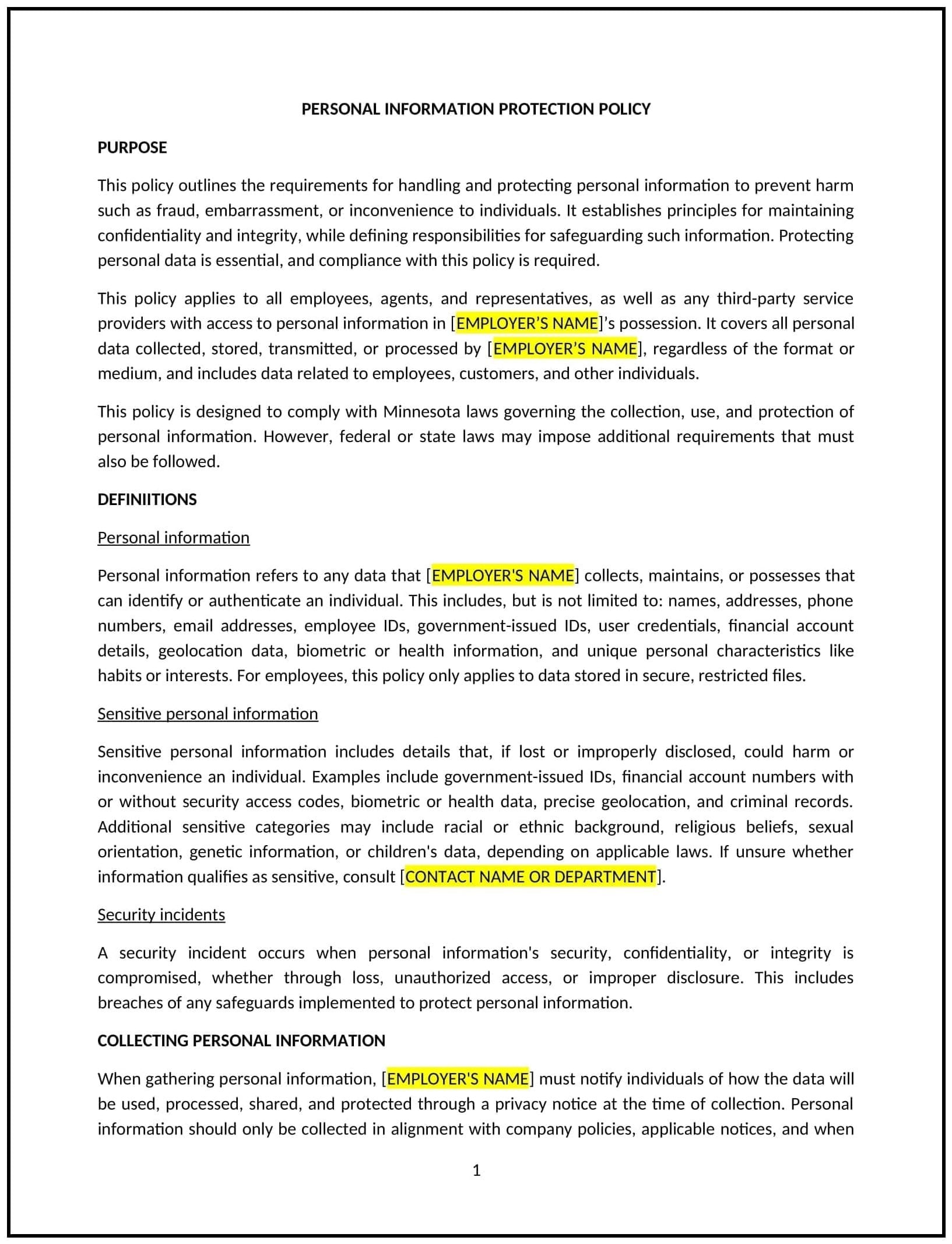
Personal information protection policy (Minnesota)
This personal information protection policy is designed to help Minnesota businesses manage and protect personal information (PI) collected from employees, customers, and other stakeholders. It outlines the company’s approach to handling, storing, and disposing of personal data to safeguard privacy and comply with data protection laws.
By implementing this policy, businesses can reduce the risk of data breaches, enhance trust with stakeholders, and demonstrate their commitment to data privacy and security.
How to use this personal information protection policy (Minnesota)
- Define personal information: Clearly define what constitutes personal information, including names, addresses, phone numbers, social security numbers, email addresses, financial details, and any other identifiable information.
- Outline data collection practices: Specify how personal information is collected, including the types of information gathered, the methods of collection, and the purposes for which it is used. Ensure that the collection of personal data is necessary, transparent, and lawful.
- Establish data storage and access controls: Specify how personal information will be stored, both electronically and physically, and establish clear access controls. Limit access to personal data to authorized personnel only, and implement encryption and other security measures to protect the data.
- Define data sharing protocols: Outline when and how personal information may be shared with third parties, including contractors, vendors, and service providers. Ensure that any data sharing complies with applicable privacy laws and agreements.
- Implement data retention and disposal guidelines: Set clear guidelines for how long personal information will be retained and how it will be securely disposed of when it is no longer needed, in compliance with both Minnesota state laws and federal regulations.
- Train employees on data protection: Provide training to employees on how to handle personal information responsibly, including how to recognize and prevent potential data security threats, such as phishing or social engineering.
- Address data breach procedures: Establish a process for responding to data breaches, including immediate actions to contain the breach, notify affected individuals, and report the breach to regulatory authorities if required by law.
Benefits of using a personal information protection policy (Minnesota)
Implementing this policy provides several advantages for Minnesota businesses:
- Builds trust with customers and employees: A robust personal information protection policy demonstrates the company’s commitment to safeguarding privacy and fosters trust among customers, employees, and stakeholders.
- Reduces risk of data breaches: By setting clear guidelines for the collection, storage, and handling of personal data, businesses can mitigate the risk of data breaches and the associated financial and reputational damage.
- Ensures legal compliance: A comprehensive personal information protection policy helps businesses comply with data protection laws, including Minnesota’s data privacy regulations, federal laws like the GDPR (if applicable), and industry-specific standards.
- Enhances security practices: The policy sets a foundation for strong data security practices, ensuring that personal data is adequately protected from unauthorized access, loss, or theft.
- Reflects Minnesota-specific considerations: Tailors the policy to comply with Minnesota’s specific privacy laws and business climate, addressing state-specific data protection requirements.
Tips for using this personal information protection policy (Minnesota)
- Communicate clearly: Ensure that employees are well-informed about the policy and understand their responsibilities for protecting personal information.
- Regularly review and update the policy: Review and update the policy regularly to account for any changes in data protection laws, business practices, or technology that may impact personal information security.
- Implement strong data security measures: Use encryption, secure access controls, and data masking to protect personal information both in transit and at rest. Regularly audit your security practices to identify potential vulnerabilities.
- Limit data collection: Collect only the personal information necessary for business purposes, and regularly assess whether certain data collection practices can be minimized or eliminated.
- Promote a culture of privacy: Encourage employees to take ownership of protecting personal data and make data privacy a key part of your company’s culture.