Personal information protection policy (Missouri): Free template
Got contracts to review? While you're here for policies, let Cobrief make contract review effortless—start your free review now.
Customize this template for free
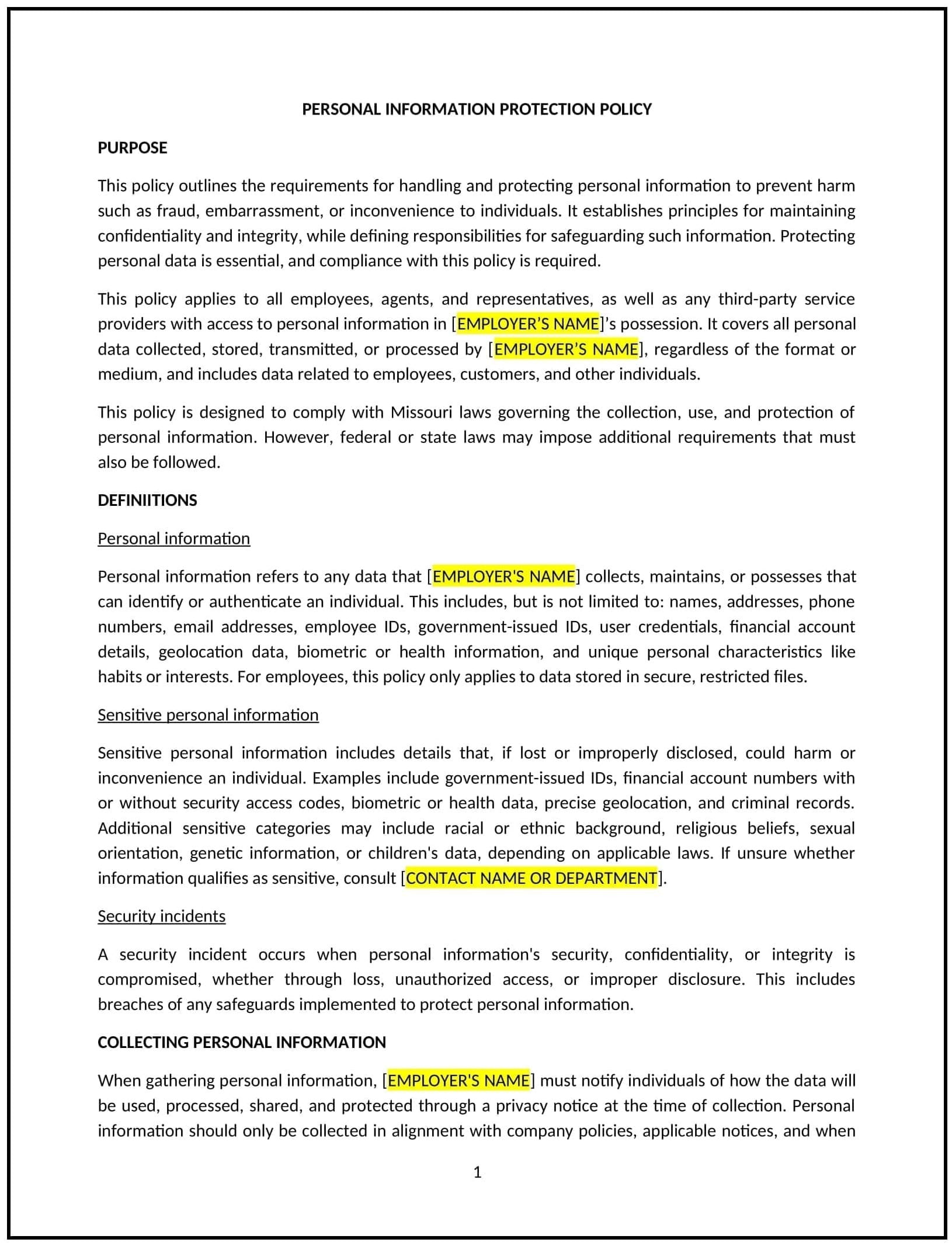
Personal information protection policy (Missouri)
A personal information protection policy helps businesses in Missouri safeguard employees' and customers' sensitive personal information from unauthorized access, misuse, or loss. This policy outlines the procedures for collecting, storing, processing, and sharing personal data, ensuring that businesses protect the privacy and integrity of such information. It is designed to minimize risks related to data breaches, comply with relevant data protection laws, and build trust with employees and customers.
By adopting this policy, businesses can reduce the risk of privacy violations, protect against identity theft or fraud, and support compliance with state and federal regulations.
How to use this personal information protection policy (Missouri)
- Define personal information: Clearly define what constitutes personal information within the context of the policy, including sensitive data such as names, addresses, phone numbers, financial information, health records, and any other data that can identify an individual.
- Set data collection guidelines: Establish procedures for how personal information is collected, ensuring that it is obtained only for legitimate business purposes and with the consent of the individual when required.
- Address data storage and access: Outline how personal information should be stored, including the use of encryption, access controls, and secure storage methods to protect data from unauthorized access or loss.
- Define data sharing protocols: Set guidelines for sharing personal information, including who is authorized to access or share data, and under what circumstances personal data can be shared with third parties (e.g., vendors or business partners).
- Ensure data retention and disposal: Specify how long personal information will be retained and the process for securely disposing of data once it is no longer needed, preventing data from being improperly accessed or used.
- Implement training and awareness: Provide training for employees on the importance of personal information protection, secure data handling practices, and how to recognize and respond to data security threats.
- Monitor and enforce security measures: Regularly assess the effectiveness of security measures in place to protect personal information and ensure compliance with the policy, including conducting audits and updating procedures as necessary.
- Review regularly: Periodically review and update the policy to ensure it reflects any changes in Missouri state laws, federal regulations, or the company's data handling practices.
Benefits of using this personal information protection policy (Missouri)
This policy provides several benefits for businesses in Missouri:
- Protects privacy: A strong personal information protection policy helps safeguard sensitive data, protecting employees and customers from potential privacy violations and identity theft.
- Reduces legal and financial risks: By adhering to data protection best practices and regulations, businesses can minimize the risk of data breaches, fines, or lawsuits related to the mishandling of personal information.
- Enhances customer trust: A company that demonstrates a commitment to protecting personal information will earn the trust of customers, enhancing its reputation and fostering long-term relationships.
- Supports regulatory compliance: The policy helps businesses comply with Missouri state laws and federal regulations governing personal data protection, such as the Missouri Data Protection Act and the General Data Protection Regulation (GDPR) for businesses operating internationally.
- Increases employee awareness: By training employees on the importance of personal information protection, businesses can create a culture of security that minimizes the risk of accidental breaches or unauthorized access.
- Improves data management: A formalized policy ensures that personal information is collected, stored, and processed in an organized and secure manner, improving overall data management practices.
Tips for using this personal information protection policy (Missouri)
- Communicate the policy clearly: Ensure that all employees understand the importance of protecting personal information and are aware of the procedures for handling data securely.
- Implement secure data practices: Adopt secure data collection, storage, processing, and sharing practices, such as encryption, access controls, and secure data transfer methods.
- Train employees regularly: Provide ongoing training to employees on data protection principles, how to handle personal information securely, and how to identify and report potential data security threats.
- Monitor data handling practices: Regularly audit and monitor data handling practices to ensure compliance with the policy and identify any areas for improvement.
- Establish a breach response plan: Develop and communicate a response plan for addressing data breaches, including steps to mitigate damage, notify affected individuals, and report the breach to relevant authorities.
- Review regularly: Periodically review and update the policy to ensure it remains up-to-date with evolving regulations, industry standards, and best practices for data protection.