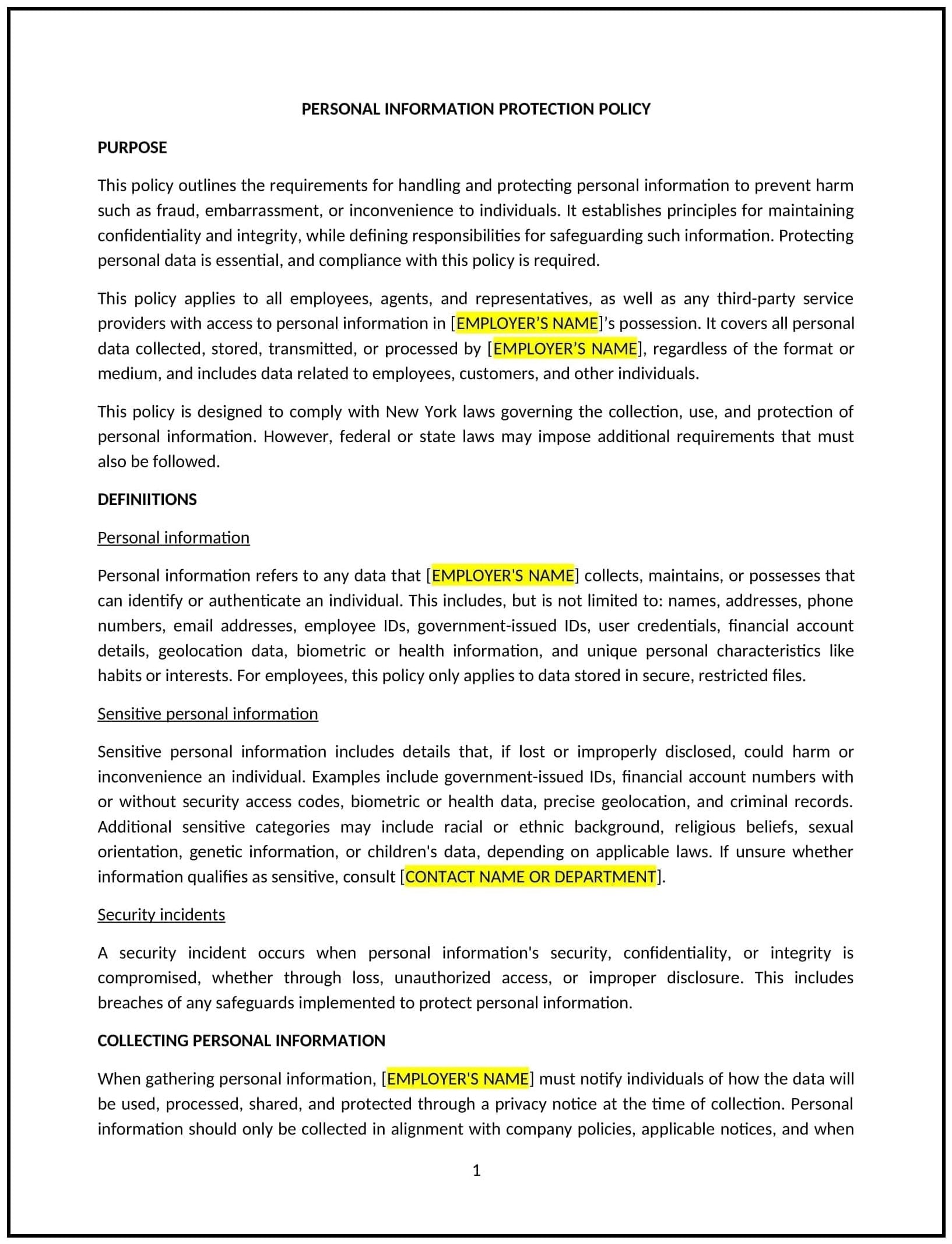
Personal information protection policy (New York): Free template
Explains how employee and customer personal data is collected, used, stored, and safeguarded.
- Policies
- New York
Personal information protection policy (New York)
This personal information protection policy is designed to help New York businesses establish clear guidelines for handling, storing, and safeguarding personal information. Whether businesses are collecting data from employees, customers, or other stakeholders, this template ensures that the company protects personal information in compliance with applicable state and federal regulations.
By adopting this template, businesses can foster trust, reduce risks related to data breaches, and support compliance with personal data protection laws.
How to use this personal information protection policy (New York)
- Define personal information: Clearly identify what constitutes personal information, including any data that can be used to identify individuals, such as names, addresses, contact details, and financial data.
- Implement data collection guidelines: Outline how personal information will be collected, stored, and used, and specify the purpose of the data collection to ensure transparency.
- Ensure data security: Include measures for securing personal information, such as encryption, restricted access, and regular data audits to prevent unauthorized access or data breaches.
- Provide employee training: Implement a training program to ensure employees understand how to handle personal information responsibly and are aware of data protection regulations.
- Address third-party data sharing: Clearly state the conditions under which personal information can be shared with third parties and the safeguards in place to protect the data.
Benefits of using a personal information protection policy (New York)
This policy offers several benefits for New York businesses:
- Promotes trust: Clear guidelines for protecting personal information help build trust with employees, customers, and other stakeholders.
- Reduces security risks: Data protection measures help prevent unauthorized access and data breaches, minimizing the risk of financial or reputational damage.
- Ensures compliance: The policy helps businesses comply with New York State's data protection laws, such as the SHIELD Act, as well as federal regulations like GDPR and CCPA where applicable.
- Safeguards business operations: Strong data protection practices mitigate the risk of costly fines, legal action, and operational disruptions caused by data breaches.
- Improves employee awareness: Regular training on personal information protection fosters a culture of responsibility and vigilance among employees.
Tips for using this personal information protection policy (New York)
- Communicate the policy: Ensure all employees are aware of the policy and understand the procedures for handling personal information, including secure storage and sharing practices.
- Implement secure systems: Use encryption, secure databases, and access control systems to protect personal information from unauthorized access or misuse.
- Regularly audit data handling practices: Conduct periodic audits to verify that personal information is being stored and processed in compliance with the policy and applicable regulations.
- Monitor third-party compliance: Ensure that any third-party vendors or contractors that handle personal information follow the same data protection standards.
- Review regularly: Update the policy as necessary to reflect changes in laws, business practices, or the types of personal information collected and processed.
Frequently asked questions (FAQs)
Similar templates
Where deals go from offer to paid
