Personal information protection policy (South Carolina): Free template
Got contracts to review? While you're here for policies, let Cobrief make contract review effortless—start your free review now.
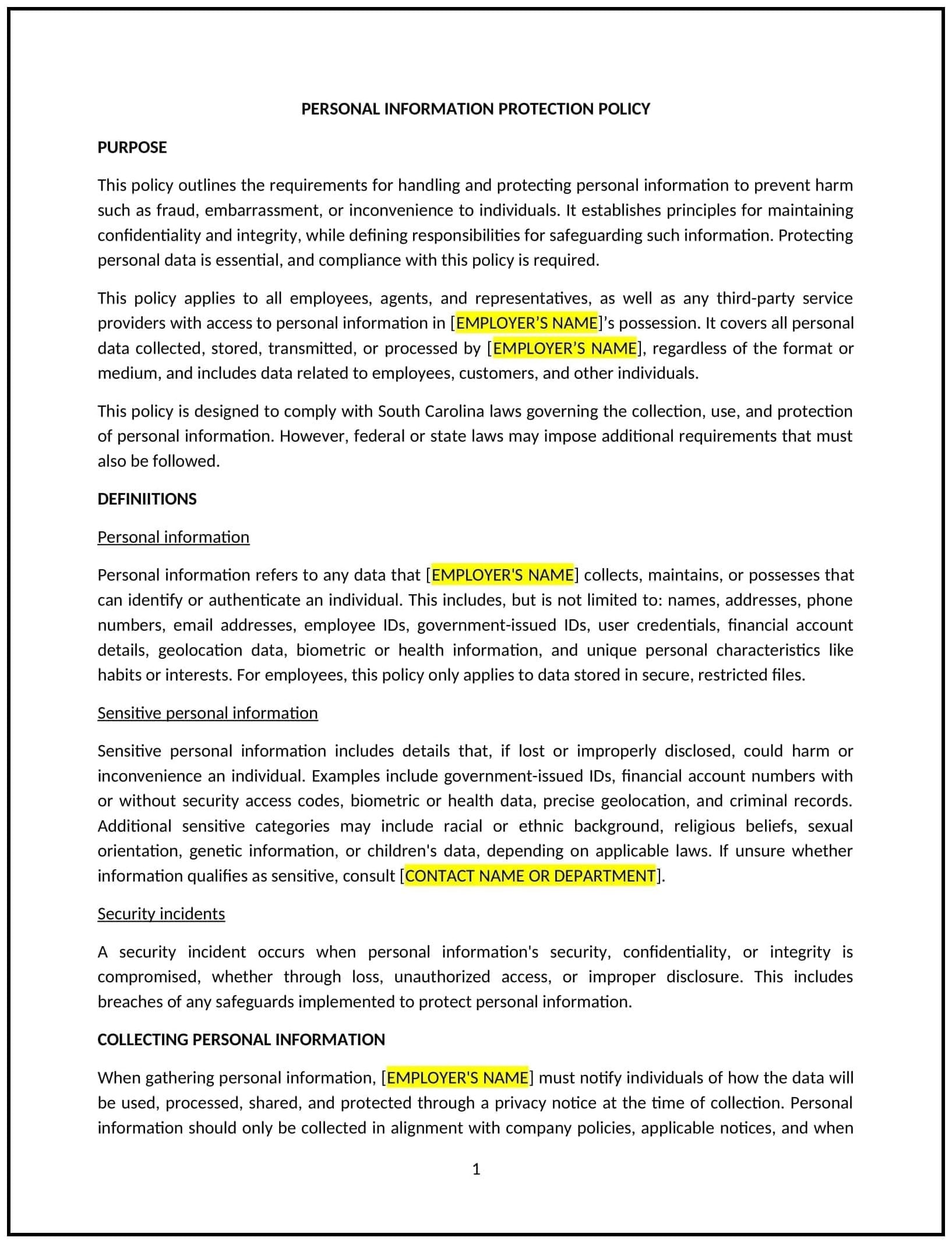
Customize this template for free
Personal information protection policy (South Carolina)
This personal information protection policy is designed to help South Carolina businesses establish guidelines for safeguarding sensitive personal data, such as employee, customer, or vendor information. It outlines procedures for collecting, storing, and sharing personal information while promoting compliance with state and federal privacy laws.
By adopting this policy, businesses can protect sensitive data, reduce the risk of breaches, and align with general best practices for data privacy and security.
How to use this personal information protection policy (South Carolina)
- Define personal information: Explain what constitutes personal information, such as names, addresses, Social Security numbers, or financial data.
- Establish collection procedures: Outline how personal information is collected, including obtaining consent and limiting data to what is necessary.
- Address storage and access: Provide guidelines for securely storing personal information and restricting access to authorized personnel only.
- Set sharing protocols: Specify when and how personal information can be shared, such as with third-party vendors or for legal compliance.
- Train employees: Educate staff on their responsibilities for protecting personal information and recognizing potential security threats.
- Review and update: Assess the policy annually to ensure it aligns with evolving business needs and privacy standards.
Benefits of using this personal information protection policy (South Carolina)
This policy offers several advantages for South Carolina businesses:
- Protects sensitive data: Reduces the risk of unauthorized access, theft, or disclosure of personal information.
- Mitigates legal risks: Helps businesses comply with state and federal privacy laws, such as the South Carolina Insurance Data Security Act.
- Enhances customer trust: Demonstrates a commitment to safeguarding personal information.
- Aligns with best practices: Provides a structured approach to managing data privacy and security.
- Reduces financial losses: Minimizes the potential costs associated with data breaches or regulatory penalties.
Tips for using this personal information protection policy (South Carolina)
- Communicate the policy: Share the policy with employees and include it in the employee handbook.
- Provide training: Educate staff on their responsibilities for protecting personal information and recognizing potential security threats.
- Monitor adherence: Regularly review data handling practices to ensure compliance with the policy.
- Address issues promptly: Take corrective action if personal information is mishandled or if a security incident occurs.
- Update regularly: Assess the policy annually to ensure it aligns with evolving business needs and privacy standards.